Why Is ‘Iran News Today’ Trending? (November 7, 2026)
Why is ‘Iran news today’ trending?
Iran is trending because two missiles hit Qeshm Island in the Strait of Hormuz,
Iran sent a nuclear proposal to the United States through Qatar,
and the US midterm results changed the politics of the war.
The war began on February 28, 2026. A ceasefire has held for about a month, but the last 24 hours brought new strikes, new talks, and a sharp fall in oil prices.
That combination is why Iran is at the top of the news today. A strike, a proposal, a mediation push, an election result, and a market move all landed on the same day.
This page explains each driver in plain language. It also gives the background, the numbers, and a way to tell real news from rumours.
Every claim here is labelled with its source. Confirmed facts, official claims, and unverified reports are kept separate, because in a live war the difference matters.
The Short Answer: Why Iran Is Trending Today
Iran is trending today for five reasons that arrived together. No single event explains the spike on its own.
First, two missiles hit Qeshm Island in the Strait of Hormuz on November 6. Iranian state media reported the strikes, and semi-official outlets reported no casualties.
Second, Iran claims it shot down a US MQ-9 drone over the same island. The claim is not independently confirmed, but it is widely reported.
Third, Iran sent a nuclear proposal to the United States through Qatar. Tehran insists on seven conditions, including sanctions relief, before it will negotiate or reopen the strait.
Fourth, Qatar’s prime minister urged both sides to take a deal now and not wait for a “perfect moment”. His interview at Oxford University was quoted around the world.
Fifth, the US midterm elections punished President Trump’s party for the war. The Republicans lost control of Congress, and oil prices fell sharply on the result.
| Driver | What happened | When | Source |
|---|---|---|---|
| Qeshm Island strikes | Two missiles hit Qeshm Island in the Strait of Hormuz | November 6, 2026 | IRNA, Tasnim |
| Drone claim | Iran claims it shot down a US MQ-9 drone over Qeshm Island | November 6, 2026 | IRIB, IRGC (not independently confirmed) |
| Nuclear proposal | Iran sent a nuclear proposal to the US through Qatar | November 6, 2026 | The National |
| Qatar mediation | Qatar PM urges a deal now, not a “perfect moment” | November 6, 2026 | Al Jazeera (Oxford interview) |
| US midterms | Republicans lose control of Congress; oil prices fall | November 2026 | GMA News, Reuters |
The war itself is not new. It began on February 28, 2026, and it has been running for more than eight months.
What is new is the pile-up.
A strike, a proposal, a mediation push, and an election result all hit the news on the same day, and that is what pushes a topic to the top of the trends.
What Happened in the Last 24 Hours
The last 24 hours brought four developments. Each one is covered below with its source and its status.
Read the status labels carefully. Some facts are confirmed by multiple outlets. Others are claims from one side only.
Qeshm Island
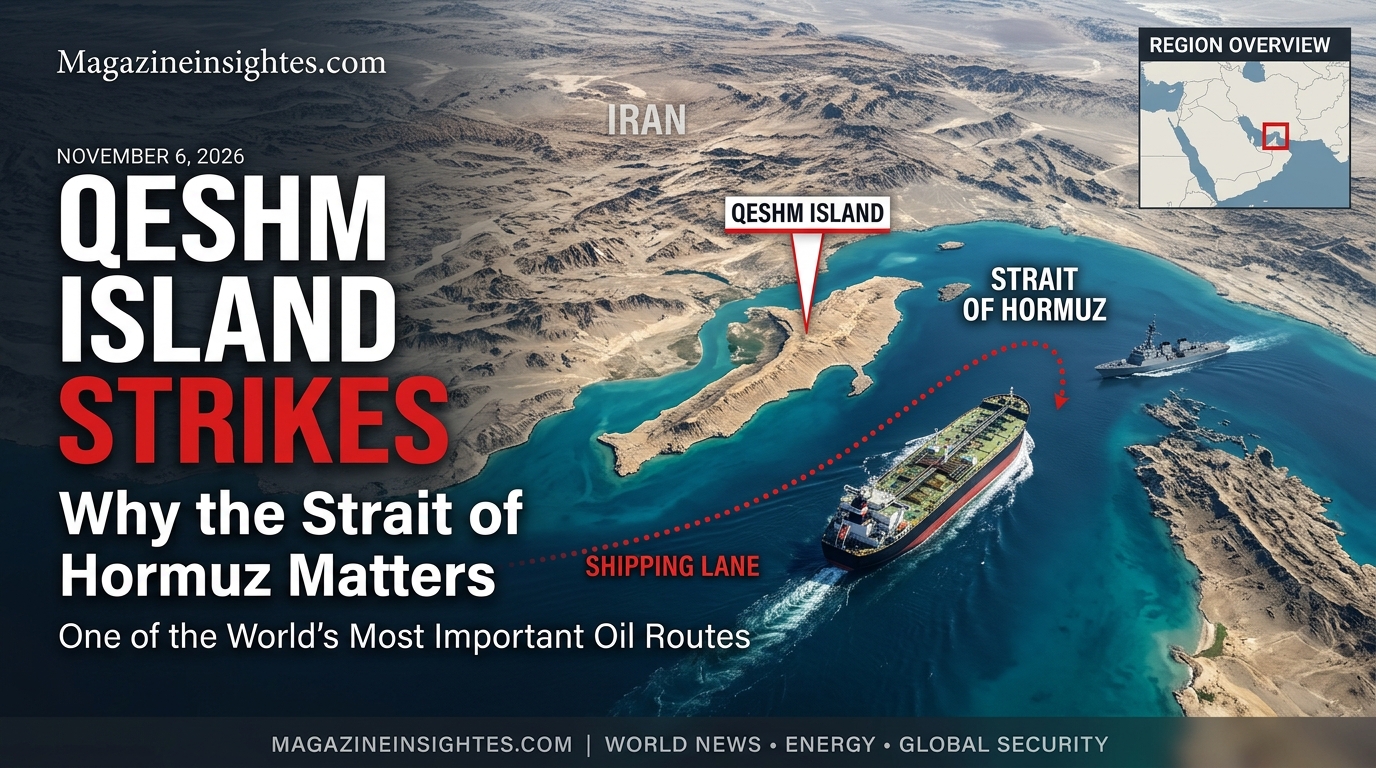
Two missiles hit Qeshm Island in the Strait of Hormuz on November 6, 2026. Iran’s official news agency IRNA reported the strikes.
Tasnim news agency, which is semi-official, reported two missile impacts on the island. Local media reported no casualties.
IRNA said locals on Qeshm Island reported that two projectiles “impacted in the Susa area” of the island. The island sits in the Strait of Hormuz, the narrow waterway at the mouth of the Gulf.
Explosions were also heard on Hengam Island and near Bandar Abbas on Monday, according to Outlook India. The strikes came amid an extended confrontation involving a US naval blockade of Iranian ports.
Qeshm Island matters because of where it sits. It guards the Strait of Hormuz, through which roughly one-fifth of global petroleum trade flows.
Any strike on the island is news because it threatens the waterway. A threat to the strait is a threat to global oil supply, and markets react to it within minutes.
The Drone Claim
Iran claims its air defence force shot down a US MQ-9 drone over Qeshm Island. The claim came from an army statement reported by state broadcaster IRIB.
The announcement followed reports from Iranian local media that two missiles had struck Qeshm Island. The IRGC said earlier that it had shot down a drone launched by the US over the island.
Iranian media, citing the IRGC, also said air defences destroyed a US MQ-1 drone over Qeshm Island, according to Reuters.
The drone type differs between reports, which is a sign to treat the details with care.
Press TV, which is owned by the Islamic Republic of Iran Broadcasting, claims the IRGC also “grounded” a fifth and sixth US MQM-170 drone over Qeshm Island. That claim cannot be independently confirmed.
The US military has not confirmed a drone loss. US Central Command, known as CENTCOM, said the situation around Qeshm Island was “relatively calm” in response to reports of explosions.
That is the status of the drone claim as of November 7, 2026: claimed by Iran, not confirmed by the US, and not independently verified by any outside source.
Qatar’s Push
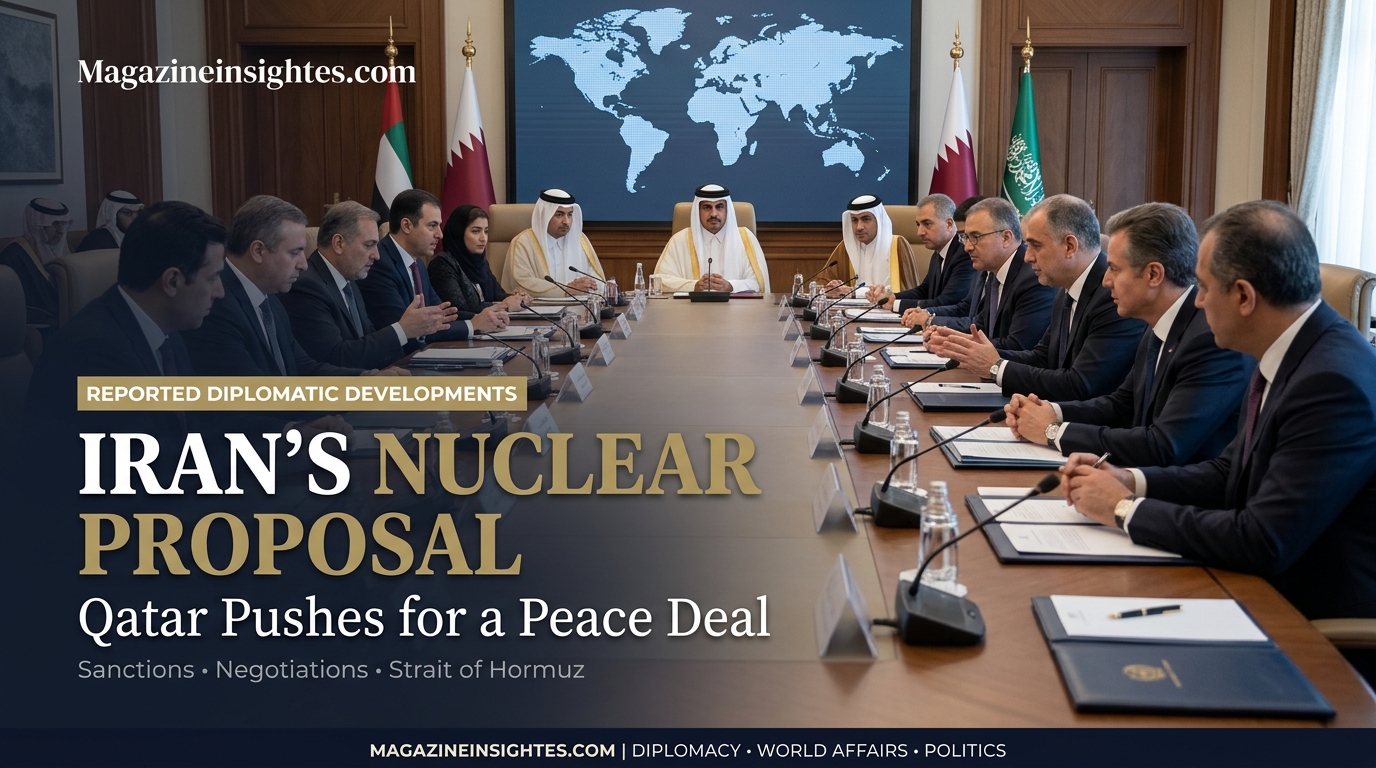
Qatar’s prime minister urged the United States and Iran to reach a peace deal and not wait for a “perfect moment”. He spoke during a public interview at Oxford University on Friday, November 6.
Sheikh Mohammed bin Abdulrahman bin Jassim Al Thani is Qatar’s prime minister and foreign minister. He said mediation efforts remain active to prevent a major regional escalation.
He warned that the crisis “cannot be left unresolved”.
He said the two countries had failed to reach a comprehensive deal, and he urged them to accept a good agreement rather than pursue a perfect one.
Qatar is the mediator in the talks. Iran sent its nuclear proposal to the US through Qatar, and Qatar has denied reports that the talks have failed.
The Qatari International Media Office denied reports that the US and Iran failed to reach a deal. It warned that such claims benefit “only those seeking to prolong the war”.
A Qatari official, Ali al-Thawadi, said Iranian leaders want to see the effect of the midterm elections on the US stance towards Iran. The election result is now part of the negotiation.
Trump’s Talks
President Donald Trump says the United States is talking to Tehran’s representatives. He told reporters his administration was talking to representatives from Tehran, adding, “We are doing very well with Iran.”
Trump said Washington has made “a lot of progress” with Iran and that Tehran wants an agreement. He also claimed American forces recently destroyed an Iranian air defence system.
His comments came after he held a phone call with Qatar’s Emir, Sheikh Tamim bin Hamad Al Thani. The call was about the talks and the mediation effort.
Trump also warned that the US may have to destroy more of Iran if Tehran’s nuclear programme cannot be permanently contained. He met his national security team on November 6 to discuss possible renewed strikes.
No final decision or military order has been announced. Trump told the Financial Times he has no immediate plans for new strikes, saying nuclear talks are progressing but the US remains ready for military action.
Trump also says Israel would no longer exist if he had allowed Iran to acquire a nuclear weapon. He told Sean Hannity the US could strike Iran’s Pickaxe Mountain nuclear site within an hour.
The War So Far: A Short Background
Iran is trending today, but the war is not new. It began more than eight months ago, and the background explains why the news keeps coming back.
This section gives the short version. It covers the war start, the leadership change, the ceasefire, and the internet shutdown.
| Date | Event |
|---|---|
| February 28, 2026 | US-Israel war on Iran begins; strike kills Supreme Leader Ali Khamenei |
| March 2026 | Mojtaba Khamenei succeeds his father as supreme leader |
| October 2026 | Ceasefire delivers a suspension in large-scale fighting |
| October-November 2026 | Near-total internet shutdown enters its 10th week |
| November 4, 2026 | 47th anniversary of the embassy takeover; rallies in Tehran |
| November 5, 2026 | JMIC reports four tanker attacks in 96 hours |
| November 6, 2026 | Qeshm Island strikes, drone claim, nuclear proposal, Qatar interview |
| November 7, 2026 | Qatar PM urges a deal; Al Jazeera live blog continues |
February 28 and the War Start
The US-Israel war on Iran began on February 28, 2026. The war started with strikes on Iran, and it has run for more than eight months.
The February 28 strike killed Supreme Leader Ayatollah Ali Khamenei. His death was the single biggest event of the war’s opening phase.
Iran has launched waves of missiles and drones at US military positions across the Persian Gulf since the war began. US and Israeli strikes have hit Iranian targets in return.
The war widened beyond the two sides. Yemen’s Houthis, Hezbollah in Lebanon, and other groups in the region have been drawn into the fighting.
Syria is aiding Riyadh with military advice and training as Saudi Arabia comes under attack by Yemen’s Houthis. Syria has sent a limited number of military personnel to the kingdom, according to Reuters.
The war is now in its 10th week of a ceasefire phase, but the fighting has not ended. Tanker attacks, drone claims, and strikes continue around the Strait of Hormuz.
The New Supreme Leader
Mojtaba Khamenei is Iran’s new supreme leader. He succeeded his father, Ali Khamenei, in March 2026, after the February 28 strike killed him.
Mojtaba Khamenei exercises power without appearing in public. He governs through written statements and decrees, and a series of recent meetings suggests a new system of decision-making is taking shape.
He is the son of the late supreme leader, and his succession was not a public process. Al Jazeera reports that he is balancing diplomacy and retaliation from behind the scenes.
His meetings have carried two parallel messages. One is Iran’s conditions for ending the war. The other is a demand for immediate retaliation without geographical limits if attacks resume.
Iran’s Parliament Speaker Mohammad Baqer Qalibaf is his opposite number at previous peace talks. Qalibaf has mocked the US vice president’s comments about the war on social media.
The new leader’s invisibility is itself a story. A supreme leader who never appears in public is unusual, and it shapes how the world reads Iran’s signals.
The Ceasefire
A ceasefire delivered a suspension in large-scale fighting about one month ago. The big strikes stopped, but the war did not end.
Nearly one month after the ceasefire, Iranian authorities are trying to reconstitute their missile and drone capabilities in case the war restarts. They are digging up bombed entrances to underground bases housing munitions and equipment.
The ceasefire has not stopped the tanker attacks. Attacks on tankers in the Gulf are still running close to a record pace, with at least five vessels reporting incidents since Sunday.
The US naval blockade of Iranian ports continues. The US has maintained its blockade while the talks go on, and Iran says the strait will stay closed until its demands are met.
American forces conducted limited defensive strikes against Iranian targets near the Strait of Hormuz on Monday, according to an unnamed US official. The strikes came as attacks on commercial shipping continued.
The ceasefire is therefore partial. The large-scale fighting is suspended, but the maritime war, the blockade, and the strikes around the strait continue.
The Internet Shutdown
A near-total internet shutdown affecting more than 90 million Iranians is in its 10th week. It has lasted more than 1,550 hours.
The government imposed the shutdown for “security considerations”. It is one of the longest internet shutdowns ever imposed on a country of Iran’s size.
The shutdown makes independent verification very hard. Journalists, researchers, and ordinary Iranians cannot easily share photos, videos, or reports from inside the country.
That is why so many claims in this war are labelled “Iran claims” or “not independently confirmed”. The information coming out of Iran is controlled, and the information coming in is limited.
The Iranian authorities’ main public campaign to keep the war narrative active is called “Jan Fadaa”. The name means a person who is prepared to “sacrifice” his or her life for the cause.
Authorities in Tehran are mobilising supporters to prepare for a potentially lengthy conflict. They continue to exchange proposals with the US while they do it.
The Five Drivers Behind the Trend
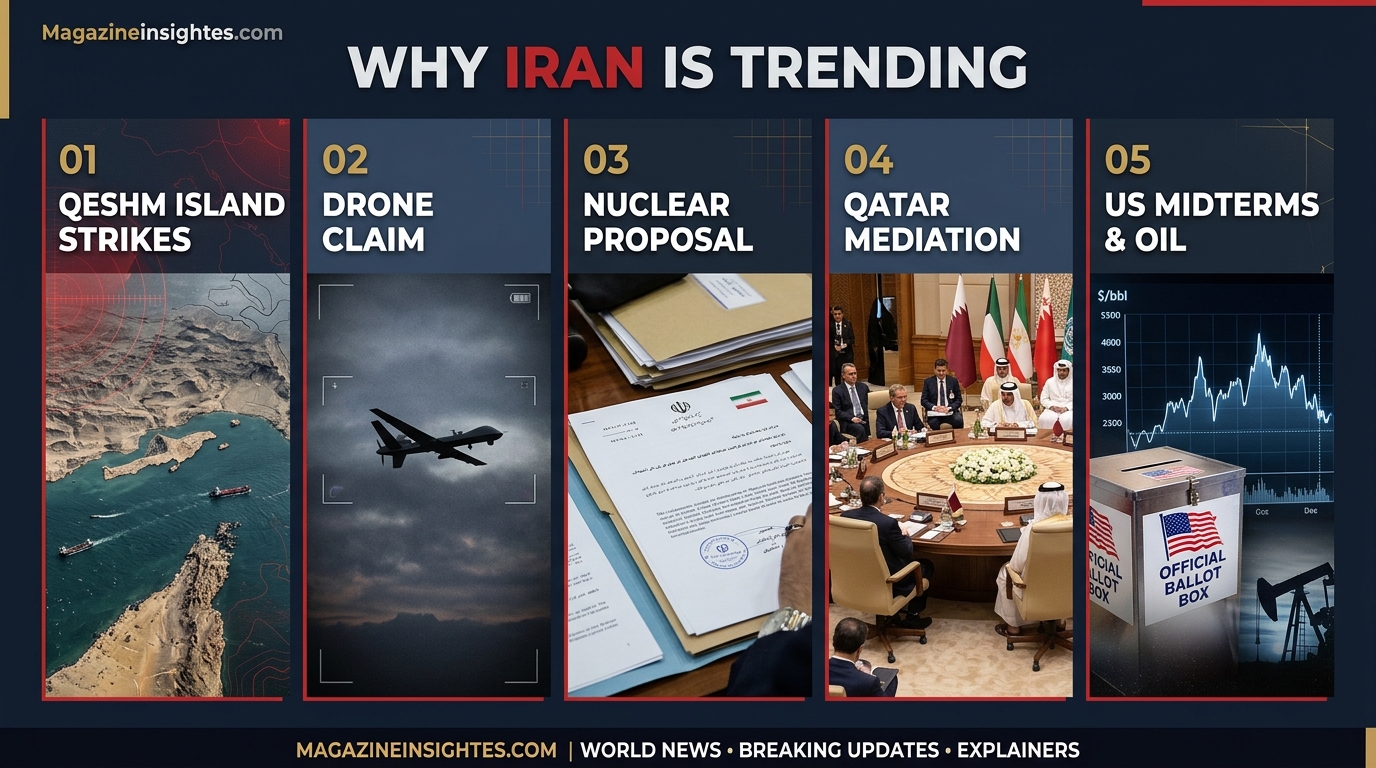
Five things pushed Iran to the top of the trends on November 7, 2026. Each one is a story on its own, and together they explain the spike.
This section takes each driver in turn. It gives the facts, the source, and why it matters.
1. The Qeshm Island Strikes
Two missiles hit Qeshm Island on November 6, 2026. That is the single biggest news driver of the day.
Qeshm Island sits in the Strait of Hormuz, the narrow waterway at the mouth of the Persian Gulf. It is Iranian territory, and it guards the strait.
IRNA, Iran’s official news agency, reported the strikes. Tasnim, a semi-official outlet, reported two missile impacts. Semi-official outlets reported no casualties.
Explosions were also heard on Hengam Island and near Bandar Abbas. The strikes came amid an extended confrontation involving a US naval blockade and restrictions on shipping.
The strikes matter because of the strait. Roughly one-fifth of global petroleum trade flows through the Strait of Hormuz, and any attack on the islands that guard it is a threat to that trade.
Markets react to strait news within minutes. Oil traders watch the strait more closely than any other waterway in the world, and a missile on Qeshm Island moves the price.
The strikes also matter because they happened during a ceasefire. Large-scale fighting is suspended, but the strikes show the ceasefire does not cover the strait.
2. The Nuclear Proposal
Iran sent a nuclear proposal to the United States through Qatar on November 6, 2026. The National reported the proposal in its daily round-up.
The proposal follows regional calls for de-escalation and diplomacy. It is the latest text in a negotiation that has run through Qatar and Pakistan as mediators.
Iran’s Foreign Ministry confirmed on Monday that Tehran was reviewing the latest text from Washington relayed through Pakistan. It urged a more “realistic” approach from Trump.
Tehran says it will speak about “nothing except for the full end to the war at this stage”. That is the ministry spokesman’s line, and it sets a high bar for the talks.
The proposal is the diplomatic driver of the trend. A nuclear proposal from Iran is news on its own, and it arrives on the same day as the strikes.
The proposal also matters because of what it does not do. It does not end the war, it does not reopen the strait, and it does not lift sanctions.
It is a step, not a settlement.
3. The Qatar Mediation
Qatar’s prime minister made the mediation public on November 6, 2026. His Oxford University interview was the most quoted statement of the day.
Sheikh Mohammed bin Abdulrahman bin Jassim Al Thani urged the US and Iran to reach a peace deal and not wait for a “perfect moment”. He warned that the crisis “cannot be left unresolved”.
Qatar is the mediator because both sides trust it. The US talks to Qatar, Iran talks to Qatar, and Qatar carries the messages between them.
Qatar has denied reports that the talks have failed. Its International Media Office warned that such claims benefit “only those seeking to prolong the war”.
The mediation matters because it is the only channel that is working. Direct US-Iran talks are not happening, and Qatar is the bridge.
Qatar’s public push is also a signal. A mediator does not go public unless the talks are at a delicate point, and the prime minister’s warning suggests the window is narrow.
4. The US Midterms
The US midterm elections punished President Trump’s party for the war. The Republicans lost control of Congress, and the result is now part of the Iran story.
GMA News, citing Reuters, reports that US voters punished Trump for waging the war. The electoral rout cost the Republicans control of Congress.
Vice President JD Vance said in a long social media post that the war was to blame for his party’s defeat. He led a stark reassessment of the conflict’s political cost in Washington.
Iran’s Parliament Speaker Mohammad Baqer Qalibaf mocked Vance’s post in a reply on Thursday. He accused Vance of letting Trump double down on the war.
The midterms matter because they change the politics of the war. A president who has lost Congress has less room to escalate, and traders know it.
Oil prices plunged in recent days as traders bet that Trump, chastened by voters, may be less likely to restart the strikes he launched alongside Israel.
Prices bounced back slightly on Thursday but are down more than $20 a barrel from last week.
Iranian leaders want to see the effect of the midterms on the US stance. A Qatari official said they are watching to see if the election “changed American behaviour”.
5. The Oil Price Fall
Oil prices fell sharply in the week of November 2 to 6, 2026. The fall is the market driver of the trend.
Brent crude futures for January were up 26 cents, or 0.3 percent, at $98.55 a barrel as of November 6. That small daily rise hides a large weekly fall.
Prices are down more than $20 a barrel from last week. The fall is the biggest weekly move in the war so far.
The reason is the midterms. Traders bet that a chastened Trump is less likely to restart strikes, and that lowers the risk premium on oil.
Attacks on vessels in the Middle East continue to provide a floor to crude. The price would fall further if the strait were safe, and it would rise sharply if the strait closed.
Oil is why many people who never follow Iran are following it today. A $20 fall in a week hits fuel prices, airline costs, and household budgets around the world.
American households already spend hundreds of dollars a month on entertainment and streaming, and energy costs sit on top of that.
See how much entertainment costs per month for what US households spend, and why an oil move shows up in family budgets.
What the Nuclear Proposal Actually Says
The nuclear proposal is the least understood part of the story. This section explains what is known, what is not known, and what happens next.
The proposal is a text, not a deal. It is Iran’s answer to the latest US text, carried through Qatar.
The Seven Conditions
Iran insists on seven conditions before it will negotiate and reopen the Strait of Hormuz. Only one condition has been publicly reported in detail.
The reported condition is sanctions relief. Iran wants sanctions on its oil sales lifted, and it wants the US naval blockade lifted.
Iran’s Supreme National Security Council chief, Mohsen Rezaei, said the strait would remain closed until Washington addressed Tehran’s demands.
Those demands include lifting the naval blockade, waiving sanctions on Iranian oil sales, and observing a ceasefire that includes Lebanon.
The other six conditions have not been publicly detailed in the sources checked for this page. Reports say there are seven, but they do not list all seven.
That gap matters. A reader who sees “seven conditions” and then reads a list of seven is being misled, because the full list has not been published.
| Condition | Status as of November 7, 2026 |
|---|---|
| Sanctions relief on Iranian oil sales | Reported by multiple outlets |
| Lifting the US naval blockade | Reported by Outlook India, citing Rezaei |
| Ceasefire that includes Lebanon | Reported by Outlook India, citing Rezaei |
| Conditions 4 to 7 | Not publicly detailed in the sources checked |
Iran is not satisfied with “paper commitments”. Ali Bagheri Kani, the deputy head of Iran’s top security body, told Iranian state television that Iran must see practical US steps before any new diplomatic efforts.
That line is the key to the proposal. Tehran wants actions, not promises, and it will not reopen the strait until it sees them.
What the US Wants
The United States wants Iran’s nuclear programme permanently contained. That is the core US demand, and it has not changed.
Trump has said Iran must give up nuclear weapons. He says Iran is “seriously talking” and hopes Tehran will accept a deal giving up nuclear weapons.
The US also wants the Strait of Hormuz reopened. Trump announced on Sunday that the US would “guide” vessels stranded by the war through the waterway.
The head of Iran’s joint military command, Major General Ali Abdollahi, warned US forces they would be attacked if they entered the Strait of Hormuz.
He said his forces will “maintain and manage security of the Strait of Hormuz with all strength”.
The US offers a reward of up to $20 million for information about Iran’s nuclear programme, including its facilities, equipment, and associated personnel.
The offer comes from the State Department’s Rewards for Justice programme, and it includes possible relocation.
The IAEA chief, Rafael Grossi, urges diplomacy over Iran’s nuclear programme. He cites Tehran’s 60 percent uranium enrichment and a lack of transparency with inspectors.
The gap between the two sides is wide. Iran wants sanctions relief and practical steps first. The US wants the nuclear programme contained first. That gap is why the talks have not produced a deal.
What Happens Next
Three things will decide what happens next: the talks, the carrier, and the strait.
First, the talks. Qatar and Oman continue diplomatic efforts with Tehran, and the US and Iran are exchanging proposals through mediators. Neither side has announced a breakthrough on the major issues.
A senior Iranian official said this week that the two sides remain far apart.
The issues are the future status of the strait, the US blockade on Iranian ports, sanctions, and a resumption of negotiations over the nuclear programme.
Second, the carrier. The USS Theodore Roosevelt and its roughly 5,000-strong crew are en route to the Middle East to join two other carrier strike groups.
They are expected to reach the Central Command area by mid-November.
Three carrier strike groups in the region is a large force. It signals that the US is ready to strike if the talks fail, and it is meant to deter Iran from closing the strait.
Third, the strait. Iran says it will stay closed until its demands are met. The US says it will guide vessels through. The next two weeks will show which side blinks first.
Trump met his national security team on November 6 to discuss possible renewed strikes. No final decision or military order has been announced, and the talks are still running.
What It Means for Oil, Flights, and Markets
The Iran war is not only a military story. It is an oil story, a shipping story, a flight story, and a markets story.
This section explains what the war means for ordinary readers, in each area, with the numbers that are known.
Oil
Oil is the biggest economic consequence of the Iran war. The Strait of Hormuz carries roughly one-fifth of global petroleum trade, and the war puts that trade at risk.
Brent crude futures for January were $98.55 a barrel on November 6, 2026, according to Dawn. That is up 26 cents on the day, but down more than $20 a barrel from the week before.
The weekly fall is the market’s verdict on the midterms. Traders bet that a president who has lost Congress is less likely to restart strikes, and that lowers the risk premium.
Attacks on vessels continue to provide a floor to crude. If the strait were safe, the price would fall further. If the strait closed, the price would rise sharply.
An Iranian lawmaker has warned that retaliatory missile strikes would reach Europe and push oil prices to new record highs.
That warning comes from state broadcaster Press TV, and it is a threat, not a forecast.
Oil prices affect fuel, heating, and transport costs around the world. A $20 move in a week shows up at the pump within days, and it shows up in airline ticket prices within weeks.
Shipping and the Strait of Hormuz
The Strait of Hormuz is the most important oil chokepoint in the world. It is a narrow waterway between Iran and Oman, and it carries the oil of the Gulf to the world.
Attacks on tankers in the Gulf are running close to a record pace. At least five vessels have reported incidents since Sunday, November 2, 2026.
In October 2026, 35 vessels were hit, the most of any month of the war, according to the UK Maritime Trade Operations agency, known as UKMTO.
The Joint Maritime Information Centre, known as JMIC, reported four attacks in the strait over 96 hours in its Update 111 Advisory Note dated November 5, 2026.
That is up from three in the preceding reporting period.
The International Maritime Organization’s tracker recorded 129 confirmed maritime incidents in the Middle East and 24 seafarer fatalities as of Thursday, November 6.
Iran says two oil tankers and a tugboat caught fire after attempting to use “unauthorised” routes. The IRGC says two tankers struck naval mines and another caught fire on Thursday.
The US Maritime Administration has warned that risks to commercial shipping remain high. It cites possible missile, drone, and unmanned surface vessel attacks, as well as boarding and diversion attempts.
Maritime traffic through the strait remains significantly below pre-conflict levels. Ships are avoiding the waterway, taking longer routes, or waiting for escorts.
Flights
Flights in the Gulf are disrupted by the war. Airlines are cancelling and rerouting services, and passengers face delays.
Gulf News reports that UAE-Saudi flights face cancellations as of November 6, 2026. The cancellations follow the security situation and the airspace risks around the strait.
The US has warned its citizens in the Middle East of Houthi attacks and Iranian threats. The warning covers Americans living and travelling in the region.
Iraq has activated nuclear emergency plans and radiation monitoring systems along its border with Iran. The plans are a precaution ahead of possible US strikes on Iranian nuclear facilities, including Pickaxe Mountain.
Travellers should check with their airline before flying to or through the Gulf. Routes change daily, and a flight that was running yesterday may be cancelled today.
This section is general information, not travel advice. Check your government’s travel guidance and your airline’s status page before booking or flying.
Markets
Asian stock markets plunged on November 6, 2026, over concerns that political changes in the US could threaten the AI investment boom. The National reported the fall in its daily round-up.
The markets worry about two things at once. One is the war, which raises oil prices and disrupts shipping. The other is the midterms, which change the politics of US spending and regulation.
Oil and stocks are moving in opposite directions this week. Oil fell on hopes of de-escalation, while stocks fell on fears of political change. Both moves are about the same election.
The Abu Dhabi-OpenAI deal bears fruit in the same round-up, which shows the region is still doing business.
The Gulf states are investing in AI while the war runs, and the two stories sit side by side.
Markets will keep reacting to the war daily. A strike, a proposal, or a carrier movement can move oil and stocks within minutes, and the next two weeks are the most sensitive period.
| Claim | Status | Source |
|---|---|---|
| Two missiles hit Qeshm Island | Confirmed by Iranian state media | IRNA, Tasnim |
| No casualties on Qeshm Island | Reported by semi-official outlets | Tasnim |
| Iran shot down a US MQ-9 drone | Claimed by Iran, not independently confirmed | IRIB, IRGC |
| Iran shot down a US MQ-1 drone | Claimed by Iran, reported by Reuters | IRGC via Reuters |
| IRGC grounded a fifth and sixth MQM-170 drone | Claimed by Iran, not independently confirmed | Press TV |
| More than 228 US base locations damaged or destroyed | Claimed by Iran, not independently confirmed | Fars |
| US situation around Qeshm Island “relatively calm” | US official statement | CENTCOM |
| Iran sent a nuclear proposal via Qatar | Reported by The National | The National |
| Iran insists on seven conditions | Reported by multiple outlets | Israel National News, Outlook India |
| Trump says US is talking to Tehran | US official statement | Trump, reported by Al Jazeera |
| Republicans lost control of Congress | Reported by GMA News and Reuters | GMA News, Reuters |
| Brent crude $98.55, down $20+ in a week | Market data | Reuters via Dawn |
| 35 vessels hit in October | Maritime data | UKMTO |
How to Tell Real Iran News from Rumours
Iran is trending, and that means rumours are trending too. This section gives a short checklist for checking any Iran story before sharing it.
The checklist takes one minute. It catches most of the bad information that circulates during a war.
Check the Source
Ask who is reporting the story, and whether that outlet has a record of accuracy.
Al Jazeera, Reuters, the Associated Press, the BBC, Dawn, and Gulf News are established outlets with correspondents and editors. They correct mistakes, and they attribute claims.
IRNA, Tasnim, Fars, and Press TV are Iranian state or semi-official outlets. They report Iranian government claims, and they should be read as the government’s view, not as independent verification.
Clickbait sites with sensational headlines and no author, no date, and no sources should not be shared. One page ranking for this query claims four countries joined forces to attack US bases, without independent verification.
Do not use it as a source.
Niche intelligence blogs can be useful signals, but they are not sources. Their claims about transit lists, mine warfare, and executions are unverified, and they should be labelled as such.
Check the Date
Ask when the story was published, and whether it is about today.
Some pages ranking for Iran protest queries are archives from 2013 and 2015. They describe protests from a decade ago, and they are not about the current war.
A story with no date, or a date from months ago, is not today’s news. In a war, a story that is a week old can be wrong, because the facts change daily.
Check the last-updated time on live blogs. Al Jazeera’s live blog is updated continuously, and the timestamp at the top tells you how fresh it is.
This page is dated November 7, 2026. If you are reading it later, check the live sources linked at the end before sharing any fact from it.
Check the Attribution
Ask who said it, and whether anyone else confirmed it.
A claim attributed to “Iranian media” is a claim from Iran. A claim attributed to “US officials” is a claim from the US. A claim with no attribution is a rumour.
The drone shootdown is a good example. Iran claims it shot down a US MQ-9 drone. The US has not confirmed it. No independent source has confirmed it.
The honest label is “Iran claims”, not “Iran shot down”.
The base damage figures are the same. Iran’s army claims more than 228 US base locations were severely damaged or destroyed. That figure comes from Fars, an IRGC-affiliated outlet, and it is not independently confirmed.
Casualty figures need the same care. Trump says Iran killed 42,000 protesters in two months, and 32,000 in another statement. The figures conflict, and neither is independently confirmed. Do not present either as fact.
Red Flags
Five red flags mark a story as unreliable. If a story has two or more, do not share it.
First, a sensational headline with emoji and capital letters. Real news outlets do not write headlines like that.
Second, no author, no date, and no sources. A story that does not say who wrote it or where the information came from is not journalism.
Third, a claim that only one obscure site reports. If Al Jazeera, Reuters, and the BBC are not reporting it, it is probably not confirmed.
Fourth, a video or photo with no context. Old footage from other wars circulates as new footage during every conflict, and the only way to check it is to search for the original.
Fifth, a story that confirms what you already believe. The most shared misinformation is the kind that feels true, and the only defence is to check the source, the date, and the attribution before sharing.
FAQs About Iran News Today
Why is ‘Iran news today’ trending?
Iran is trending because two missiles hit Qeshm Island in the Strait of Hormuz, Iran sent a nuclear proposal to the US through Qatar, and the US midterm results changed the politics of the war.
The war began on February 28, 2026, and a ceasefire has held for about a month.
What is happening in Iran right now?
As of November 7, 2026, the US-Israel war on Iran is in a ceasefire phase, but strikes, tanker attacks, and talks continue.
Two missiles hit Qeshm Island on November 6, Iran claims it shot down a US drone, and Qatar is mediating a nuclear proposal.
Is there a war in Iran?
Yes. The US-Israel war on Iran began on February 28, 2026.
A ceasefire has suspended large-scale fighting for about a month, but the war has not ended, and strikes and tanker attacks continue around the Strait of Hormuz.
When did the US-Israel war on Iran start?
The war began on February 28, 2026. The February 28 strike killed Supreme Leader Ayatollah Ali Khamenei, and the war has run for more than eight months since then.
Who is Iran’s supreme leader now?
Mojtaba Khamenei is Iran’s supreme leader. He succeeded his father, Ali Khamenei, in March 2026, after the February 28 strike killed him. He governs through written statements and decrees, without appearing in public.
What happened to Ali Khamenei?
Ali Khamenei was killed in the February 28, 2026 strike that opened the US-Israel war on Iran. His son Mojtaba Khamenei succeeded him as supreme leader in March 2026.
What happened on Qeshm Island?
Two missiles hit Qeshm Island in the Strait of Hormuz on November 6, 2026, according to Iran’s official news agency IRNA and the semi-official Tasnim agency. Semi-official outlets reported no casualties.
Qeshm Island guards the Strait of Hormuz.
Did Iran shoot down a US drone?
Iran claims its air defence shot down a US MQ-9 drone over Qeshm Island on November 6, 2026.
The claim comes from an army statement reported by state broadcaster IRIB, and it is not independently confirmed. The US has not confirmed a drone loss.
What is the Strait of Hormuz?
The Strait of Hormuz is a narrow waterway between Iran and Oman at the mouth of the Persian Gulf.
Roughly one-fifth of global petroleum trade flows through it, which makes it the most important oil chokepoint in the world.
Is the Strait of Hormuz closed?
Iran says the strait will stay closed until the US meets its demands, including lifting the naval blockade and waiving sanctions on Iranian oil sales.
Maritime traffic through the strait remains significantly below pre-conflict levels, and the US says it will guide vessels through.
What is Iran’s nuclear proposal?
Iran sent a nuclear proposal to the United States through Qatar on November 6, 2026.
It is Iran’s answer to the latest US text, and it insists on seven conditions, including sanctions relief, before Tehran will negotiate or reopen the Strait of Hormuz.
What are Iran’s seven conditions?
Only three have been publicly reported: sanctions relief on Iranian oil sales, lifting the US naval blockade, and a ceasefire that includes Lebanon.
The other four conditions have not been publicly detailed in the sources checked for this page as of November 7, 2026.
Is there a peace deal between the US and Iran?
No. Qatar is mediating talks, and both sides are exchanging proposals, but neither side has announced a breakthrough.
A senior Iranian official said this week that the two sides remain far apart on the major issues.
What is Qatar’s role in the Iran talks?
Qatar is the mediator. Iran sent its nuclear proposal to the US through Qatar, and Qatar carries messages between the two sides.
Qatar’s prime minister urged both sides on November 6, 2026, to accept a good deal rather than wait for a “perfect moment”.
What did Trump say about Iran today?
Trump said the US is talking to Tehran’s representatives and has made “a lot of progress”.
He also warned the US may have to destroy more of Iran if the nuclear programme cannot be permanently contained,
and he said Israel would no longer exist if he had allowed Iran to acquire a nuclear weapon.
Will the US attack Iran again?
Trump met his national security team on November 6, 2026, to discuss possible renewed strikes, but no final decision or military order has been announced.
He told the Financial Times he has no immediate plans for new strikes, while the USS Theodore Roosevelt carrier strike group is en route to the region.
What is Pickaxe Mountain?
Pickaxe Mountain is an Iranian nuclear site that the US may strike.
Iran is distributing iodine tablets to communities near its nuclear facilities in preparation for possible US strikes on the site, according to The Times of London, citing an Iranian Health Ministry official.
Why is Iran distributing iodine tablets?
Iran is distributing iodine tablets to communities near its nuclear facilities as it prepares for the possibility of US strikes.
Iodine tablets protect the thyroid gland from radiation, and Iran distributes them within 2 to 3 kilometres of nuclear facilities during every war.
Why are oil prices falling?
Oil prices fell more than $20 a barrel in the week of November 2 to 6, 2026, because traders bet the US midterm results make Trump less likely to restart strikes.
Brent crude was $98.55 a barrel on November 6, down sharply from the week before.
How does the Iran war affect oil prices?
The war affects oil prices through the Strait of Hormuz, which carries roughly one-fifth of global petroleum trade.
Attacks on tankers and threats to close the strait raise prices, while hopes of a deal lower them. Brent crude fell more than $20 a barrel in one week on hopes of de-escalation.
How does the Iran war affect flights?
Flights in the Gulf are disrupted by the war. Gulf News reports UAE-Saudi flights face cancellations as of November 6, 2026, and airlines are rerouting services around the conflict zone.
Check with your airline before flying to or through the Gulf.
Is it safe to travel to the Gulf?
The US has warned its citizens in the Middle East of Houthi attacks and Iranian threats. Flights face cancellations, and the security situation changes daily.
Check your government’s travel guidance and your airline’s status page before travelling.
What is the IRGC?
The IRGC is the Islamic Revolutionary Guard Corps, Iran’s powerful military and security force.
It runs Iran’s missile and drone programmes, controls the Strait of Hormuz operations, and has been designated a terrorist organization by the European Union.
What is the Iran internet shutdown?
A near-total internet shutdown affecting more than 90 million Iranians is in its 10th week as of November 7, 2026. It has lasted more than 1,550 hours, and the government imposed it for “security considerations”.
The shutdown makes independent verification of news from inside Iran very hard.
What did the US midterms change for Iran?
The US midterm elections cost Trump’s Republicans control of Congress, and Vice President JD Vance said the war was to blame for the defeat.
Traders bet the result makes Trump less likely to restart strikes, which pushed oil prices down more than $20 a barrel in a week.
Conclusion
Why is ‘Iran news today’ trending?
Because five things arrived on the same day: strikes on Qeshm Island, a drone claim, a nuclear proposal, a mediation push from Qatar, and a midterm result that changed the politics of the war.
The war began on February 28, 2026. A ceasefire has held for about a month, but the fighting around the Strait of Hormuz has not stopped, and the talks have not produced a deal.
The next two weeks will decide what happens. The USS Theodore Roosevelt arrives in mid-November. The talks continue through Qatar. The strait stays closed until Iran’s demands are met.
Check the date on anything you read about Iran. This page was checked on November 7, 2026, and the facts can change within hours.
Check the source, check the attribution, and do not share a claim that only one obscure site reports.
In a live war, the difference between a confirmed fact and a claim is the difference between news and rumour.