How Indian Films Shape Fashion and Trends: Bollywood to Global Runways
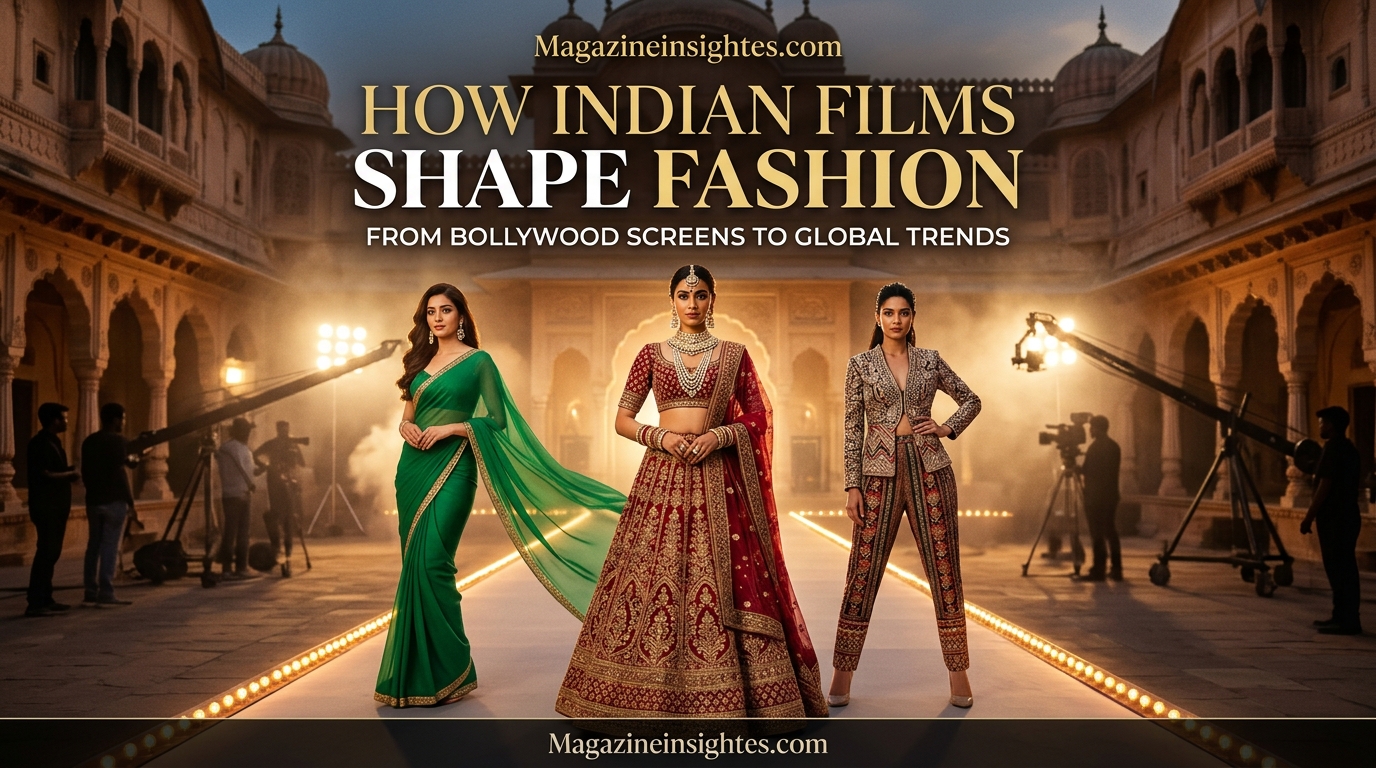
How Indian films shape fashion and trends is a question with a clear answer, because Indian cinema sets the styles that India wears, from wedding lehengas to streetwear.
A costume designer dresses a star, the audience copies the look, and the trend reaches the street, the runway, and the global luxury houses, in a pipeline that has run for almost a century.
Indian films have shaped fashion since 1939, when a hairstyle from the film Mukti became the method of dressing for modern girls across Calcutta.
Readers will find the screen-to-street pipeline first, then the era-by-era history, the iconic looks, the designers, the bridal and menswear sections, the 2026 trends, and the global luxury angle.
The Short Answer: Indian Films Set the Trends India Wears
Indian films shape fashion through the screen-to-street pipeline, where a costume designer creates a look for a star, the audience sees it on screen, and the trend spreads to tailors, shops, and runways.
Bollywood stars, not models, are the supermodels of India, because they pose in fashion advertisements, serve as social media fashion icons, and are the face of the Indian fashion industry.
Designers rely on Bollywood films and stars for attention, media coverage, and business, and stars need designers to look fashionable at events, so the two sides feed each other.
Designer Manav Gangwani says Bollywood certainly acts as a catalyst for the Indian fashion industry in terms of retail.
Designers prefer to dress a celebrity for a film rather than showcase a design on the ramp.
Gangwani explains that Bollywood has millions of followers, so the brand recognition through a film goes a long way, far beyond what a runway show can deliver.
The Screen-to-Street Pipeline in Five Steps
Step 1: The costume designer creates the look, choosing the fabric, the silhouette, the colour palette, and the jewellery for a character, months before the film releases.
Step 2: The star wears it on screen, and the look becomes desirable, because the audience sees a beloved actor in an outfit that fits the character and the story.
Step 3: The audience copies it, by taking film stills to a local tailor, by buying a replica online, or by asking a shop for the same saree or lehenga.
Step 4: The trend reaches the mass market, as shops, e-commerce sellers, and bridal boutiques stock the look, and the style becomes mainstream.
Step 5: The trend reaches the runway and the luxury houses, as designers build collections around it, and global brands borrow the craft, the textile, or the silhouette.
| Step | What happens | Who acts | Example |
|---|---|---|---|
| 1. Design | Costume designer creates the look | Manish Malhotra, Bhanu Athaiya | Kajol green lehenga in DDLJ, 1995 |
| 2. Screen | Star wears it in the film | Kajol, Madhuri Dixit, Madhubala | Madhuri purple saree, 1994 |
| 3. Copy | Audience replicates it | Local tailors, e-commerce sellers | Film stills taken to tailors |
| 4. Mass market | Shops and bridal boutiques stock it | Retailers, Meesho, Myntra | Trailer look sells out in 48 hours |
| 5. Runway and luxury | Designers and global brands adopt it | Sabyasachi, Dior, Prada | Dior Pre-Fall 2023 in Mumbai |
The pipeline has sped up sharply, because in the 1990s a trend took about a year to reach a tailor in Ahmedabad or a market stall in Lucknow.
Today a look from a film trailer can sell out on Meesho within 48 hours, according to amordesign.org, which is competitor-reported rather than verified.
The amordesign.org guide to how Indian films shape fashion trends explains the mechanism in full, with the era table and the costume designer role.
What Is Screen-to-Street Fashion?
Screen-to-street fashion is the movement of a look from a film screen to everyday clothing, through tailors, shops, and e-commerce, rather than through a runway show.
Costume stylist Aastha Sharma says films were the only visual inspiration for most Indians before the internet, and whatever stars wore became trendy and was replicated even by the smallest of stores in the country.
Sharma explains that viewers took film stills to local tailors, because there was nowhere else to buy the looks they saw their favourite actors wearing.
A Century of Bollywood Fashion: Era by Era
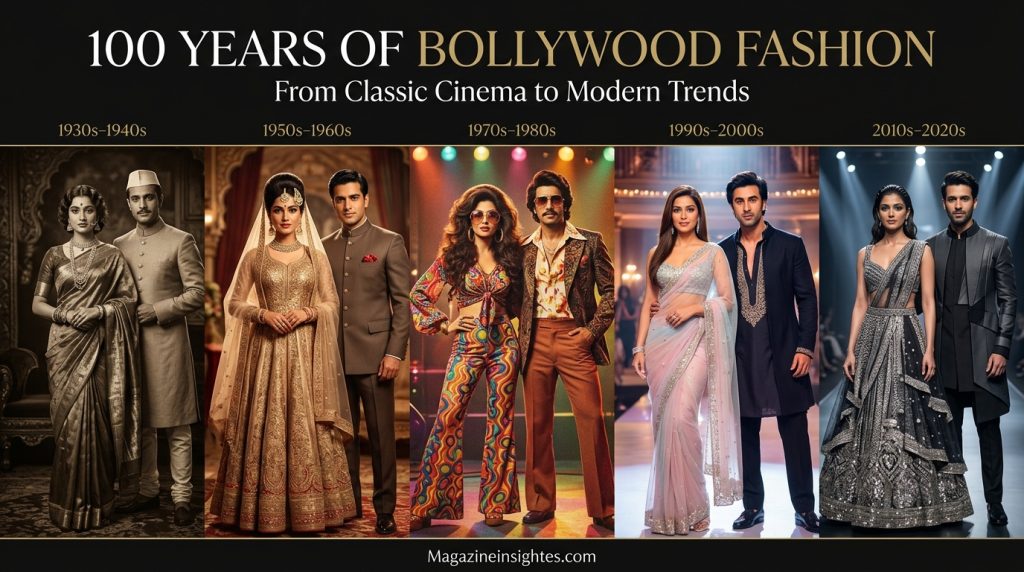
Indian film fashion has changed with every decade, and each era left a look that still shapes what India wears today.
The earliest evidence dates to 1939, when Barnouw and Krishnaswamy noted in their book Indian Film that Kanan Devi’s hairdressing in Mukti had become the method of dressing for modern girls.
The same book records that P.C. Barua’s cap in Mukti won Calcutta-wide recognition as the most up to date headwear, and that Lila Desai’s dancing sari in Didi was in vogue as the Lila sari.
The Istituto Marangoni guide to 100 years of Bollywood fashion traces the costume history decade by decade, from mythological stories in the 1920s to the balanced Western and local styles of the 2020s.
| Era | Defining Bollywood style | Impact on Indian fashion |
|---|---|---|
| 1930s to 1940s | Traditional attire, dhotis, ghagra cholis, draped saris | Film looks become personal style, first documented in 1939 |
| 1950s to 1960s | Cotton saris, Anarkali, Sadhana cut, Bobby print | Homegrown textile culture, sari as everyday fashion |
| 1970s to 1980s | Bell-bottoms, polyester, disco, hippie looks | Western casual enters mainstream Indian wardrobes |
| 1990s | Chiffon saris, crop tops, metallics, sequins | Ethnic-Western fusion becomes the new normal |
| 2000s | Prep, designer lehengas, metrosexual menswear | Designer labels reach small-town aspirations |
| 2010s | Indo-Western fusion, athleisure, OTT bridal wear | E-commerce makes Bollywood looks accessible to all |
| 2020s | Sustainability, gender-fluid dressing, regional cinema | Conscious fashion and hyperlocal identity become mainstream |
1930s to 1940s: Traditional Attire and the First Film Looks
The 1930s and 1940s were the era of traditional Indian attire on screen, with men in classic dhotis and women in ghagra cholis or draped saris.
Men also wore Western attire in this era, with suits, wide-legged trousers, and shirts appearing alongside the traditional dress.
Indian folklore fused with film in the 1940s, and songs and dances became the language through which Bollywood told its stories.
1950s to 1960s: Independence, Identity, and the Anarkali
The 1950s celebrated Indian identity after independence, with women wearing rich traditional attire in brighter shades and men adopting suits, ties, and sleek hairstyles.
The 1960s explored classical and existential questions of Indian identity, with Islamic and Hindu influences converging in the fashion of the time.
Madhubala’s Anarkali in Mughal-e-Azam (1960) became the first fashion trend from cinema that rocked the nation, and the style still defines ethnic fashion today.
The Sadhana cut, a fringed hairstyle, and the Bobby print, a polka dot print named after the 1973 film Bobby starring Dimple Kapadia, were two more looks from this era that became household styles.
1970s to 1980s: Bell-Bottoms, Disco, and the Hippie Look
The 1970s brought bell-bottoms, polyester, and disco influence to Indian screens, with Amitabh Bachchan silhouettes defining the decade for men.
Zeenat Aman’s hippie look in Hare Rama Hare Krishna (1971), in the song Dum Maro Dum, became a defining style of the decade.
The 1980s shifted toward disco-inspired fashion, with women wearing colourful leggings and fishnet stockings, and global brands beginning to explore India’s cultural richness.
Even the bad fashion of the 1980s and 1990s showed the power of film, because tailoring shops in urban India pinned posters of Madhuri Dixit in kitsch outfits on their boards for inspiration.
1990s: Chiffon Saris, Excess, and the Designer Arrives
The 1990s were the age of extravagant fashion, with big accessories, metallic colours, and sequins becoming common in everyday wardrobes.
Sridevi’s chiffon saree in Chandni (1989) and Madhuri’s purple saree in Hum Aapke Hain Koun (1994) became the two most copied looks of the decade.
American silhouettes rose on the big screen in the 1990s, marking a shift toward Western consumption patterns while still honouring traditional roots.
Manish Malhotra made his costume design debut in 1990, and his work on Rangeela in 1995 won the first Filmfare Award for Best Costume Designing.
Costume stylist Aastha Sharma says fashion and Bollywood have had the perfect relationship since the 1960s, and that since then movie stars have been style icons.
2000s: Prep, Designer Lehengas, and Metrosexual Menswear
The 2000s brought Kuch Kuch Hota Hai prep, designer lehengas, and metrosexual men’s fashion to Indian screens and streets.
Dil Chahta Hai (2001) defined a new casual cool for men, with Aamir Khan in business blazers and Akshaye Khanna in relaxed casual wear, styled by Arjun Bhasin.
Designer labels reached small-town aspirations in the 2000s, because films carried designer looks to audiences far beyond the metros.
2010s: Indo-Western Fusion, Athleisure, and OTT Bridal
The 2010s made Indo-Western fusion the new normal, with athleisure and OTT bridal wear joining the mainstream.
E-commerce made Bollywood looks accessible to all in the 2010s, because online sellers could copy a film look and ship it anywhere in India.
Deepika Padukone’s night-out club outfits in Cocktail (2012) brought back major love for mini dresses, while Kareena Kapoor’s Patiala salwar in Jab We Met (2007) had already started an Indo-Western revolution.
2020s: Sustainability, Gender-Fluid Dressing, and Regional Cinema
The 2020s show a balanced combination of Western and local influences, with progressive and nostalgic storylines running side by side.
Sustainable fashion, gender-fluid dressing, and regional cinema influence define the current decade, with conscious fashion and hyperlocal identity becoming the new mainstream.
Social media has collapsed the time between screen and street, and the rise of global Indian personalities means history has trickled down to the present day.
Stars such as Priyanka Chopra, Aishwarya Rai, and Alia Bhatt draw from what they saw on Bollywood screens growing up, expressing their style in ways that honour tradition and embrace modernity.
The Most Iconic Bollywood Looks That Created Fashion Trends
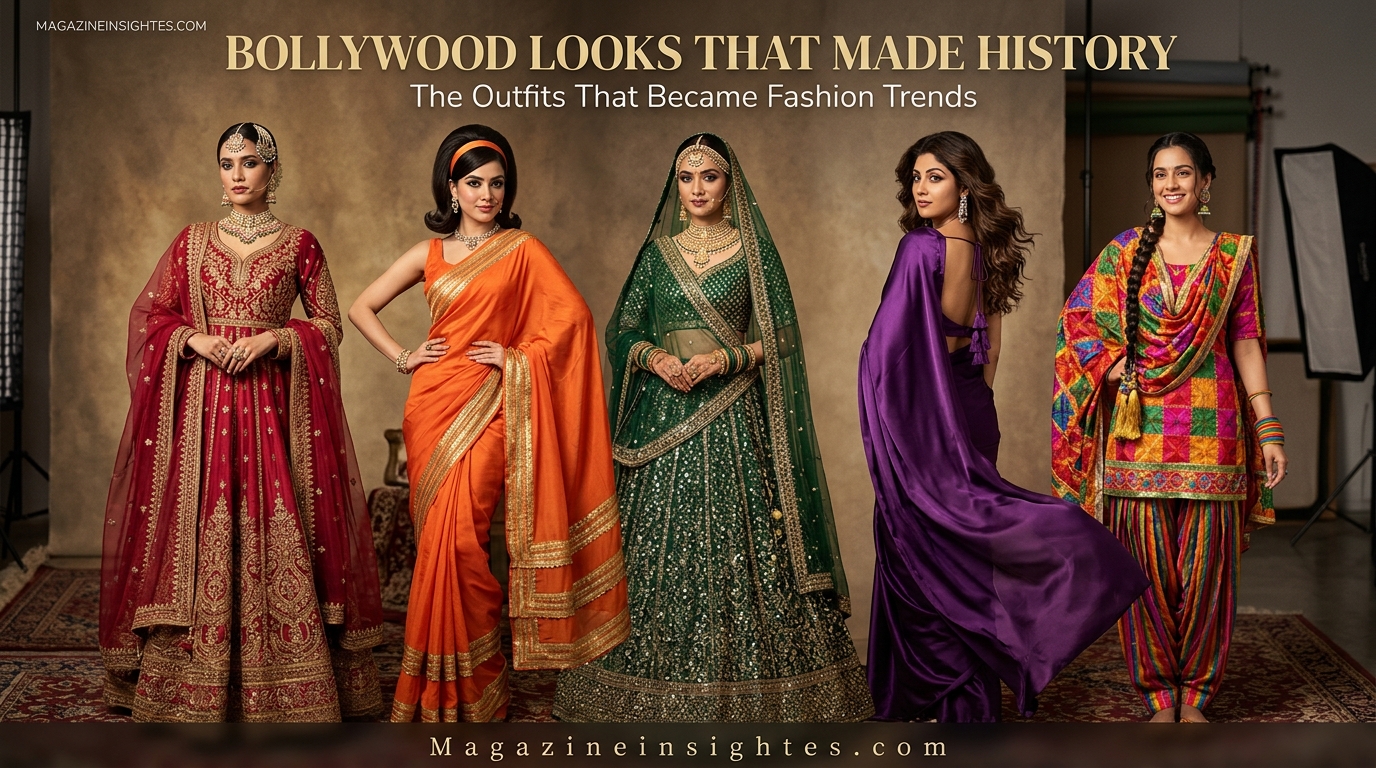
A small number of film outfits created fashion trends that lasted for decades, and the table below lists the most important ones.
Each look started with a film, a star, and a designer, and each one became a style that shops, tailors, and bridal boutiques copied across India.
The Filmfare guide to Bollywood influence on major fashion trends covers the same looks, from the Anarkali to the streetwear ripples of the 1980s and 1990s.
| Look | Film and year | Star | Designer | Trend it started |
|---|---|---|---|---|
| Anarkali suit | Mughal-e-Azam, 1960 | Madhubala | Bhanu Athaiya era | Anarkali suits for weddings and festivals |
| Orange saree | Brahmachari, 1968 | Mumtaz | Bhanu Athaiya | Mumtaz saree, tight-draped style |
| Hippie look | Hare Rama Hare Krishna, 1971 | Zeenat Aman | Not credited | Bohemian dressing in India |
| Bobby print | Bobby, 1973 | Dimple Kapadia | Not credited | Polka dot prints for young women |
| Blue saree | Mr India, 1987 | Sridevi | Not credited | Chiffon saree revival |
| Chiffon saree | Chandni, 1989 | Sridevi | Bhanu Athaiya era | White and pastel chiffon sarees |
| Purple saree | Hum Aapke Hain Koun, 1994 | Madhuri Dixit | Not credited | Wedding sarees with backless blouses |
| Green lehenga | Dilwale Dulhania Le Jayenge, 1995 | Kajol | Manish Malhotra | Designer bridal lehengas |
| Mirror-work ghagras | Hum Dil De Chuke Sanam, 1999 | Aishwarya Rai | Neeta Lulla | Mirror work for bridal wear |
| Short kurti suits | Bunty Aur Babli, 2005 | Rani Mukherjee | Not credited | Short kurtis for young women |
| Patiala salwar | Jab We Met, 2007 | Kareena Kapoor | Not credited | Indo-Western revolution |
| Mini dresses | Cocktail, 2012 | Deepika Padukone | Not credited | Mini dresses for night outs |
| Pastel lehenga | Wedding, 2017 | Anushka Sharma | Sabyasachi | Pastel bridal lehengas |
| Rani sarees | Rocky Aur Rani Kii Prem Kahaani, 2023 | Alia Bhatt | Manish Malhotra | Bold sarees for weddings |
Madhubala Anarkali in Mughal-e-Azam (1960)
Madhubala’s Anarkali in Mughal-e-Azam is the most iconic Bollywood costume ever worn by an actress, and it made history as the first fashion trend from cinema that rocked the nation.
The Anarkali suit represents opulence and history, because the name refers to the famous dancer at Mughal Emperor Akbar’s court who won Prince Salim’s heart.
The name Anarkali literally means blossoming pomegranate, and the flared silhouette with intricate details has remained a favourite among women of all ages.
The timeless song Pyar Kiya To Darna Kya showed the Anarkali at its most resplendent, and the look gave serious fashion goals to Madhuri Dixit and Mallika Sherawat decades later.
Mumtaz Orange Saree in Brahmachari (1968)
Mumtaz was not the leading lady in Brahmachari, yet she stole the show in her bright orange saree, draped in an unconventional manner with tight pleats and a sleeveless blouse.
The orange saree in the song Aaj Kal Tere Mere Pyaar Ke Charche became an instant hit, and the style is still known by all as the Mumtaz saree.
The sleek, tightly wound drape became a popular look across the country, inspiring women to embrace a chic, modernised version of the traditional saree for weddings and festivals.
Bhanu Athaiya designed the look, and the same designer created the concept sari, or pre-draped saree, in the same film.
Madhuri Purple Saree in Hum Aapke Hain Koun (1994)
Madhuri Dixit’s purple satin saree with a backless blouse in the song Didi Tera Devar Deewana is one of the most iconic Bollywood sarees of all time.
The heavily embroidered, crystal-encrusted purple saree was in high demand in the market at the time, and the backless blouse added to the oomph factor.
The look set the trend for wedding fashion in the 1990s, and the design was given a thumbs up by women across India.
Some sources call the saree lilac rather than purple, but the look is the same, and the purple name is the one most sources use.
Kajol Green Lehenga in Dilwale Dulhania Le Jayenge (1995)
Kajol’s shiny green lehenga in Dilwale Dulhania Le Jayenge, designed by Manish Malhotra, rocked the nation and the overseas market.
Manish Malhotra draped Kajol in a now-iconic blue chiffon saree in the same film, and the silhouette became one that bridal boutiques across India replicated for the next decade.
Dilwale Dulhania Le Jayenge is Bollywood’s longest-running romance, and its bridal looks still shape what brides ask for at fittings today.
Kareena Patiala Salwar in Jab We Met (2007)
Kareena Kapoor’s salwar kameez pants and T-shirt look in Jab We Met started an Indo-Western revolution, according to Filmfare.
The Patiala salwar with a T-shirt made ethnic wear casual and young, and it became the look that college students and young women copied across India.
The look proved that a film could make a traditional garment modern, without losing the comfort and identity of the original.
Deepika Mini Dresses in Cocktail (2012)
Deepika Padukone’s night-out club outfits in Cocktail brought back major love for mini dresses, and the look defined 2010s party fashion in India.
The mini dresses showed how a film could set a Western trend in India, because the audience saw a star wearing them with confidence and wanted the same look.
Alia Bhatt Rani Sarees in Rocky Aur Rani Kii Prem Kahaani (2023)
Alia Bhatt’s bold Rani sarees in Rocky Aur Rani Kii Prem Kahaani are the most recent iconic Bollywood fashion moments, and they shaped how women dress and dance at weddings.
The Rani sarees, designed by Manish Malhotra, mixed bold colours with traditional draping, and they became the wedding look of 2023 and 2024.
The Designers Behind the Looks
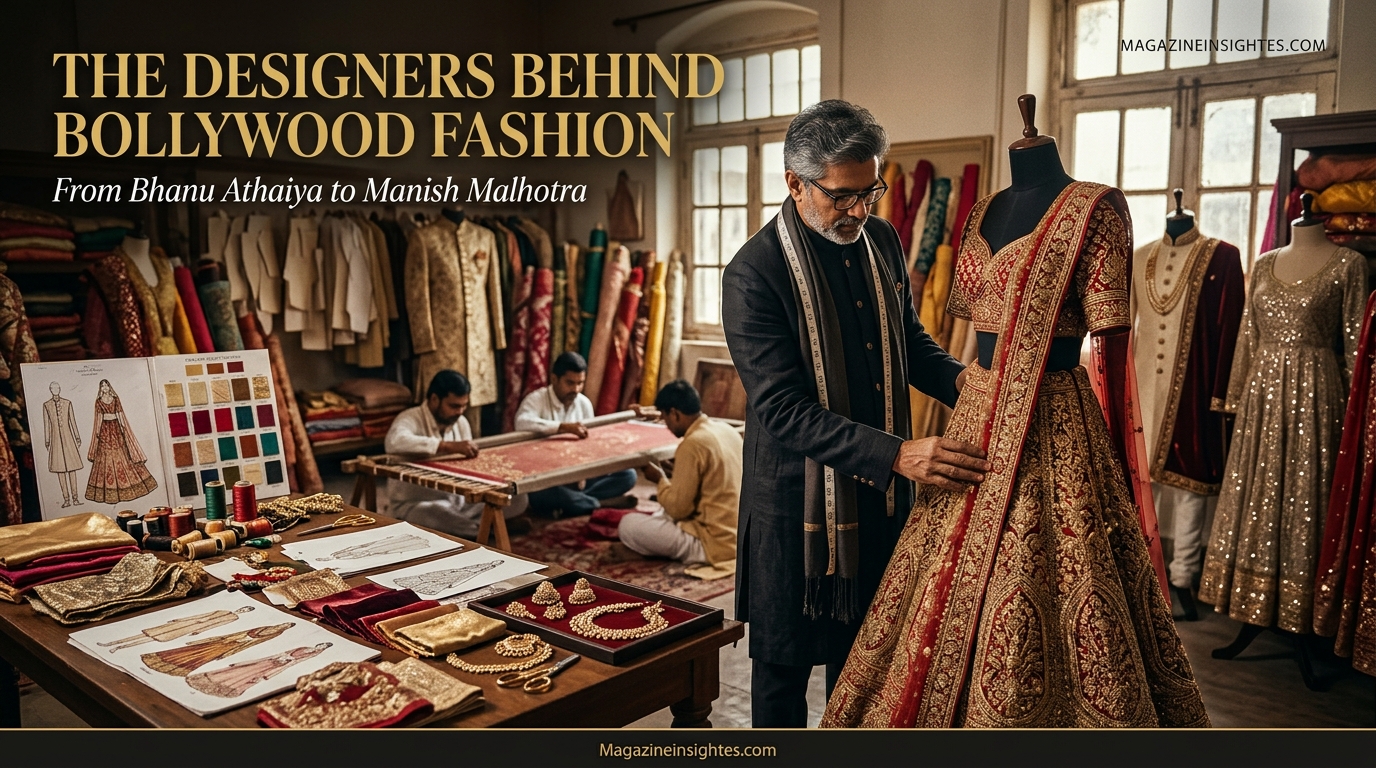
Costume designers are the real trendsetters of Indian fashion, because they make hundreds of decisions before a single audience member sees a film.
They choose the fabrics, the silhouettes, the colour palette, and the jewellery, and those choices shape public fashion for months after the film releases.
Designers such as Manish Malhotra, Niharika Khan, and Anaita Shroff Adajania have shaped entire fashion movements through their film work, according to amordesign.org.
| Designer | Debut | Iconic films | Signature style |
|---|---|---|---|
| Bhanu Athaiya | 1956 | Waqt, Brahmachari, Satyam Shivam Sundaram, Gandhi | Period costumes, concept sari, Oscar winner |
| Manish Malhotra | 1990 | Rangeela, DDLJ, Rocky Aur Rani | Chiffon sarees, bridal lehengas, star designer |
| Neeta Lulla | 1980s | Hum Dil De Chuke Sanam, Devdas | Period and bridal costumes |
| Sabyasachi Mukherjee | 1999 | Black, Raavan, Anushka wedding | Heritage bridal, vintage luxury |
| Anaita Shroff Adajania | 1990s | Dhoom, Cocktail, Yeh Jawaani Hai Deewani | Contemporary styling, fashion editor |
| Niharika Khan | 2000s | Band Baaja Baaraat, The Dirty Picture | Character-driven costumes |
| Rocky S | 1990s | Over 200 films | Fast, prolific film costuming |
Bhanu Athaiya: The First Costume Designer and the Oscar
Bhanu Athaiya became the first costume designer to enter Bollywood in 1956, and her influence on Indian fashion has sadly been lost in the creases of time.
Athaiya won an Oscar for her work on Richard Attenborough’s Gandhi in 1982, which was India’s first Academy Award, albeit for an Indian-British production.
She designed the lycra legging churidar in Waqt (1965), the concept sari in Brahmachari (1968), and Zeenat Aman’s seductive wet white sari in Satyam Shivam Sundaram (1978).
Few in the fashion industry remember that Athaiya was responsible for many of Helen’s striking costumes, or that her creative mind shaped Zeenat Aman’s most famous looks.
For a long time, Athaiya’s work in films defined India’s fashion sense, and she remains the only Indian costume designer to have won an Oscar.
Manish Malhotra: The Star Designer Who Changed Fashion
Manish Malhotra made his debut as a costume designer in 1990, and he has over 100 films to his credit listed on IMDb.
In 1995, he won the first Filmfare Award for Best Costume Designing for Rangeela, a film that changed the way the audience perceived fashion in movies.
Malhotra believes cinema is a reflection of reality, and he says the influence of cinematic dressing is very strong when scripts have a story to tell.
He adds that the impact grows when the clothes are aligned with the characters, so they can be effectively narrated through their style and performances.
Malhotra held his first runway presentation in 1999, nine years after his film debut, and he has not looked back since then.
His success came in fame and in massive business, because he generated huge sales by making replicas of his film costumes for private customers.
Malhotra made costume designing a respectable and lucrative craft.
He showed that films can serve as a virtual store to showcase creations and set off immediate country-wide fashion trends that do not happen through ramps.
Sabyasachi, Neeta Lulla, Anaita Shroff Adajania, and Niharika Khan
Sabyasachi Mukherjee has been a household name for 25 years, appearing at Milan Fashion Week in 2004 and New York Fashion Week in 2006, and collaborating with Christian Louboutin and H and M.
Neeta Lulla designed the mirror-work ghagras for Aishwarya Rai in Hum Dil De Chuke Sanam (1999), and her period costumes define Bollywood’s historical films.
Anaita Shroff Adajania is a celebrity stylist and costume designer, known for contemporary styling in films such as Cocktail and Yeh Jawaani Hai Deewani.
Niharika Khan shapes entire fashion movements through her film work, with character-driven costumes that become mainstream styles.
Rocky S has worked on the costumes of over 200 films since the 1990s.
He recalls that when he started, it was normal for a director to ask him to create an outfit overnight, with no budget set aside for costumes.
How Bollywood Shapes Bridal Fashion
Bollywood shapes bridal fashion more than any other force in India, because brides copy film wedding looks more than any other style.
The DDLJ green lehenga (1995) made designer bridal lehengas mainstream, and bridal boutiques replicated the silhouette for the next decade.
Aishwarya Rai’s mirror-work ghagras in Hum Dil De Chuke Sanam (1999) made mirror work a bridal staple, and the look still appears in bridal collections today.
Anushka Sharma’s pastel wedding lehenga in 2017, designed by Sabyasachi, started the pastel bridal trend, which replaced the traditional red lehenga for many brides.
Alia Bhatt’s Rani sarees in Rocky Aur Rani Kii Prem Kahaani (2023) brought bold sarees back to weddings, and they became the wedding look of 2023 and 2024.
Madhuri’s purple saree in Hum Aapke Hain Koun (1994) set the trend for wedding fashion in the 1990s, with the backless blouse becoming a bridal favourite.
| Bridal look | Film and year | Star | Designer | Trend it started |
|---|---|---|---|---|
| Green lehenga | DDLJ, 1995 | Kajol | Manish Malhotra | Designer bridal lehengas |
| Mirror-work ghagras | Hum Dil De Chuke Sanam, 1999 | Aishwarya Rai | Neeta Lulla | Mirror work for bridal wear |
| Purple saree | Hum Aapke Hain Koun, 1994 | Madhuri Dixit | Not credited | Backless blouses for weddings |
| Pastel lehenga | Wedding, 2017 | Anushka Sharma | Sabyasachi | Pastel bridal lehengas |
| Rani sarees | Rocky Aur Rani, 2023 | Alia Bhatt | Manish Malhotra | Bold sarees for weddings |
Brides ask for film looks at fittings, because a film wedding is the most visible wedding in India, and the outfit becomes the dream outfit for real brides.
The bridal industry follows the films, because designers build their bridal collections around the looks that films make popular, and the cycle repeats with every hit film.
How Bollywood Shapes Menswear
Indian films shape menswear as much as womenswear, although no competitor covers the men’s side in depth, which makes it an open opportunity.
Amitabh Bachchan’s bell-bottoms and polyester suits in the 1970s and 1980s defined men’s fashion for a generation, and the angry young man silhouette became the default for young men.
Shah Rukh Khan’s prep look in Kuch Kuch Hota Hai and Dilwale Dulhania Le Jayenge made casual blazers, sweaters, and jeans the standard for young men in the 1990s.
Dil Chahta Hai (2001) defined a new casual cool for men, with Aamir Khan in business blazers and Akshaye Khanna in relaxed casual wear, styled by Arjun Bhasin.
Ranveer Singh is the current streetwear icon of Bollywood, with bold prints, oversized silhouettes, and gender-fluid dressing that younger audiences copy.
Salman Khan’s ripped jeans and Hrithik Roshan’s fitted casual wear also set trends, because the audience copies the physique and the outfit together.
Sherwanis and bandhgalas remain the wedding standard for men, because films show grooms in them, and real grooms follow the film groom.
| Era | Star | Look | Trend it started |
|---|---|---|---|
| 1970s to 1980s | Amitabh Bachchan | Bell-bottoms, polyester suits | Angry young man silhouette |
| 1990s | Shah Rukh Khan | Prep, blazers, sweaters | Casual prep for young men |
| 2000s | Aamir Khan | Business blazers, casual cool | Metrosexual menswear |
| 2010s | Salman Khan, Hrithik Roshan | Ripped jeans, fitted casual | Fitness-led casual wear |
| 2020s | Ranveer Singh | Bold prints, oversized, gender-fluid | Streetwear and gender-fluid menswear |
The Y2K fashion trends guide covers the 1990s and 2000s revival that Bollywood films from those decades started, with the same looks returning in 2026.
How Bollywood Shapes Streetwear and Everyday Fashion
Bollywood shapes streetwear and everyday fashion through the same pipeline as bridal wear, but faster, because everyday looks are cheaper to copy.
The ripples from Indian cinema dating back to the 1980s, 1990s, and early 2000s appear in the relatively new streetwear scene, according to Filmfare, with cult-classic Hindi films inspiring modern streetwear labels.
Kareena Kapoor’s Patiala salwar with a T-shirt in Jab We Met (2007) made ethnic wear casual enough for college and the street.
Deepika Padukone’s mini dresses in Cocktail (2012) made Western party wear mainstream for young women in Indian cities.
Ranveer Singh’s streetwear looks bring bold prints and oversized silhouettes to young men, and the same looks appear in streetwear labels within weeks.
Local tailors and e-commerce sellers are the real engine of streetwear replication, because they copy a film look within days and sell it at a price a student can afford.
Casual outfit ideas from films work for everyday wear, and the casual outfit ideas for women guide shows how to build film-inspired everyday looks without a designer budget.
The Most Fashionable Films: When Fashion Was the Story
Some Bollywood films are remembered as much for their fashion as for their stories, and they set trends that lasted for years.
Aisha (2010) starred Sonam Kapoor in a role tailor-made for her, inspired by Alicia Silverstone in Clueless, and it is best remembered for Sonam’s impeccable stylistic outings, styled by Pernia Qureshi and Kunal Rawal.
Aisha’s Chanel and Dior outfits were expensive to copy, but the styling, with its colour blocking and layering, influenced young women’s fashion across India.
Fashion (2008), Madhur Bhandarkar’s dark drama on the fashion industry, starred Priyanka Chopra and Kangana Ranaut, who both won National Awards, with striking ensembles styled by Narendra Kumar Ahmed and Rita Dhody.
Dil Chahta Hai (2001) may be about friendship, romance, and Goa trips, but Farhan Akhtar’s directorial debut is equally remembered for its style quotient, with Arjun Bhasin’s costume design defining each character’s personality.
Karan Johar’s films, including Kuch Kuch Hota Hai, Dostana, and Rocky Aur Rani Kii Prem Kahaani, are noted for their strong sartorial statements and impact on styling.
Web series such as Four More Shots Please and Masaba Masaba also highlight fashion as a crucial element, reflecting character personalities and designer prowess, and they show how streaming changed the pipeline.
The OTT effect is real, because a series runs for hours rather than minutes, so the costumes get more screen time, and the looks reach the audience through Instagram reels before the series even ends.
Bollywood Fashion in 2026: The Trends Right Now
Bollywood fashion in 2026 is about minimal effort and maximum impact, with heavy and uncomfortable clothing officially out and lightweight fabrics in.
Stars are falling in love with lightweight fabrics that look royal but feel as light as air, according to justbringstyle.com, and the same trend runs through the Dhanteras and Diwali 2026 celebrity looks.
Pastel shades, including soft pinks, mint greens, and lavenders, dominate daytime events, while metallic tissue and brocade lehengas dominate evening events.
The current fashion trends 2026 guide covers the same trends in full, with the colours, silhouettes, and styling that define the year.
| 2026 trend | What it is | Film or star that started it |
|---|---|---|
| Regal pastel and neutral hues | Soft pinks, mint greens, lavenders for daytime | Anushka Sharma pastel lehenga, 2017 |
| Pre-draped sarees with belts | Ready-to-wear saree, no draping needed | Bhanu Athaiya concept sari, 1968 |
| Metallic tissue and brocade lehengas | Shine without heavy stones | Bollywood festive looks, 2026 |
| Tailored jackets over sarees | Blazer or jacket over ethnic wear | Indo-Western fusion, 2010s |
| Hand embroidery over bling | Chikankari, zardozi, pearl drops | Heritage craft revival, 2020s |
| Banarasi silk revival | Teal Banarasi saree with woven border | Heritage weaves, 2020s |
| Dhoti skirts and co-ord sets | Comfortable, high-fashion separates | Streetwear and fusion, 2020s |
| Organza sarees | Ivory organza with fine gold border | Quiet luxury, 2020s |
| Tone-on-tone dressing | One colour across different textures | Minimalism, 2020s |
| Celebrity re-wears and vintage | Stars re-wearing past looks | Sustainability movement, 2020s |
Dhanteras and Diwali 2026 Celebrity Looks
Alia Bhatt made a case for understated festive dressing at Dhanteras 2026, with a textured moss-green saree paired with a statement turquoise blouse.
Shraddha Kapoor celebrated the traditional Nauvari drape, with a vibrant purple and pink nine-yard saree and nostalgic puff sleeves.
Kiara Advani wore a golden velvet blouse with a tonal textured lehenga skirt and a richly embellished dupatta, for a golden festive statement.
Janhvi Kapoor brought vibrant colours and traditional detailing in a multi-coloured printed lehenga, with prominent deep pink tones.
Ananya Panday gave the Paithani a contemporary twist, in a rich royal-blue colourway with bright peacock motifs.
Kareena Kapoor Khan made a glamorous statement in red and gold at Diwali 2026, with a salwar ensemble that blended traditional charm with contemporary sophistication.
Neha Dhupia proved a saree never goes out of style, in an ivory-white saree with beautiful golden hues, while Rasika Dugal gave festive fashion a glamorous twist in a sleek black saree.
The 2026 fashion trends for women guide lists 25 styles for the year, including the same pastel, pre-draped, and organza trends.
The fashion color trends 2026 guide covers the full-year colour story, from pastels to metallics, with the shades that Bollywood stars wear most.
The spring 2026 fashion trends guide shows what to wear now, with the same lightweight fabrics and tone-on-tone dressing that Bollywood stars favour.
How Indian Films Shape Global Fashion
Indian films now shape global fashion, not just Indian fashion, because luxury houses borrow Indian craft, Indian stars front global campaigns, and Indian designers show on global runways.
Brands that once treated the subcontinent as mood-board fodder are now courting it in earnest, according to soignemiddleeast.com, because India’s luxury economy is expanding even as global demand cools.
Moments such as Mumbai’s NMACC gala and the Ambani wedding turned a regional story into a global headline, and the scale is new, even though South Asian fashion has inspired the West every decade.
The Soigne Middle East guide to South Asia fashion revolution on global runways covers the same story, with the McKinsey and Kearney figures and the designer profiles.
| Brand | India moment | Year | What happened |
|---|---|---|---|
| Dior | Pre-Fall show, Gateway of India, Mumbai | 2023 | Zardozi, kantha, and mirror work with French tailoring, with the Chanakya School of Craft |
| Prada | Kolhapuri chappal partnership | 2024 | Partnered with Maharashtra leather development corporations to reinterpret the Kolhapuri chappal |
| Prada | Kolhapuri-inspired sandals, SS26 runway | 2026 | Runway sandals drew an uproar, Prada sent dignitaries to Kolhapur to learn the craft |
| Louis Vuitton | Menswear SS26 runway | 2026 | Snakes and Ladders runway by Bijoy Jain, with A. R. Rahman |
| Vivienne Westwood | First India show, Gateway of India | 2023 | First-ever fashion show in India, with the Department of Textiles, Government of Maharashtra |
| Sabyasachi | H and M collaboration | 2021 | Brought Indian textile work to the international stage |
| Rahul Mishra | Paris Fashion Week | SS15 | First Indian haute couture designer at Paris Fashion Week |
| Vaishali Shadangule | Paris Fashion Week | 2021 | First female couture designer to showcase at Paris Fashion Week |
| Gaurav Gupta | Cannes and Oscars red carpets | 2020s | Gravity-defying drapes on global red carpets |
| Anamika Khanna | H and M capsule | 2024 | Sold-out capsule, now a Lakme Fashion Week highlight |
Dior in Mumbai, Prada and the Kolhapuri, Louis Vuitton SS26
Dior planted its Pre-Fall 2023 show on Mumbai’s Gateway of India, marrying zardozi, kantha, and mirror work with classic French tailoring.
Prada partnered with Maharashtra’s leather development corporations in 2024 to reinterpret the traditional Kolhapuri chappal for global audiences.
Prada then showed Kolhapuri-inspired sandals on the runway for SS26, which drew a worldwide uproar, and Prada sent dignitaries to Kolhapur to learn more about the craft.
Louis Vuitton menswear for SS26, under Pharrell Williams, featured a Snakes and Ladders-inspired runway by architect Bijoy Jain, with Indian design elements and a musical collaboration with A. R. Rahman.
Vivienne Westwood staged its first-ever fashion show in India in 2023 at the Gateway of India, in collaboration with the Department of Textiles, Government of Maharashtra.
Indian Stars as Global Brand Ambassadors
Indian celebrities are increasingly appointed as global ambassadors for leading luxury houses, and the strategy is to build a brand persona rooted in cultural resonance.
Alia Bhatt is the global ambassador for Gucci, Deepika Padukone for Louis Vuitton, and Ananya Panday for Chanel, according to thestylelist.in.
Sonam Kapoor represents Lancome, Kiara Advani represents Maybelline New York, and KL Rahul represents Paul and Shark, while Gauravi Kumari, Princess of Jaipur, represents Jimmy Choo.
The Style List guide to why global luxury brands choose Indian ambassadors explains the strategy in full, with the diaspora and the Indian luxury market behind it.
A vast Indian diaspora across the United States, Europe, and the Middle East is more likely to connect with an international brand fronted by a recognisable Indian face, which is why the ambassador strategy works.
Indian Designers on Global Runways
Sabyasachi has been a household name for 25 years, appearing at Milan Fashion Week in 2004 and New York Fashion Week in 2006, and collaborating with Christian Louboutin and H and M.
Rahul Mishra became the first Indian haute couture designer at Paris Fashion Week, with his SS15 collection, and Vaishali Shadangule became the first female couture designer to showcase there.
Gaurav Gupta’s gravity-defying drapes regularly turn up on red carpets from Cannes to the Oscars, and Falguni Shane Peacock and Anamika Khanna are now among the most anticipated shows at Lakme Fashion Week.
Hermes has rolled out limited-edition saris, Jimmy Choo drops a Diwali capsule every year, and Bulgari’s India-only Mangalsutra and kada bracelet campaign, fronted by Priyanka Chopra Jonas and Ayushmann Khurrana, went viral.
The Money Behind the Influence
McKinsey’s State of Fashion: Luxury report forecasts India’s high-end market to grow roughly 15 to 20 percent in 2025, powered by a sharp rise in ultra-high-net-worth households.
The Indian ultra-high-net-worth population is expected to grow by 50 percent from 2023 to 2028, making it the fastest-growing UHNWI population globally, according to the same report.
Kearney projects India’s luxury market to approach $12 billion by 2028, overtaking most countries in the world, according to soignemiddleeast.com.
As of early 2026, India is the 4th largest economy, having recently surpassed Japan, and India’s broader retail market is expected to cross $2 trillion by the end of the decade, according to thestylelist.in.
The luxury figure and the retail figure are separate, because $12 billion is the luxury market by 2028.
$2 trillion is the total retail market by the end of the decade, and the two were never merged.
Regional Cinema Fashion: Beyond Bollywood
Every competitor covers Hindi cinema only, but regional cinema also shapes fashion, and no top-ranking guide covers Tamil, Telugu, Malayalam, Bengali, or Marathi cinema.
Tamil cinema, or Kollywood, shapes fashion through its stars and its music, with lungi styling, checked shirts, and temple jewellery appearing in everyday wear across Tamil Nadu.
Telugu cinema, or Tollywood, shapes fashion through its larger-than-life heroes, with silk dhotis, traditional panche, and bold colours appearing in festive wear across Andhra Pradesh and Telangana.
Malayalam cinema, or Mollywood, shapes fashion through its realistic styling, with cotton sarees, kasavu borders, and simple kurtas defining Kerala’s everyday elegance.
Bengali cinema shapes fashion through its literary and artistic heritage, with handloom sarees, tant and Baluchari weaves, and the classic Bengali drape.
Marathi cinema shapes fashion through the Nauvari saree, the nine-yard drape that Shraddha Kapoor wore at Dhanteras 2026, with puff sleeves and a traditional Maharashtrian silhouette.
| Industry | Language | Signature style | Iconic look |
|---|---|---|---|
| Kollywood | Tamil | Lungi, checked shirts, temple jewellery | Rajinikanth and Kamal Haasan casual wear |
| Tollywood | Telugu | Silk dhotis, panche, bold colours | Festive silk wear in family dramas |
| Mollywood | Malayalam | Cotton sarees, kasavu borders, kurtas | Kerala kasavu saree |
| Bengali cinema | Bengali | Handloom sarees, tant, Baluchari | Classic Bengali drape |
| Marathi cinema | Marathi | Nauvari saree, nine-yard drape | Shraddha Kapoor Nauvari, Dhanteras 2026 |
Regional cinema is the biggest gap in the existing guides, because the 2020s trend is conscious fashion and hyperlocal identity, and regional cinema is where hyperlocal fashion lives.
The Dark Side: Fast Fashion, Artisans, and Appropriation
No competitor covers the dark side of Bollywood fashion, but the pipeline has real costs for artisans, for the environment, and for the crafts it borrows.
Fast-fashion sellers copy a film look within days and sell it at a price that undercuts the artisan, because the copy uses machine embroidery and synthetic fabric instead of handwork.
Artisans who weave Banarasi silk, embroider chikankari, or craft Kolhapuri chappals earn a fraction of what the copied look sells for, and the film that made the craft famous does not pay them.
The Prada Kolhapuri sandals controversy shows the problem clearly, because Prada showed Kolhapuri-inspired sandals on the SS26 runway without crediting the craft, and the uproar forced the brand to send dignitaries to Kolhapur.
Cultural appropriation happens when a global brand borrows an Indian craft, a textile, or a silhouette without credit, without payment, and without the artisan, and the Kolhapuri case is the most visible example.
Bollywood itself can stereotype through fashion, because films have used Western clothes to signal a modern woman and traditional clothes to signal a traditional woman, which reduces fashion to a character shortcut.
Unrealistic beauty standards are another cost, because film stars wear designer outfits with professional styling, lighting, and retouching, and the audience compares itself to an image that no real person can match.
Sustainability and the Re-Wear Movement
Sustainability is the defining fashion movement of the 2020s, and Bollywood is part of it, through celebrity re-wears, vintage looks, and the handloom revival.
Celebrity re-wears are gaining traction, with stars re-wearing vintage pieces or past generations’ garments, especially those tied to cultural milestones, which promotes sustainability and timeless style.
The handloom revival puts weavers back at the centre of fashion, because Banarasi silk, Kanjeevaram silk, Paithani, and chikankari are handmade, and buying them supports the artisan directly.
Minimalistic ensembles are gaining popularity over traditional and classic ones, according to Manav Gangwani, and many young designers have taken inspiration from Western silhouettes and blended them with traditional designs.
Rental fashion is growing for weddings and festivals, because a designer lehenga can be rented for a day instead of bought, which cuts cost and waste.
The quiet luxury trend, with an ivory organza saree and a fine gold border, is the definition of understated design that celebrates craftsmanship, construction, and high-quality materials over overt shine.
How to Recreate a Bollywood Look
Anyone can recreate a Bollywood look without a designer budget, by following the same steps that the audience has used for decades.
Step 1: Choose the look and the film, and save a clear still of the outfit, because the still is the reference that the tailor or the seller needs.
Step 2: Find the closest outfit, by searching e-commerce sites for the saree, lehenga, or anarkali, or by taking the still to a local tailor.
Step 3: Match the fabric and the colour, not the label, because the look comes from the silhouette and the shade, not from the designer name.
Step 4: Style the hair and the jewellery to match, because the Sadhana cut, the jhumka earrings, and the maang tikka complete the look.
Step 5: Wear it with confidence, because the star’s confidence is what makes the look work, and the outfit alone is only half the style.
Step 6: Consider a pre-draped saree for a first attempt, because traditional draping is tough in a rush, and a pre-draped saree with a belt gives the same look with less effort.
How to Become a Bollywood Costume Designer
Costume design is a career that Bollywood created, and the path runs through fashion school, assisting a designer, and building a portfolio of film work.
The National Institute of Fashion Technology, set up in New Delhi in 1986, is the premier destination for aspiring designers in India, and its fashion design and textile courses feed the film industry.
Most costume designers start as assistants to an established designer, learning how to read a script, build a character wardrobe, and work within a film budget and schedule.
The job needs more than design skill, because a costume designer must understand character, story, camera, lighting, and the star’s comfort, all at once.
The book 100 Iconic Bollywood Costumes by Sujata Assomull and Aparna Ram was published by Roli Books in 2019.
It documents the 100 most memorable costumes in Hindi films from the 1950s to Veere Di Wedding in 2018.
Assomull says Hindi cinema was her only window to Indian fashion growing up as an NRI in London.
Watching Umrao Jaan in 1980 at age eight led her to enrol in a Kathak dance class and wear a brocade anarkali like Rekha’s to the next family wedding.
The career is demanding but visible, because a costume designer’s work is seen by millions, and a single hit film can make a designer’s name across India.
Frequently Asked Questions
How do Indian films shape fashion and trends?
Indian films shape fashion through the screen-to-street pipeline, where a costume designer dresses a star, the audience copies the look, and the trend reaches tailors, shops, runways, and global luxury houses.
Why is Indian fashion so heavily influenced by Bollywood?
Bollywood stars, not models, are the supermodels of India, and films were the only visual inspiration for most Indians before the internet, so whatever stars wore became trendy.
What is the most iconic Bollywood outfit of all time?
Madhubala’s Anarkali in Mughal-e-Azam (1960) is the most iconic Bollywood costume ever worn by an actress, and it made history as the first fashion trend from cinema that rocked the nation.
Who is the most famous Bollywood costume designer?
Manish Malhotra is the most famous Bollywood costume designer, with over 100 films to his credit, the first Filmfare Award for Best Costume Designing in 1995, and a runway career since 1999.
Who was the first costume designer in Bollywood?
Bhanu Athaiya became the first costume designer to enter Bollywood in 1956, and she won an Oscar for Gandhi in 1982, India’s first Academy Award.
How did Bhanu Athaiya influence Indian fashion?
Bhanu Athaiya created the lycra legging churidar in Waqt (1965) and the concept sari in Brahmachari (1968), and her work in films defined India’s fashion sense for decades.
How did Manish Malhotra change Bollywood fashion?
Manish Malhotra changed Bollywood fashion with Rangeela in 1995, winning the first Filmfare Award for Best Costume Designing, and he made costume designing a respectable and lucrative craft by selling replicas of his film costumes.
What is the Anarkali suit, and which film made it famous?
The Anarkali suit is a flared, embellished outfit named after the dancer Anarkali at Mughal Emperor Akbar’s court, and Madhubala made it famous in Mughal-e-Azam in 1960.
Which film made the purple saree famous?
Hum Aapke Hain Koun (1994) made the purple saree famous, with Madhuri Dixit’s crystal-encrusted purple satin saree and backless blouse in the song Didi Tera Devar Deewana.
What is the Mumtaz saree?
The Mumtaz saree is the tight-draped orange saree that Mumtaz wore in Brahmachari (1968), in the song Aaj Kal Tere Mere Pyaar Ke Charche, and the style is still known by that name.
What is the Sadhana cut?
The Sadhana cut is a fringed hairstyle named after actress Sadhana, and it was one of the most popular styles of the 1960s, alongside the Anarkali and the Bobby print.
What is the Bobby print?
The Bobby print is a polka dot print named after the 1973 film Bobby starring Dimple Kapadia, and it became a popular print for young women in the 1970s.
Which Bollywood film started the Indo-Western trend?
Jab We Met (2007) started the Indo-Western revolution, with Kareena Kapoor’s Patiala salwar and T-shirt look making ethnic wear casual and young.
How does Bollywood influence bridal fashion?
Bollywood influences bridal fashion through film wedding looks, because brides copy the DDLJ green lehenga, the mirror-work ghagras, the pastel lehenga, and the Rani sarees at their fittings.
What is the most popular Bollywood bridal look?
The DDLJ green lehenga (1995) is the most popular Bollywood bridal look, designed by Manish Malhotra, and bridal boutiques replicated it for the next decade.
How does Bollywood influence menswear?
Bollywood influences menswear through star looks, from Amitabh Bachchan bell-bottoms to Shah Rukh Khan prep, Dil Chahta Hai casual cool, and Ranveer Singh streetwear.
How does Bollywood influence streetwear?
Bollywood influences streetwear through the screen-to-street pipeline, with local tailors and e-commerce sellers copying film looks within days and selling them at student prices.
What are the latest Bollywood fashion trends in 2026?
The latest Bollywood fashion trends in 2026 are pastel hues, pre-draped sarees with belts, metallic tissue lehengas, tailored jackets over sarees, hand embroidery, Banarasi revival, dhoti skirts, and organza sarees.
How fast does a Bollywood look reach the street?
A Bollywood look can reach the street within 48 hours today, because a trailer look can sell out on Meesho within 48 hours, while in the 1990s the same journey took about a year.
Where can I buy Bollywood-inspired outfits?
Bollywood-inspired outfits are available from local tailors, e-commerce sites such as Meesho and Myntra, and bridal boutiques, with replicas at every price point.
How can I recreate a Bollywood look on a budget?
Choose the look, save a film still, match the fabric and colour rather than the label, and take the still to a local tailor.
Or buy a replica online, and style the hair and jewellery to match.
How does Bollywood influence global fashion?
Bollywood influences global fashion through Dior’s Pre-Fall 2023 show in Mumbai, Prada’s Kolhapuri sandals, Louis Vuitton SS26, Indian ambassadors for Gucci and Chanel, and Indian designers at Paris Fashion Week.
What happened with Prada and the Kolhapuri sandals?
Prada showed Kolhapuri-inspired sandals on the SS26 runway, which drew a worldwide uproar, and Prada sent dignitaries to Kolhapur to learn more about the craft, after partnering with Maharashtra leather development corporations in 2024.
Which Indian stars are global brand ambassadors?
Alia Bhatt is the global ambassador for Gucci, Deepika Padukone for Louis Vuitton, Ananya Panday for Chanel, Sonam Kapoor for Lancome, and Kiara Advani for Maybelline New York.
Is Bollywood fashion sustainable?
Bollywood fashion is becoming more sustainable through celebrity re-wears, vintage looks, the handloom revival, and rental fashion, although fast-fashion copying remains a problem for artisans and the environment.
Conclusion
How Indian films shape fashion and trends has a clear answer: through the screen-to-street pipeline.
A costume designer dresses a star, the audience copies the look, and the trend reaches the street, the runway, and the global luxury houses.
The pipeline has run for almost a century, from Kanan Devi’s hairstyle in Mukti in 1939 to Alia Bhatt’s Rani sarees in Rocky Aur Rani in 2023.
It has only sped up with social media and e-commerce.
The next trend is already on a screen somewhere, in a film, a series, or a trailer, and the audience, the tailors, and the designers are already watching.
Readers who want to follow the trend should watch the films, save the stills, and support the artisans, because the craft behind the look is what makes Indian film fashion last.