15-Minute Home Workout for Beginners: No Equipment Needed
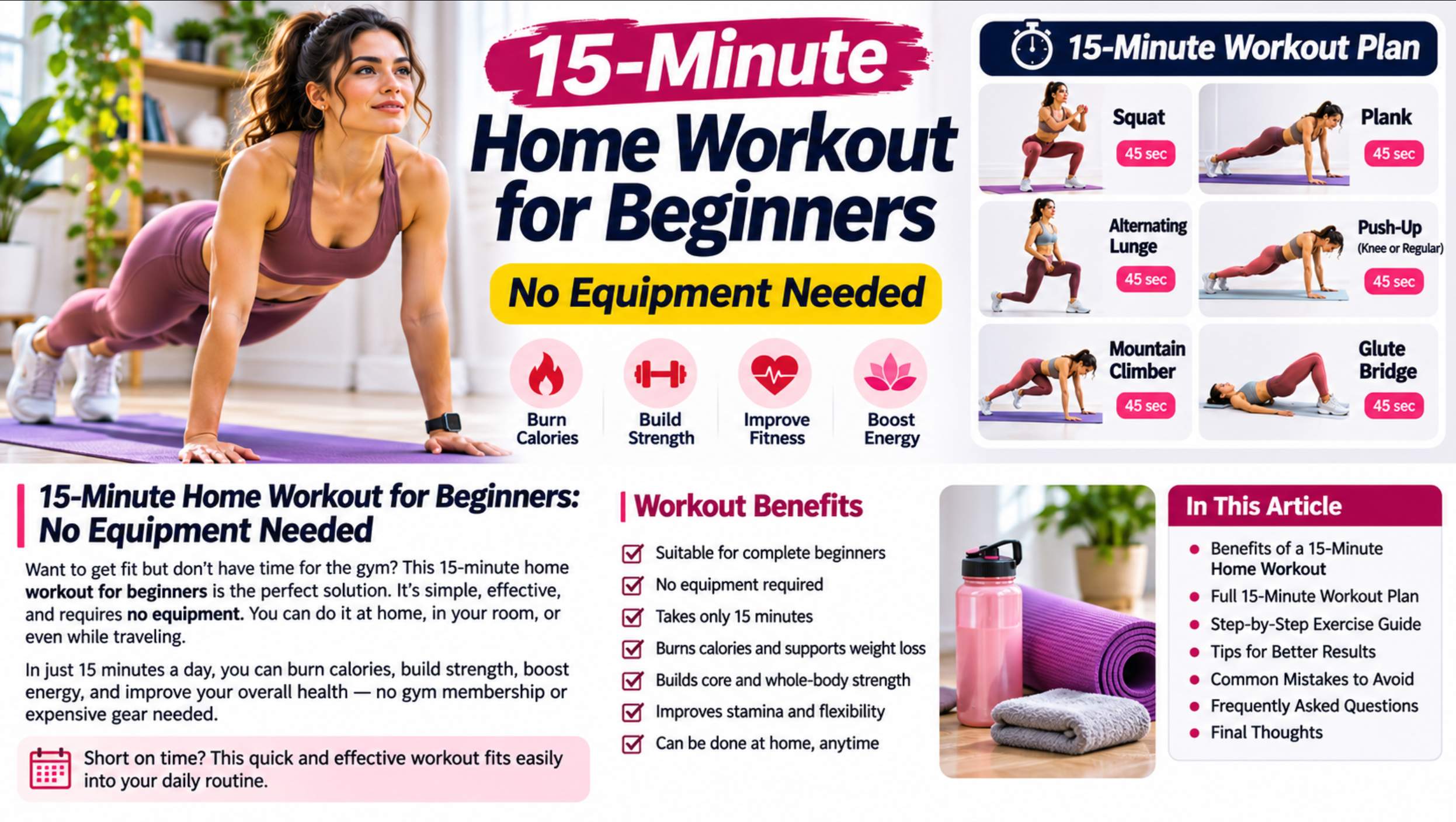
Starting a fitness routine doesn’t require an expensive gym membership, complicated equipment, or hours of free time. With a little space and a few simple exercises, you can begin improving your strength, mobility, and overall fitness from the comfort of your home.
A home workout for beginners is an excellent way to introduce regular physical activity into your daily routine.
This 15-minute workout includes simple bodyweight movements that can be modified according to your fitness level. Whether you’re exercising for the first time or returning after a long break, the routine provides a manageable starting point.
In this guide, you’ll learn the benefits of short workouts, a complete 15-minute exercise plan, step-by-step instructions, common mistakes, and practical tips for building a consistent fitness habit.
For more wellness and exercise advice, explore the Health & Fitness category at Magazine Insightes.
Benefits of a 15-Minute Home Workout
Short workouts can provide meaningful benefits, especially for people who are currently inactive.
Although a 15-minute routine may not meet all recommended weekly activity targets by itself, regular exercise sessions can contribute to better physical fitness over time.
1. Helps Build Strength
Bodyweight exercises such as squats, wall push-ups, and glute bridges engage several major muscle groups.
With consistent practice and gradual progression, these movements can help improve muscular strength and endurance.
2. Supports Cardiovascular Fitness
Activities such as marching in place and controlled stepping can increase your heart rate.
Regular moderate-intensity exercise supports cardiovascular health.
3. Improves Mobility
Movements involving the hips, shoulders, and legs can help maintain joint mobility.
Choose a comfortable range of motion and avoid forcing movements.
4. Makes Exercise More Accessible
Home workouts remove common barriers such as gym travel time and equipment costs.
You can exercise in a living room, bedroom, or another safe indoor space.
5. Helps Establish Healthy Habits
A short, manageable routine may be easier to repeat consistently than an overly ambitious workout plan.
According to the CDC’s physical activity guidelines, adults generally benefit from at least 150 minutes of moderate-intensity aerobic activity per week, along with muscle-strengthening activities on at least two days.
A 15-minute workout can be one useful part of reaching those recommendations.
What You Need Before Starting
You don’t need gym equipment for this beginner workout.
Prepare a few basic items:
- Comfortable exercise clothing.
- Supportive footwear when appropriate.
- A clear, non-slip exercise area.
- Drinking water.
- A stable wall or sturdy chair for support.
- An optional exercise mat.
Make sure the floor is free from obstacles.
If you have a medical condition, significant pain, balance difficulties, or have been advised to limit physical activity, consult a qualified healthcare professional before starting.
Complete 15-Minute Home Workout for Beginners
This routine includes a warm-up, a main workout, and a cooldown.
The exercises are designed for beginners and can be adjusted based on individual ability.
15-Minute Workout Schedule
| Time | Exercise | Duration |
|---|---|---|
| 0:00–1:00 | Marching in Place | 60 seconds |
| 1:00–2:00 | Shoulder Rolls and Arm Circles | 60 seconds |
| 2:00–3:00 | Gentle Side Steps | 60 seconds |
| 3:00–4:00 | Bodyweight Squats | 40 sec + 20 sec rest |
| 4:00–5:00 | Wall Push-Ups | 40 sec + 20 sec rest |
| 5:00–6:00 | Alternating Reverse Steps | 40 sec + 20 sec rest |
| 6:00–7:00 | Standing Knee Raises | 40 sec + 20 sec rest |
| 7:00–8:00 | Glute Bridges | 40 sec + 20 sec rest |
| 8:00–9:00 | Standing Side Leg Raises | 40 sec + 20 sec rest |
| 9:00–10:00 | Bodyweight Squats | 40 sec + 20 sec rest |
| 10:00–11:00 | Wall Push-Ups | 40 sec + 20 sec rest |
| 11:00–12:00 | Standing Knee Raises | 40 sec + 20 sec rest |
| 12:00–13:00 | Slow Marching | 60 seconds |
| 13:00–14:00 | Gentle Upper-Body Stretches | 60 seconds |
| 14:00–15:00 | Gentle Lower-Body Stretches | 60 seconds |
Move at a comfortable pace. You don’t need to perform as many repetitions as possible.
Take additional rest whenever necessary, even if that means completing fewer exercises.
Step-by-Step Beginner Exercise Guide
1. Marching in Place
Marching in place is a simple way to begin warming up.
How to do it:
- Stand upright with your feet hip-width apart.
- Lift one knee slightly.
- Lower your foot and lift the opposite knee.
- Swing your arms naturally.
- Continue at a comfortable pace.
Beginner modification: Hold a stable chair for support if necessary.
Marching gradually increases movement and prepares your body for exercise.
2. Shoulder Rolls and Arm Circles
These movements help warm up the shoulders and upper body.
How to do them:
- Stand or sit comfortably.
- Roll your shoulders backward slowly.
- Reverse the direction.
- Extend your arms gently to the sides.
- Make small, controlled circles.
Avoid forcing your shoulders into uncomfortable positions.
3. Gentle Side Steps
Side steps are a low-impact movement that can help raise your heart rate gradually.
Instructions:
- Stand with your feet hip-width apart.
- Step to the right.
- Bring your left foot toward your right.
- Repeat in the opposite direction.
- Continue at a steady pace.
Keep your movements controlled and avoid rushing.
4. Bodyweight Squats
Squats engage the legs and gluteal muscles.
How to perform a beginner squat:
- Stand with your feet approximately shoulder-width apart.
- Keep your chest comfortably upright.
- Bend your hips and knees.
- Lower yourself only as far as you can comfortably control.
- Push through your feet to return to standing.
Beginner modification: Use a sturdy chair behind you and practice sitting down and standing up.
Avoid forcing deep squats if they cause discomfort.
5. Wall Push-Ups
Wall push-ups are a beginner-friendly alternative to floor push-ups.
They engage the chest, shoulders, and arms.
Instructions:
- Stand facing a stable wall.
- Place your hands against the wall at approximately shoulder height.
- Step your feet backward slightly.
- Bend your elbows and bring your chest toward the wall.
- Push gently back to the starting position.
Keep your body aligned and avoid holding your breath.
6. Alternating Reverse Steps
Reverse steps provide a simpler alternative to full lunges.
How to do them:
- Stand upright.
- Step one foot backward.
- Return to the starting position.
- Repeat with the opposite foot.
- Continue slowly and evenly.
Hold a sturdy chair or countertop for balance if needed.
Beginners can keep the steps small and avoid bending deeply.
7. Standing Knee Raises
Standing knee raises help develop coordination and engage the core and hip muscles.
Instructions:
- Stand upright.
- Lift one knee toward your waist as comfortably as possible.
- Lower your foot slowly.
- Repeat with the other knee.
- Continue alternating.
Avoid leaning excessively backward.
8. Glute Bridges
Glute bridges strengthen the gluteal muscles and engage the hips.
How to perform them:
- Lie on your back on a comfortable mat.
- Bend your knees and place your feet flat on the floor.
- Keep your arms relaxed beside your body.
- Gently lift your hips.
- Pause briefly.
- Lower your hips slowly.
Avoid arching your lower back excessively.
If floor exercises are uncomfortable or inaccessible, substitute another set of standing hip extensions while holding a stable support.
9. Standing Side Leg Raises
Standing side leg raises engage muscles around the hips.
Instructions:
- Stand beside a stable chair.
- Hold the chair lightly for balance.
- Lift one leg a short distance to the side.
- Keep your upper body upright.
- Lower the leg slowly.
- Repeat on the opposite side.
Avoid swinging your legs or leaning heavily.
How Often Should Beginners Exercise?
Consistency matters more than performing an intense workout immediately.
Beginners may start with a few short sessions each week and gradually increase their activity.
Sample Beginner Weekly Workout Plan
| Day | Suggested Activity |
|---|---|
| Monday | 15-minute home workout |
| Tuesday | Comfortable walking |
| Wednesday | 15-minute home workout |
| Thursday | Gentle mobility or rest |
| Friday | 15-minute home workout |
| Saturday | Walking or another enjoyable activity |
| Sunday | Rest or light movement |
This is an example rather than a mandatory schedule.
As your fitness improves, gradually increase exercise duration, frequency, or difficulty.
The World Health Organization’s physical activity guidance emphasizes that some physical activity is better than none and that regular movement provides important health benefits.
How to Make Home Workouts Easier
If you’re completely new to exercise, start with modifications that make movements manageable.
Reduce Exercise Duration
Instead of performing 40 seconds of an exercise, begin with 15–20 seconds and rest for the remaining time.
Use Support for Balance
A stable chair or wall can help with standing exercises.
Choose Smaller Movements
You don’t need to squat deeply or lift your knees very high.
Controlled movements within a comfortable range are appropriate.
Take Longer Breaks
Rest whenever you need to recover.
Focus on Technique
Good movement quality is more important than completing a specific number of repetitions.
For additional beginner exercise guidance, visit the American Council on Exercise.
How to Progress After Your First Two Weeks
Once the routine becomes comfortable, consider making small changes.
You might:
- Increase exercise intervals gradually.
- Add another short walking session.
- Try slightly more challenging squat variations.
- Progress from wall push-ups to countertop push-ups.
- Improve movement control before increasing repetitions.
Change only one or two elements at a time.
If an exercise causes pain, stop and reassess your technique or choose a more comfortable alternative.
Common Home Workout Mistakes to Avoid
1. Skipping the Warm-Up
Starting intense movements without preparation can make exercise feel more difficult.
Begin with gentle movements to increase activity gradually.
2. Exercising Too Hard Too Soon
Beginners don’t need to push themselves to exhaustion.
Start with manageable intensity and progress gradually.
3. Ignoring Pain
Muscle effort is normal, but sharp or worsening pain is a reason to stop.
Seek medical advice if symptoms are persistent or concerning.
4. Holding Your Breath
Try to breathe naturally throughout each exercise.
Avoid unnecessary breath-holding during movements.
5. Using Poor Technique
Rushing repetitions can reduce control.
Move slowly enough to maintain comfortable alignment.
6. Expecting Immediate Results
Fitness improvements develop over time.
Regular activity, sufficient recovery, and realistic expectations are important.
Can a 15-Minute Home Workout Help With Weight Management?
A short home workout can contribute to overall physical activity and energy expenditure.
However, body weight is influenced by several factors, including dietary intake, activity levels, sleep, genetics, medications, and medical conditions.
A 15-minute workout alone does not guarantee weight loss.
Regular exercise can still provide health benefits even when body weight does not change.
For evidence-based information about healthy weight management, visit the National Institute of Diabetes and Digestive and Kidney Diseases.
Tips for Staying Consistent With Home Workouts
Building a regular exercise habit can take time.
These practical strategies may help:
Choose a realistic schedule. Select a time that fits your daily routine.
Prepare your exercise space. Keep a clear area available for movement.
Track your progress. Record completed sessions or improvements in exercise comfort.
Make workouts enjoyable. Listen to music or choose activities you like.
Allow recovery. Rest is an important part of a balanced exercise routine.
Celebrate consistency. Focus on building a sustainable habit rather than achieving perfection.
For more wellness information and healthy lifestyle ideas, explore the Magazine Insightes Health & Fitness category.
Frequently Asked Questions
Is a 15-minute home workout enough for beginners?
Yes, a 15-minute workout can be a useful starting point for beginners. Over time, gradually increasing physical activity can help you work toward recommended weekly exercise targets.
Can I do a home workout without equipment?
Yes. Bodyweight movements such as squats, wall push-ups, standing knee raises, and glute bridges can be performed without gym equipment.
How many days a week should beginners work out?
Beginners can start with a manageable number of sessions, such as two or three days per week, and gradually increase activity according to their fitness level and recovery needs.
Can beginners exercise every day?
Light movement, such as comfortable walking, may be suitable on many days. More demanding exercise should be balanced with appropriate recovery.
What is the easiest home exercise for beginners?
Marching in place, gentle side steps, chair-assisted squats, and wall push-ups are accessible starting options for many people.
Should I eat before a 15-minute workout?
This depends on your preferences, timing, and individual health needs. Many people can comfortably complete a short, light workout without a special pre-workout meal. Stay hydrated and avoid exercising when you feel faint or unwell.
When will I notice fitness improvements?
The timeline varies depending on starting fitness, consistency, exercise intensity, recovery, and other factors. Some people notice improved exercise comfort within several weeks, while other changes take longer.
Final Thoughts
Starting a home workout for beginners doesn’t have to be complicated.
A simple 15-minute routine can help you introduce regular movement into your day, practice basic exercises, and gradually improve your fitness.
The most important thing is to begin at a comfortable level and build consistency over time.
Whether you’re exercising in your living room, bedroom, or another safe indoor space, you can make meaningful progress without expensive gym equipment.
Remember to prioritize proper technique, gradual progression, and adequate recovery.
For more exercise routines, healthy lifestyle tips, and wellness guides, explore Health & Fitness at Magazine Insightes.
Disclaimer: This article provides general fitness information and is not a substitute for individualized medical advice. Consult a qualified healthcare professional before starting a new exercise program if you have relevant health concerns.

Nora Parker is the founder of Magazine Insightes, specializing in celebrity news and lifestyle content. With nine years of experience in entertainment journalism and digital marketing, she holds certifications from ClickMinded SEO Training, LinkedIn Learning, HubSpot Content Marketing, Google Digital Garage, Semrush Academy, and Shaw Academy. Nora has authored over 2,500 articles and successfully executed 120+ SEO campaigns.