Is 1440 News Conservative? What the Ratings Actually Say
Is 1440 News conservative? No, it is not classified as a conservative news outlet by any independent rating service. Three separate raters place it at the political center.
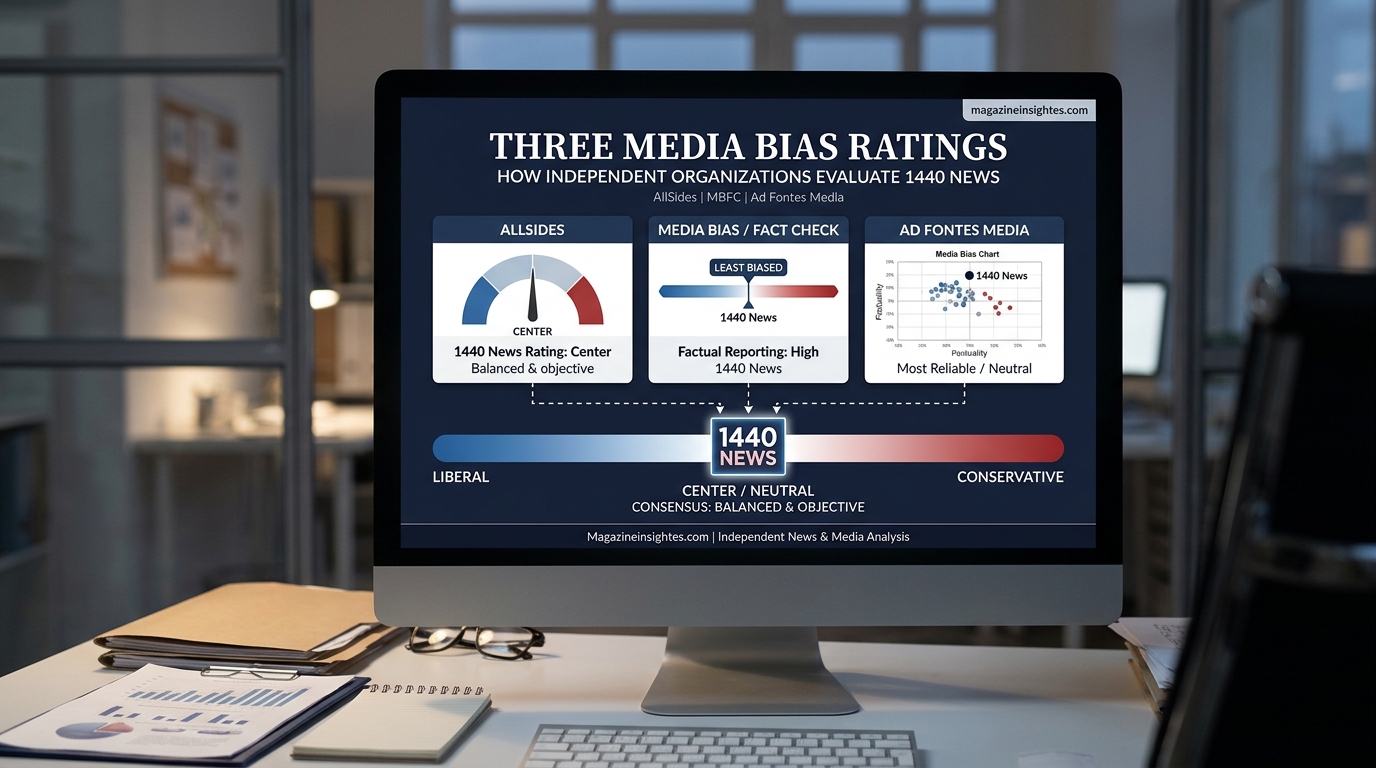
AllSides rates 1440 News as Center, with low confidence in that rating. Media Bias/Fact Check rates the 1440 Newsletter as Least Biased, with high factual reporting.
Ad Fontes Media places the 1440 Newsletter in the center of its chart, inside the zone for sources that are generally reliable and minimally biased. Snopes reaches a similar conclusion.
That answer is short, but the evidence behind it is worth a closer look. Ratings have dates, methods, and limits, and each one matters before you trust a verdict.
The Short Answer: No, and Here Is the Evidence
The question has a clear answer, and the evidence points the same way from every rater. No independent service rates 1440 as conservative, and none rates it as liberal either.
AllSides put 1440 in the Center column of its chart in December 2025. Three trained panelists, one from the left, one from the center, and one from the right, reviewed it together.
Media Bias/Fact Check, known as MBFC, rates the 1440 Newsletter as Least Biased. It also gives the newsletter a High grade for factual reporting, its second-highest grade.
Ad Fontes Media included the 1440 Newsletter in the green box of its October 2025 chart. That box holds sources its analysts found generally reliable and minimally biased.
These three ratings agree, but they were made in different ways and at different times. The rest of the page shows each rating, explains each method, and states the caveats.
Readers who only want the verdict can stop here. Readers who want to judge the verdict for themselves should keep reading, because the details change how much weight each rating deserves.
The key takeaways from the three ratings are simple.
- AllSides rates 1440 News as Center, with low or initial confidence.
- Media Bias/Fact Check rates the 1440 Newsletter as Least Biased, with High factual reporting.
- Ad Fontes Media places the 1440 Newsletter in its center zone for reliable, minimally biased sources.
- Snopes finds that 1440 generally sticks to the facts, while noting that topic selection bias is inevitable.
- No independent rater places 1440 on the right or on the left.
What Is 1440 News?
1440 News is a free daily email newsletter that summarizes the day’s top stories in about five minutes. It arrives Monday through Saturday, and it costs nothing to subscribe.
The name comes from the number of minutes in a day. The newsletter promises 1,440 minutes of news, boiled down into one short morning briefing for busy readers.
1440 was founded in 2017, and its first email went to 78 friends and family members in May of that year. It has grown from that small list into a large national audience.
1440 does not do original reporting. Its team reads stories from more than 100 sources, then writes short, neutral summaries and links back to the original reporting.
That model matters for the bias question. A curator inherits the slant of the sources it picks, so judging 1440 means judging its source mix and its story choices, not just its wording.
For the full background on what 1440 News is, how it started, and how it grew, see the companion guide to what 1440 News is.
The bias verdict below builds on that background without repeating it.
What the Three Bias Ratings Say About 1440
Three independent services have rated 1440, and all three land in the same place. Each one uses a different method, so their agreement carries more weight than any single rating alone.
Two of the ratings come from the raters’ own pages and announcements. The third comes from secondary sources, because the rater’s own page could not be opened directly during this research.
AllSides Rates 1440 Center
AllSides rates 1440 News as Center on its five-point scale, which runs from Left through Lean Left, Center, Lean Right, and Right. The rating sits in the middle column of its chart.
AllSides added 1440 to its Media Bias Chart in December 2025, when it released Version 11 of the chart. The announcement named 1440, Tangle, and Morning Brew together, all rated Center.
The rating was set by a Small Group Editorial Review, not by a public survey. Three trained panelists reviewed 1440 together, one from the left, one from the center, and one from the right.
AllSides gives the rating low or initial confidence. That label means the rating is new and rests on a small review, so readers should treat it as a starting point rather than a settled fact.
An earlier AllSides editorial review in July 2025 found 1440’s original reporting largely balanced and straightforward. The review said the reporting focused on observable facts rather than opinion.
AllSides is clear about what its rating does and does not mean.
Its own ratings page says Center does not mean better, and a Center rating does not mean a source is unbiased or always correct.
Media Bias/Fact Check Rates the 1440 Newsletter Least Biased
Media Bias/Fact Check rates the 1440 Newsletter as Least Biased, its middle category on a scale that runs from Extreme Left to Extreme Right. The rating covers the newsletter by name.
The same rating gives 1440 a High grade for factual reporting. That grade sits one step below Very High, and it reflects sourcing quality, a clean fact-check record, and minimal editorializing.
MBFC last updated the 1440 rating on January 5, 2022, according to secondary sources that quote the page. The rating is therefore more than four years old, and it has not been refreshed since.
One secondary source reports that MBFC gave 1440 a bias score of negative 0.5 on its scale. That figure is competitor-reported, so treat it as an unverified detail rather than a confirmed score.
Another secondary source says 1440 had zero failed fact checks in the five years before its 2023 update. That claim is also competitor-reported, and its five-year window would have run from 2018 to 2023.
MBFC says its rating reflects balanced story selection and minimal editorializing. It also credits 1440 with proper sourcing and a clean fact-check record, which support the High factual grade.
One conflict needs a plain statement. The Boston Report, in a guide last reviewed on October 5, 2026, lists 1440 as Center with low confidence and says MBFC found nothing for it.
A screenshot dated May 12, 2026, shows the MBFC page rating the 1440 Newsletter as Least Biased with High factual reporting.
The two findings disagree. The MBFC page could not be opened directly during this research, so the rating is reported here from the dated secondary sources and the screenshot.
Ad Fontes Media Puts 1440 in the Center
Ad Fontes Media placed the 1440 Newsletter inside the green box of its October 2025 Media Bias Chart for websites. That box holds sources its analysts found generally reliable and minimally biased.
The October 2025 chart features 105 sources, and the green box is the chart’s top zone for reliability. Sources there score well on both of Ad Fontes’ two axes, bias and reliability.
Ad Fontes rates individual articles, not just whole outlets. Its analysts read each article and score it for political bias and for reliability, then a weighted average sets the outlet’s place on the chart.
By October 2025, Ad Fontes had rated almost 4,400 websites, podcasts, and television sources. Its analysts had fully rated more than 79,500 individual articles from across the political spectrum.
Ad Fontes scores bias from negative 42 to positive 42, with the middle zone running from negative 6 to positive 6.
It scores reliability from zero to 64, with 40 counting as High and 48 as Very High.
No specific numeric Ad Fontes score for 1440 was published in the sources checked.
The placement in the green box is the finding, and no number should be invented to make it look more precise.
The Ratings Table: All Three Services Side by Side
| Rater | Rating for 1440 | Date | What It Measures | Confidence |
|---|---|---|---|---|
| AllSides | Center | December 2025 (Version 11) | Political perspective only, not accuracy | Low or initial |
| Media Bias/Fact Check | Least Biased, High factual reporting | January 5, 2022 (last update) | Bias plus factual reporting | Not stated; see the conflict note |
| Ad Fontes Media | Center, green box (reliable, minimally biased) | October 2025 chart | Bias and reliability, two axes | Based on rated articles |
| Snopes | Generally sticks to the facts | Reported in secondary sources | Factual accuracy and topic selection | Not a formal rating |
The table shows the full picture in one place. AllSides is the freshest rating, Ad Fontes is recent, and MBFC is the oldest, which is why its date matters.
Snopes does not give 1440 a formal bias rating. Its finding is a judgment from its analysis, and it comes with a warning that topic selection bias is inevitable for any news source.
How the Three Rating Services Actually Work
A rating is only as good as the method behind it.
The three services that rated 1440 work in very different ways, and those differences explain why their ratings agree and where each one is weak.
AllSides uses people and surveys. Media Bias/Fact Check uses an editorial checklist. Ad Fontes uses trained analysts who score individual articles. None of the three is a perfect measure.
AllSides: Perspective Only, Not Accuracy
AllSides was founded in 2012 by John Gable and Scott McDonald, with Joan Blades as a co-founder.
Gable had worked as a Republican political aide, including for Mitch McConnell and George H. W. Bush, before moving into technology.
The three founders span the political spectrum by design.
Gable rates as Lean Right, McDonald rates as Center, and Blades rates as Left, which was a deliberate choice to build a rating body with internal diversity.
AllSides is based in San Jose, California, and it operates as a Public Benefit Corporation. In 2024 it ran an equity crowdfunding campaign, which spread its ownership to investors across the political spectrum.
AllSides rates more than 1,400 media sources and writers, according to a 2026 profile. Its chart footer says the chart rests on more than 2,400 individual ratings, which counts repeat ratings of the same sources.
Its method has two parts.
Blind Bias Surveys ask ordinary Americans to rate news content without knowing the source, and Editorial Reviews ask a multipartisan panel of trained experts to rate it with the source known.
AllSides says its ratings measure perspective, not accuracy or credibility. Its ratings cover online United States political content only, so they say nothing about a source’s science, sports, or international coverage.
Media Bias/Fact Check: Bias Plus Factual Reporting
Media Bias/Fact Check was founded by Dave Van Zandt, and it rates thousands of sources with a small editorial team. It gives every source two separate grades, one for bias and one for factual reporting.
The bias scale runs from Extreme Left to Extreme Right, with Least Biased in the middle. The factual scale runs from Very High down to Very Low, with High as the second-best grade.
Its reviewers use an editorial checklist that covers wording, story selection, sourcing, and the use of opinion. The checklist is published, so readers can see what the reviewers look for.
The service is widely cited, but its small staff means some ratings are thin and some are old. One media guide warns that its uneven depth means it works best alongside more rigorous evaluators.
That warning fits the 1440 rating exactly.
The rating is more than four years old, and the page could not be opened directly during this research, so it should be read as dated evidence, not as a fresh verdict.
Ad Fontes Media: Two Axes, Bias and Reliability
Ad Fontes Media was created by Vanessa Otero, a patent attorney, who built the first Media Bias Chart in 2016 to explain news bias to friends.
The chart is now the best-known two-axis map of the news landscape.
Its analysts score individual articles on two axes at once. One axis measures political bias from left to right, and the other measures reliability, from low factual quality to high factual quality.
Each article is rated by a small panel of analysts with different political leanings. The analysts use a transparent method that combines trained human review with artificial intelligence assistance.
A weighted average of the article scores sets where a source sits on the chart. A source with many rated articles has a steadier placement than a source with only a few.
Ad Fontes rates almost 4,400 sources, and its analysts had fully rated more than 79,500 articles by October 2025. The team spends dozens of hours each week reading and scoring new articles.
The Methods Table: What Each Rater Measures
| Rater | What It Measures | Who Rates | Scale | Main Limit |
|---|---|---|---|---|
| AllSides | Political perspective only | Public surveys plus trained multipartisan panel | Left to Right, five steps; Bias Meter negative 6 to positive 6 | Low confidence on new ratings; perspective, not accuracy |
| Media Bias/Fact Check | Bias and factual reporting | Small editorial team with a checklist | Bias: Extreme Left to Extreme Right; Factual: Very High to Very Low | Small staff; some ratings are years old |
| Ad Fontes Media | Bias and reliability | Trained analysts, multiple leanings, plus AI help | Bias: negative 42 to positive 42; Reliability: 0 to 64 | Full scores sit behind a paywall; free search is limited |
| Snopes | Factual accuracy of claims | Fact-checking staff | No numeric scale; written findings | Checks claims, not whole outlets |
The methods table shows why the three ratings agree without being identical. AllSides asks people, MBFC applies a checklist, and Ad Fontes scores articles, yet all three put 1440 in the middle.
That agreement is the strongest part of the verdict. Three different methods, run by three different teams, reached the same place on the spectrum.
What “Center” Does and Does Not Mean
The word Center sounds simple, but it is easy to misunderstand. A Center rating says something specific, and it leaves several important questions unanswered.
AllSides itself warns readers not to overread the label. Its ratings page says Center does not mean better, and a Center rating does not mean a source is unbiased or always correct.
Center Is Not the Same as Unbiased
A Center rating means a source does not show a consistent pattern of favoring the left or the right. It does not mean the source is free of bias in every story it publishes.
Every news source makes choices, and every choice can lean. Which stories get covered, which facts get highlighted, and which voices get quoted all shape how a story lands.
AllSides rates perspective, not accuracy. A source can be rated Center and still make factual errors, and a source can be rated Lean Left or Lean Right and still report facts accurately.
That distinction is why the MBFC and Ad Fontes ratings matter alongside AllSides. They add a reliability grade, so readers can see bias and accuracy as two separate questions.
Perfect objectivity is impossible in news, and the honest sources say so. The useful question is not whether a source is perfectly neutral, but whether its lean is small, consistent, and disclosed.
Why One Story Can Still Feel Slanted
Readers often judge a source by one story, and one story can mislead. A single summary may sound slanted even when the source’s overall pattern is balanced.
Your own politics shape what you notice. A reader on the right may see a neutral story as leaning left, while a reader on the left may see the same story as leaning right.
Some 1440 readers have reported exactly that effect. A user-review summary notes that some readers perceive minor left-leaning tendencies in the wording of some political topics, including reporting on Trump administration policies.
Other readers in the same summary said the opposite, arguing that facts can look left-leaning to Republicans without the reporting itself being biased. Both reactions show how much perception depends on the reader.
The fair test is the pattern across many stories, not the feeling from one.
That is what the rating services try to measure, and it is what a single reader rarely has time to check alone.
Who Owns 1440 News, and Why It Matters for Bias
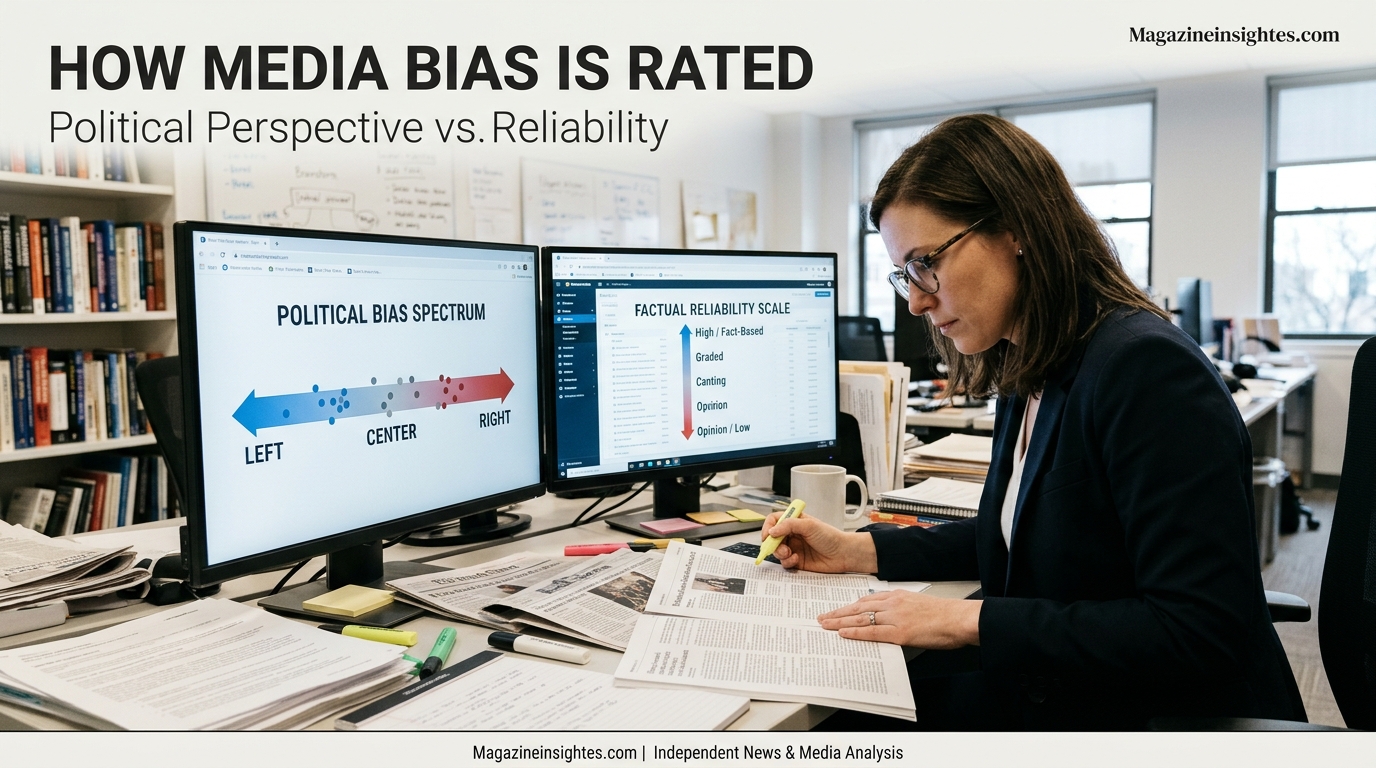
Ownership shapes incentives, and incentives shape coverage. A source owned by a partisan company has different pressures than a source owned by its own employees.
1440’s ownership is one of the reasons its Center rating is believable. No large media company controls it, and no political donor or party fund owns a stake in it.
Independent and Largely Employee-Owned
1440 News is run by 1440 Media LLC, an independent company with no corporate parent and no major media backing. It is not publicly traded, and it has no parent network.
Employees own the majority stake in the company. A venture capital firm holds a small minority stake, and that firm has never been publicly named in the sources checked.
The company was founded in 2017 by Tim Huelskamp, Andrew Steigerwald, and Pierre Lipton.
Some sources name a fourth founder, Bobby Adelson, and the two accounts conflict, so neither count should be stated as settled fact.
1440 earns its money from advertising, not from subscriptions. More than 95 percent of its income comes from ads inside the newsletter, with reader donations making up the remainder.
Each email open generates roughly five cents in ad revenue, according to Steigerwald. That model rewards a large, broad audience rather than a narrow, partisan one.
The company was ranked 79th on the 2023 Inc. 5000 list, with a reported growth rate of 5,500 percent.
That figure is competitor-reported, so it should be read as a growth claim from a secondary source, not as an audited number.
The False GateHouse Claim, Corrected
One page ranking for this keyword claims that GateHouse Media, now part of Gannett, acquired 1440 as part of a strategy to capture a conservative digital audience. That claim is false.
1440 was never acquired by GateHouse Media, and it was never acquired by Gannett. It remains independent and largely employee-owned, as its own company record and every reliable profile agree.
The false claim matters because ownership is a real bias signal. If a conservative media company owned 1440, the Center rating would deserve much harder questions than it does now.
Readers who see the GateHouse claim should ignore it. It appears on a low-quality page that also contradicts itself, and no reliable source supports it in any form.
Ownership alone never proves a source is unbiased, but a false ownership claim can unfairly damage a source. The correction belongs in any honest answer to the bias question.
The Ownership Table
| Fact | What the Sources Say | Source and Date |
|---|---|---|
| Legal entity | 1440 Media LLC | Company record, reported 2025 |
| Ownership | Largely employee-owned, majority employee stake | Company reporting, 2025 |
| Minority stake | Small venture capital stake, firm never publicly named | Company reporting, 2025 |
| Corporate parent | None; no major media backing | Company reporting, 2025 |
| GateHouse or Gannett | Never acquired 1440; the claim is false | Correction, November 2026 |
| Revenue model | Over 95 percent advertising, remainder reader donations | Steigerwald, reported 2025 |
| Valuation | 101 million dollars | Editor and Publisher, mid-2026 |
The ownership table gives the facts in one place. Independence is real, the employee stake is real, and the GateHouse claim is not real.
For comparison, Fox News is owned by Fox Corp, a large public media company with a clear corporate identity.
The question of who owns Fox News is a separate guide, and its ownership structure is very different from 1440’s.
How 1440 Covers Politics: Curation, Not Reporting
1440 does not send reporters into the field, and it does not publish its own investigations. Its team reads other outlets and writes short summaries of what those outlets found.
That model changes how bias works. The bias in a 1440 summary can come from the original reporting, from the choice of which stories to cover, or from the words used in the summary itself.
Researchers, Not Journalists
1440’s team is made up of researchers, not journalists. They read dozens of sources on each topic, then distill the key facts into a few sentences for the morning email.
Co-founder Andrew Steigerwald has described the model as going an inch deep and a mile wide. The goal is breadth across many topics, not depth on any single story.
That breadth is the product’s strength and its limit at once. Readers get a fast overview of the day, but they do not get the detail or the context that a full article provides.
The team writes summaries without opinion and without emotional language. It avoids clickbait headlines, speculation, and the kind of framing that tells readers what to think.
Its editorial rules put facts and actions ahead of cherry-picked quotes. Context is given without interpretation, and speculative stories are kept out of the digest.
More Than 100 Sources, Links Back to the Originals
1440 says its Daily Digest is curated from more than 100 sources. The list spans wire services, national newspapers, broadcast networks, magazines, and international outlets.
Typical sources include The New York Times, The Wall Street Journal, The Washington Post, Reuters, and the Associated Press. Broadcast networks such as CNN, Fox News, and MSNBC also appear in the mix.
Every summary links back to the original reporting, so readers can check the source directly. That link is the most important trust feature in the whole product.
A reader who doubts a summary can open the original in one click. That design makes bias easier to spot, because the summary and the source sit side by side.
The source list is broad, but it is not global. 1440 draws primarily from United States and English-language outlets, which means its neutral baseline still reflects one region’s framing of events.
Story Selection Is Where Bias Can Creep In
Snopes notes that topic selection bias is inevitable for any news source. Choosing which stories matter most is itself a judgment, and no editor can escape it.
1440’s editors choose a small set of stories each day from a very large news flow. The stories they skip are invisible to readers, which makes omission the hardest bias to detect.
One comparison site found that 1440’s summaries sometimes draw on a narrow set of regions, even when the same event is covered very differently elsewhere in the world. That finding is recent and worth watching.
Sponsor content is another point to watch. Revenue comes from sponsor content embedded in the email alongside editorial, and that model has drawn criticism for blurring the line between ads and news.
The criticism does not claim that sponsors shape the news summaries. It claims that the placement makes the boundary harder for readers to see, which is a design issue rather than a bias finding.
Readers who want to judge story selection should watch it for a week. Note which stories appear, which are missing, and which sources get cited most often, then compare that pattern with another digest.
What 1440 Readers Say About Its Politics
Ratings from experts are one kind of evidence, and reader opinion is another. Both matter, but they measure different things, and reader opinion is the weaker of the two.
Readers report their own experience, which is real but personal. A rating service measures a pattern across many stories, which is slower but more reliable.
The 2021 Reader Survey Bell Curve
A 2021 reader survey, reported by The Coolist, found a bell curve in 1440’s audience. Ten percent of readers placed themselves on the far left, and ten percent placed themselves on the far right.
Twenty percent placed themselves on the left, and twenty percent placed themselves on the right. Forty percent, the largest group, placed themselves as independent.
The curve mirrors national polling on political identity, which is why it is often cited. An audience split evenly across the spectrum suggests the product does not serve only one side.
The survey is five years old, and its sample was self-selected from readers who chose to answer. Both limits mean it should be read as a dated snapshot, not as current proof.
Still, the shape is useful. A newsletter that drew only from one side would show a lopsided audience, and 1440’s audience does not show that pattern.
Why Reader Surveys Are Weak Evidence
Reader surveys measure who reads a source, not how the source writes. A balanced audience can read a biased source, and a slanted audience can read a balanced one.
People also answer surveys about themselves, not about the news. Their self-placement on the left or right may not match how an expert would place them.
Open rates add a different signal. PR Newswire reported in January 2026 that 1440’s open rates run over 65 percent, which is high for email newsletters and suggests readers find the product useful.
Usefulness is not the same as neutrality, though. Readers can open a newsletter every day because it is fast and clear, even if they disagree with some of its framing.
Reader opinion belongs in the verdict as supporting evidence, never as the main proof. The ratings from AllSides, MBFC, and Ad Fontes carry the weight, and the survey only confirms the shape of the audience.
1440 vs Other Newsletters and Outlets
A rating means more when it can be compared. 1440 sits in the Center column next to other well-known names, and those neighbors show what Center looks like in practice.
The comparisons below use the same raters for every outlet, so the differences come from the sources themselves rather than from different methods.
1440 vs Tangle
Tangle is the closest comparison to 1440, because it is also a daily newsletter and AllSides also rates it Center. The two products solve the same problem in opposite ways.
Tangle’s Center rating was confirmed in the July 2025 Blind Bias Survey, which is a stronger method than the small editorial review that set 1440’s rating. Tangle’s rating rests on more evidence.
Tangle covers one issue a day and summarizes the arguments from the left, the right, and the center, then adds its own take.
1440 covers many stories a day and summarizes each one without adding a take.
That difference matters for readers. Tangle shows the debate explicitly, while 1440 hides the debate inside a short summary and lets the reader infer it.
Both newsletters are free to read in their basic form, and both aim at readers who want balance.
Tangle is the better choice for readers who want to see the arguments, and 1440 is the better choice for readers who want speed.
1440 vs Morning Brew and The Skimm
Morning Brew is the other newsletter AllSides added to its chart in December 2025, also rated Center.
Its rating came from a Small Group Editorial Review in the same month, the same method used for 1440.
Morning Brew covers business and finance first, with a casual voice and a younger audience. 1440 covers general news first, with a plain voice and a broader audience.
The two newsletters overlap on business stories, but they serve different mornings. Morning Brew is a business briefing, and 1440 is a general news briefing.
The Skimm is a third morning newsletter aimed at a similar audience, but it does not appear on the AllSides chart Version 11.
No AllSides rating for The Skimm was found in the sources checked.
That absence is itself a finding. A newsletter can be popular and well-known without being rated, and an unrated source should not be assumed to be Center, Left, or Right.
Readers who want a rated alternative to 1440 should look at Tangle or Morning Brew first. Both carry the same Center rating from the same rater, with the same date.
1440 vs NewsNation, Reuters, and the Associated Press
NewsNation is a television network, not a newsletter, and AllSides also rates it Center. It sits in the same column as 1440 on the Version 11 chart, alongside Reuters and the BBC.
NewsNation’s rating is useful because it is a different medium with the same label. A Center rating can apply to a cable channel and to an email digest at the same time.
Reuters is a wire service, and AllSides confirmed its Center rating in the July 2025 Blind Bias Survey.
Reuters is often used as a baseline for straight reporting, and 1440 draws on Reuters as a source.
The Associated Press is rated Lean Left by AllSides, which shows that not every wire service sits in the Center.
1440 also draws on the Associated Press, so its source mix includes both Center and Lean Left wires.
Fox News is rated Right by AllSides, and it appears in 1440’s source mix as well.
A digest that cites Right, Center, and Lean Left sources in one email is doing what a curator is supposed to do.
For readers who want the full comparison of television bias, the guide to whether NewsNation is conservative covers NewsNation’s ratings in full.
The Comparison Table
| Outlet | Format | AllSides Rating | How the Rating Was Set | What It Covers |
|---|---|---|---|---|
| 1440 | Daily email digest | Center | Small Group Editorial Review, December 2025 | General news, 100+ sources |
| Tangle | Daily email newsletter | Center | Blind Bias Survey, July 2025 | One issue a day, three perspectives |
| Morning Brew | Daily email newsletter | Center | Small Group Editorial Review, December 2025 | Business and finance first |
| NewsNation | Television network | Center | Chart Version 11, December 2025 | General news, cable |
| Reuters | Wire service | Center | Blind Bias Survey, July 2025 | Straight reporting, global |
| Associated Press | Wire service | Lean Left | Chart Version 11, December 2025 | Straight reporting, global |
| Fox News | Television network | Right | Chart Version 11, December 2025 | News and opinion, cable |
| The Skimm | Daily email newsletter | Not rated on the chart | No rating found | General news, morning briefing |
The comparison table shows 1440 in context. Its neighbors in the Center column are wire services, a television network, and two other newsletters, which is a broad and credible group.
The table also shows the limits of comparison. The Skimm has no rating, so it cannot be placed, and the Associated Press shows that a wire service can sit outside the Center.
The Timeline Table: Subscribers and Ratings by Year
| Year | What Happened | Source |
|---|---|---|
| 2017 | 1440 founded; first email to 78 friends and family in May | Company history |
| 2021 | About 700,000 subscribers; reader survey bell curve published | Company reporting; The Coolist |
| January 2022 | MBFC rates the 1440 Newsletter Least Biased, High factual reporting | MBFC, via secondary sources |
| November 2023 | Over 3.2 million subscribers | Startupbooted, competitor-reported |
| March 2025 | 4.5 million subscribers | Digiday |
| July 2025 | AllSides editorial review finds 1440 largely balanced; Tangle and Reuters confirmed Center | AllSides |
| October 2025 | Ad Fontes places 1440 Newsletter in the green box of its chart | Ad Fontes Media |
| December 2025 | AllSides adds 1440, Tangle, and Morning Brew to its chart, all Center | AllSides, Version 11 |
| January 2026 | 4.6 million subscribers; open rates over 65 percent | PR Newswire |
| Mid-2026 | 4.7 million subscribers; 101 million dollar valuation | Editor and Publisher |
The timeline shows growth and ratings side by side. The audience grew from 78 readers to about 4.7 million in nine years, while the ratings stayed in the center throughout.
Two Claims You Should Ignore
Two claims about 1440 circulate online, and both are wrong. They appear on pages that rank for this keyword, so readers are likely to meet them.
Both claims look detailed and confident, which makes them easy to believe. Both fall apart when checked against the sources that actually rated 1440.
The GateHouse Acquisition That Never Happened
A page ranking for this keyword claims that GateHouse Media, now part of Gannett, acquired 1440 to capture a conservative digital audience. No reliable source supports that claim in any form.
1440 Media LLC is independent and largely employee-owned. Its ownership is reported the same way by its own company record, by trade press, and by every reliable profile checked.
Gannett is a large newspaper company, and GateHouse was its predecessor in a 2019 merger. Neither company has ever owned 1440, invested in 1440, or controlled 1440’s editorial choices.
The false claim may come from confusion with another outlet, or it may be invented. Either way, it is the single most misleading statement in the search results for this keyword.
Readers should treat any page that repeats the GateHouse claim as unreliable on every other fact it states. A page that gets ownership wrong has not checked its other claims either.
The Two Contradictory Audits on the Same Domain
Two pages on the same low-quality domain make opposite claims about 1440, and both claim to have audited its content. One says 1440 skews centrist to mildly progressive, and the other says it leans conservative.
The first page claims a three-month audit found 60 percent of stories from center-left or mainstream outlets, 25 percent from center or neutral wires, and 15 percent from conservative and liberal sources.
No method, no dates, and no sample are given.
The second page claims a different audit found 73 percent of cited sources leaning conservative. That number contradicts the first page’s numbers, and the two pages cannot both be right.
The second page also claims that 1440 produces a high volume of short-form video content from viral social media posts.
1440 is a daily email newsletter, not a video platform, so the claim describes a different product entirely.
Neither audit is verifiable, and neither page names its author or its method. Readers should ignore both audits and rely on the three rating services instead, whose methods are published and whose dates are known.
How to Check 1440’s Bias Yourself in Five Steps
Ratings are a shortcut, but you can check 1440 yourself in about a week. The method below takes five steps, and each one tests a different part of the bias question.
You need no special tools for any step. A free subscription, a notebook, and the rating pages linked above are enough.
Step 1: Read the Original, Not Just the Summary
Pick three political stories from one 1440 digest. Open the original article behind each summary by clicking the link that 1440 provides.
Compare the summary with the original, sentence by sentence. Note any fact the summary left out, any quote it shortened, and any word it changed.
If the summary matches the original on the key facts, that is evidence of fair curation. If it softens or sharpens the original, note the direction of the change.
Step 2: Compare the Same Story Across Three Outlets
Take one major story from the week and read it in three places: one outlet rated Lean Left, one rated Center, and one rated Lean Right. AllSides lists all three on its chart.
Note what each outlet leads with, what each one leaves out, and which voices each one quotes. Then read the 1440 summary of the same story and see which version it resembles most.
Repeat the comparison for three different stories. A pattern across three stories means more than a single match, which could be chance.
Step 3: Check the Rating Pages Directly
Open the AllSides page for 1440 and read the rating, the confidence level, and the method. Then open the Ad Fontes interactive chart and find 1440’s placement.
Try to open the Media Bias/Fact Check page for the 1440 Newsletter as well.
If it loads, note the rating and the last-updated date; if it does not, note that the page could not be found.
Check the dates on every rating you find.
A rating from 2022 deserves less weight than a rating from December 2025, and a rating with low confidence deserves less weight than one confirmed by a survey.
Step 4: Watch Story Selection for a Week
Read 1440 every morning for one full week and write down the lead story each day. At the end of the week, list the topics that appeared and the topics that never appeared.
Compare your list with the front pages of two other sources for the same week. Note any major story that 1440 skipped and any minor story that 1440 led with.
Omission is the hardest bias to spot, and a week of notes is the simplest way to catch it. One skipped story proves little, but a pattern of skipped stories proves a great deal.
Step 5: Separate Facts from Framing
Take one 1440 summary and underline every fact in it. Then circle every word that carries a judgment, such as slammed, praised, controversial, or shocking.
Count the circled words. A summary with few or no judgment words is doing what 1440 promises, and a summary full of them is not.
Apply the same test to a summary from another newsletter. The comparison shows whether 1440’s language is plainer than its rivals, or only plainer in its own marketing.
Should You Read 1440 If You Want Conservative News?
The answer depends on what you want from a morning briefing. 1440 is a broad digest, not a conservative outlet, and it will disappoint readers who want conservative commentary.
It will suit readers who want a fast, plain overview of the day’s news without a partisan frame. That is a different job from advocacy, and 1440 is built for the first job.
If You Want Conservative Commentary, Look Elsewhere
1440 does not publish opinion pieces, and it does not argue for conservative policies. Its summaries report what happened and why it matters, then stop.
Readers who want conservative analysis should look at outlets that openly identify as conservative. The Daily Wire, National Review, and The Washington Examiner all publish conservative commentary every day.
Those outlets are rated Right or Lean Right by AllSides, and they say so themselves. Their value is argument and interpretation, which is the opposite of what 1440 offers.
Using 1440 as a conservative source would be a category error. It is a digest, not a voice, and judging it for its lack of conservative commentary misses its purpose.
If You Want a Broad Morning Briefing, It Fits
1440 fits readers who want the day’s news in five minutes, without shouting and without a paywall. It covers politics, business, science, technology, culture, and sports in one email.
It also fits readers who want to check their own bubble. A Center-rated digest is a useful counterweight to a diet of sources from only one side.
The best use is as one source among several, not as the only source. Pair it with a left-leaning outlet, a right-leaning outlet, and a wire service, and compare their coverage of the same stories.
That balanced diet is the practical answer to the bias question. No single source is perfectly neutral, but a reader who compares sources can be balanced even when no source is.
For readers weighing news apps rather than newsletters, the guide to which news app is the best compares the main options on features and bias.
A newsletter and an app solve the same problem in different ways.
Frequently Asked Questions
Is 1440 News conservative?
No, 1440 News is generally not classified as a conservative news outlet. AllSides rates it Center, Media Bias/Fact Check rates it Least Biased, and Ad Fontes Media places it in its center zone.
No independent rating service puts 1440 on the right. The three raters agree that it sits at the political center, with low bias and high factual reporting.
Is 1440 News liberal?
No, 1440 News is not generally classified as a liberal or left-wing news source either. Its coverage is positioned more toward the center than toward either political extreme.
Some readers perceive a slight left lean in the wording of some political stories, but no rater has placed 1440 on the left, and the audience survey shows readers from across the spectrum.
Is 1440 News biased?
Every news source has some bias, and 1440 is no exception. Its bias is rated as low by the services that measure it, which is different from having no bias at all.
The honest answer is that 1440 is low-bias, not bias-free. Story selection and source choice can lean even when the wording stays neutral.
Is 1440 News unbiased?
1440 is considered relatively low-bias by the available third-party assessments, but a center or low-bias rating does not mean every article is completely free from bias.
AllSides says a Center rating does not mean a source is unbiased or always correct. Readers should check important stories against the original reporting.
Is 1440 News left or right?
1440 News is neither left nor right by the ratings that exist. It sits in the center, between the two sides, according to AllSides, Media Bias/Fact Check, and Ad Fontes Media.
That placement does not mean it pleases both sides equally. Readers on each side sometimes see the same story as leaning toward the other side.
Is 1440 News centrist?
Yes, centrist is a fair description of 1440’s rated position. AllSides places it in the Center column, and Ad Fontes puts it in the middle of its chart.
Centrist here means the coverage does not show a consistent pattern of favoring the left or the right. It does not mean the coverage is free of all slant.
What does AllSides rate 1440 News?
AllSides rates 1440 News as Center. The rating was set by a Small Group Editorial Review with three trained panelists, one from the left, one from the center, and one from the right.
AllSides gives the rating low or initial confidence, and it added 1440 to its chart in December 2025, when it released Version 11.
What does Media Bias/Fact Check rate 1440 News?
Media Bias/Fact Check rates the 1440 Newsletter as Least Biased, with a High grade for factual reporting. The rating was last updated on January 5, 2022, according to secondary sources.
One conflict exists: The Boston Report’s October 2026 lookup found no MBFC rating, while a May 2026 screenshot shows the MBFC page with the Least Biased rating.
The MBFC page itself could not be opened directly during this research.
What does Ad Fontes rate 1440 News?
Ad Fontes Media placed the 1440 Newsletter in the green box of its October 2025 chart. That box holds sources its analysts found generally reliable and minimally biased.
No specific numeric Ad Fontes score for 1440 was published in the sources checked. The placement is the finding, and no number should be invented for it.
Is 1440 News reliable?
Yes, by the ratings that measure reliability. Media Bias/Fact Check gives 1440 a High grade for factual reporting, and Ad Fontes places it in its reliable zone.
Reliability and neutrality are different things. A source can be reliable and still lean, and a source can be neutral and still make errors, so check both grades separately.
Is 1440 News trustworthy?
1440 is widely treated as trustworthy for a daily briefing. Its summaries link back to original reporting, its ownership is independent, and its ratings are consistent across raters.
Trust should still be checked, not assumed. Open the originals behind the summaries on important stories, and compare 1440’s version with at least one other source.
Is 1440 News legit?
Yes, 1440 News is a legitimate news company, not a scam. It was founded in 2017, it is run by 1440 Media LLC, and it has about 4.7 million subscribers as of mid-2026.
Its valuation reached 101 million dollars in mid-2026, according to Editor and Publisher, and it has been profitable since 2023. Those are the marks of a real business, not a fake one.
Is 1440 News safe?
Yes, 1440 News is safe to read and to subscribe to. It operates transparently, it collects minimal data, and it does not sell personal data, according to a 2026 safety review.
It is free, and it is funded by sponsorships and affiliate marketing rather than by subscriptions. Unsubscribing is a standard one-click process from any email.
Who owns 1440 News?
1440 News is run by 1440 Media LLC, an independent company with no corporate parent.
Employees own the majority stake, and a venture capital firm holds a small minority stake that has never been publicly named.
It was founded in 2017 by Tim Huelskamp, Andrew Steigerwald, and Pierre Lipton. Some sources name a fourth founder, Bobby Adelson, and the two accounts conflict.
Was 1440 News bought by Gannett?
No, 1440 News was never bought by Gannett. The claim appears on a low-quality page and is false, with no support from any reliable source.
1440 remains independent and largely employee-owned. Gannett has never owned it, invested in it, or controlled its editorial choices.
Was 1440 News bought by GateHouse Media?
No, 1440 News was never bought by GateHouse Media either. GateHouse was Gannett’s predecessor in a 2019 merger, and neither company has ever owned 1440.
The claim is the single most misleading statement in the search results for this keyword, and any page that repeats it should be treated as unreliable.
Is 1440 News owned by a conservative company?
No, 1440 News is not owned by a conservative company. It is owned by 1440 Media LLC, an independent firm with no corporate parent and no political owner.
Its minority venture capital stake is held by a firm that has never been publicly named, so no political identity can be attached to that stake from the available evidence.
Is 1440 News owned by a liberal company?
No, 1440 News is not owned by a liberal company either. The same facts apply: independent, employee-owned, no corporate parent, and no political owner of record.
Ownership by employees is not the same as ownership by a political group. The employee stake is spread across the staff, not held by an advocacy organization.
Does 1440 News have a political agenda?
No evidence shows that 1440 News has a political agenda. Its stated mission is to deliver facts without opinion, and the three rating services agree that its coverage does not push one side.
Its business model also points away from an agenda. Advertising rewards a large, broad audience, and a partisan agenda would narrow that audience rather than grow it.
Does 1440 News lean left?
No rater has placed 1440 on the left, and its AllSides rating is Center.
Some individual readers perceive a slight left lean in the wording of some political stories, but that perception is not a rating.
The fair reading is that 1440’s overall pattern is central, while individual stories can feel slanted to readers on either side. That is true of every Center-rated source.
Does 1440 News lean right?
No rater has placed 1440 on the right either. Its AllSides rating is Center, its MBFC rating is Least Biased, and Ad Fontes puts it in the middle of its chart.
One low-quality page claims a conservative lean based on an unverifiable audit, but that page contradicts another page on the same domain, and neither audit can be checked.
What is 1440 News?
1440 News is a free daily email newsletter that summarizes the day’s top stories in about five minutes. It arrives Monday through Saturday and covers politics, business, science, technology, culture, and sports.
It was founded in 2017, and its first email went to 78 friends and family members. Its name comes from the 1,440 minutes in a day.
Is 1440 News a newspaper or a newsletter?
1440 News is a newsletter, not a newspaper. It does not publish original reporting, and it does not employ journalists to cover events.
Its team of researchers reads stories from more than 100 sources and writes short summaries with links back to the originals. That curation model is the whole product.
Does 1440 News write its own stories?
No, 1440 News does not write its own stories in the reporting sense. It writes summaries of stories that other outlets reported, and it links to those originals.
That distinction matters for bias, because the bias in a summary can come from the original reporting, from the choice of stories, or from the summary’s own words.
Is 1440 News free?
Yes, 1440 News is free to subscribe and free to read. It earns its money from advertising inside the newsletter, not from reader payments.
More than 95 percent of its income comes from ads, with reader donations making up the rest. There is no paywall on the daily digest.
Conclusion
Is 1440 News conservative? No, and the evidence is consistent across three independent rating services that use three different methods. AllSides, Media Bias/Fact Check, and Ad Fontes Media all place 1440 at the political center.
AllSides rates it Center, based on a Small Group Editorial Review in December 2025, with low confidence.
Media Bias/Fact Check rates it Least Biased, with High factual reporting, in a rating last updated in January 2022. Ad Fontes puts it in the green box of its October 2025 chart.
The caveats matter as much as the verdict. The MBFC rating is old, one guide found no MBFC rating at all, and a Center rating never means a source is unbiased.
Readers should weigh those limits before trusting any single grade.
The false claims matter too. 1440 was never acquired by GateHouse or Gannett, and the two contradictory audits on one low-quality domain cannot both be true.
A careful reader ignores both and trusts the published ratings instead.
The practical answer is simple. Use 1440 as one source among several, compare its summaries with the originals, and check the rating pages yourself.
A Center-rated digest is a good start for a balanced news diet, but no single source should be the whole diet.