Fashion Trends 2025 2026 Spring Summer, What Defined the Season
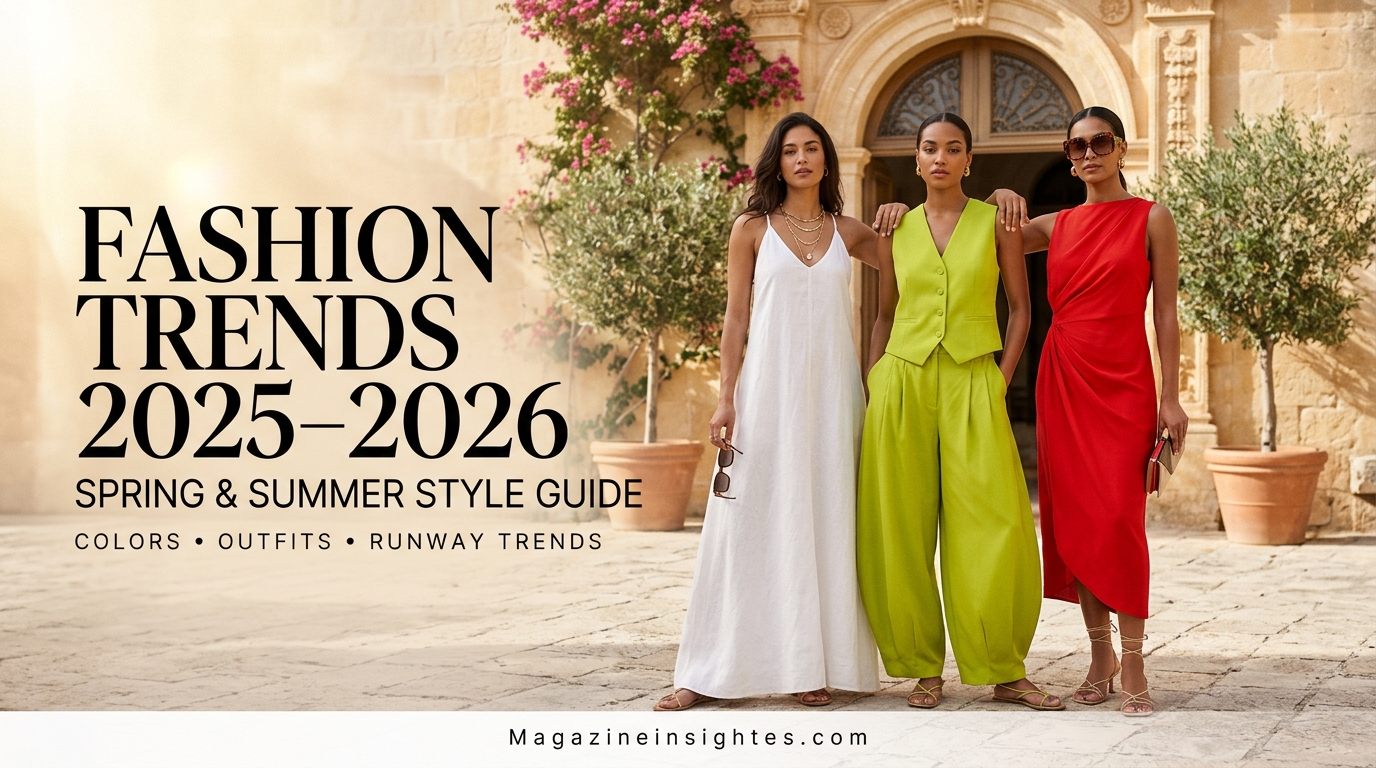
Fashion trends 2025 2026 spring summer tell one clear story when the two seasons are read together.
Spring and summer 2026 were defined by bold color, generous volume, and tactile texture, after a year when quiet neutrals had ruled.
The season rewarded clothes that felt good to wear and looked good in motion.
Linen sets, white maxi dresses, slip dresses, and balloon trousers were the pieces people actually reached for, while the runway supplied the color and the drama.
Spring and summer 2026 are over now, so the honest way to read them is as a finished season.
The guide below looks back at what defined the season, what changed from 2025, and what is worth keeping for next year.
The Short Answer: What Defined Spring and Summer 2026
Bold color led the season, with soft white as its calm counterweight.
Pantone named Cloud Dancer, a billowy white, its Color of the Year for 2026, while the runways filled with chartreuse, scarlet, pistachio, and primary color blocks.
Volume shaped the silhouette, from balloon trousers to voluminous skirts and strong 1980s shoulders. The mini returned, the waist dropped, and harem pants came back with desert draping and sandy hues.
Texture did the talking on the surface of clothes. Fringe, lace, feathers, crochet, and sheer layers appeared across the four fashion weeks, and the most wearable versions were small details rather than full runway looks.
Runway-share data from T-Fashion, which read 430 articles on the season’s womenswear, showed leather rising from 6.2 percent to 7.0 percent of looks across the four fashion weeks.
Floral rose from 9.8 percent to 12.3 percent of looks in the same analysis, while black fell sharply from 45.4 percent to 22.1 percent of looks.
Denim returned to classic form, with straight, boot, and wide cuts in no-fuss washes. Linen ruled summer heat, cotton poplin and voile followed close behind, and worn-in denim replaced the crisp blue of earlier seasons.
Accessories finished the look with personality. Coin belts, safari utility jackets, jelly heels, ballet flats, raffia bags, and pillbox hats gave simple outfits a clear point of view.
Three moods ran through summer itself: bohemian and free, coastal and crisp, and romantic minimalism.
Most people mixed two of them rather than committing to one, which made the trends easier to wear in everyday life.
From 2025 to 2026: What Changed
The change from 2025 to 2026 was a shift from calm to color.
Pantone moved its Color of the Year from Mocha Mousse, a warm brown, to Cloud Dancer, a billowy white, and the runways answered with louder color around that quiet center.
Butter yellow carried over from 2025 into 2026 and stayed everywhere through summer. It softened the season’s bolder reds and greens, and it appeared on dresses, blouses, trousers, and accessories alike.
Balloon trousers carried over from last year as well, and they returned on the runways of Balmain, Michael Kors, and Calvin Klein. The exaggerated hem became a polished staple rather than a one-season experiment.
Quiet luxury gave way to open expression in 2026. Who What Wear called the season cinematic, disruptive, bold, and optimistic, with sex appeal returning alongside reimagined feminine silhouettes.
Fifteen designers made their debuts at major houses during the September 2025 shows, and that churn reset the tone.
Louise Trotter arrived at Bottega Veneta, Jonathan Anderson at Dior, and Matthieu Blazy at Chanel, while Chemena Kamali at Chloé and Sarah Burton at Givenchy felt free to lean deeper into their own visions.
Personal style became the trend itself, according to market reporting on the season. Shoppers favored mindful curation and longevity over impulse buys and fleeting microtrends, and well-chosen pieces mattered more than constant newness.
Cross-style mixing underlined that point in trade data.
Euromonitor reported that cross-style mixing accounted for 62 percent of global women’s wear market sales in 2025, up 38 percent year over year, in figures reported by the POP Fashion trade platform.
| What changed | 2025 | 2026 |
|---|---|---|
| Pantone Color of the Year | Mocha Mousse, a warm brown | Cloud Dancer, a billowy white |
| Dominant mood | Quiet luxury and neutrals | Bold color, volume, and texture |
| Butter yellow | Emerging soft shade | Carried over and everywhere |
| Balloon trousers | New and experimental | Carried over, polished staple |
| Denim | Varied washes and cuts | Classic revival, no-fuss washes |
| Designer houses | Established creative directors | Fifteen debuts reset the tone |
| Shopping behavior | Microtrends and impulse buys | Mindful curation and longevity |
The Colors of Spring and Summer 2026
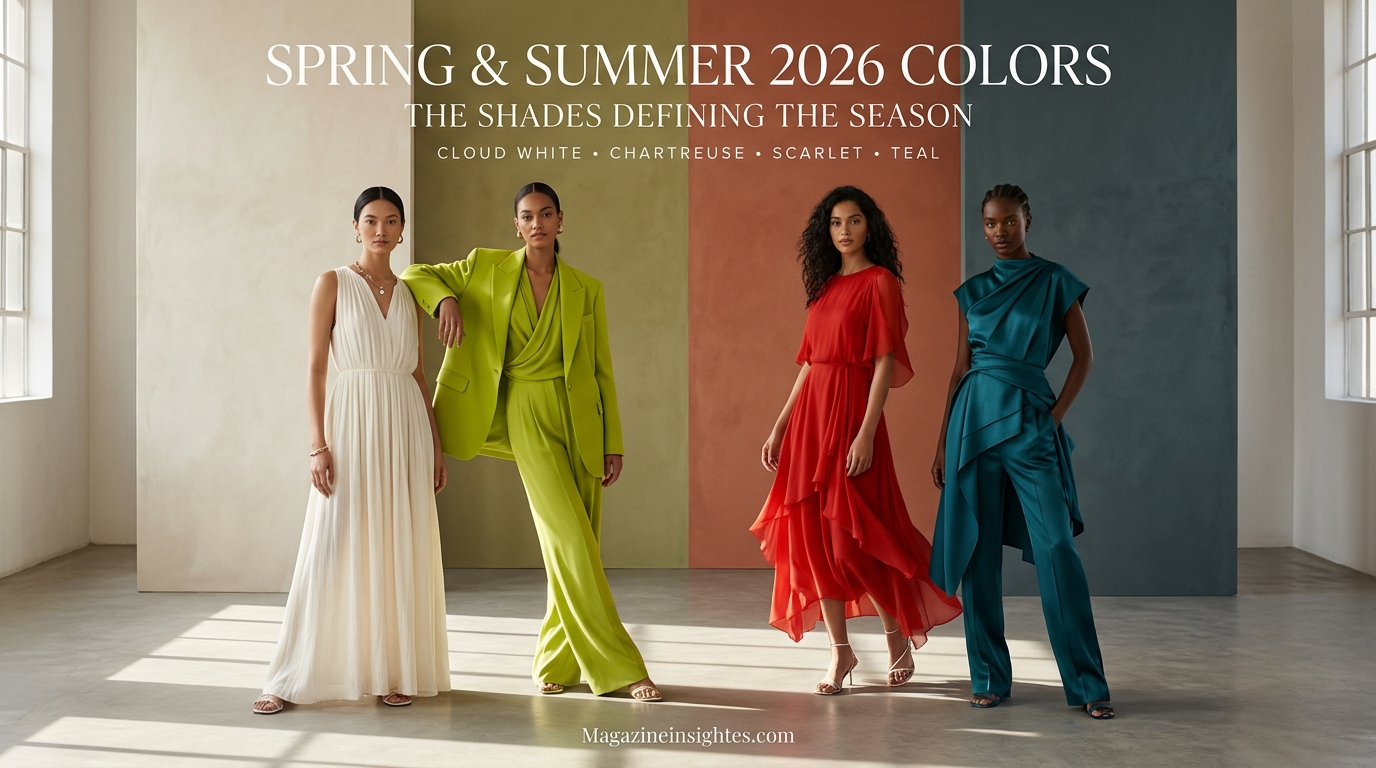
Color was the season’s loudest story, and two rival color authorities told it differently. Pantone chose a white, while WGSN and Coloro chose a teal, and the runways used both ideas at once.
Pantone announced Cloud Dancer as its Color of the Year for 2026 on December 4, 2025, in Carlstadt, New Jersey.
The shade is PANTONE 11-4201, described as a billowy white imbued with a feeling of serenity, and it was the first white ever named Color of the Year.
Leatrice Eiseman, executive director of the Pantone Color Institute, called Cloud Dancer a discrete white hue offering a promise of clarity.
She said the cacophony around us had become overwhelming, making it harder to hear the voices of our inner selves.
Laurie Pressman, vice president of the Pantone Color Institute, called it an airy white hue that exemplifies the search for balance between a digital future and a primal need for human connection.
Pantone president Sky Kelley said at the launch event that she knew the choice would be controversial.
The Pantone program began in 1999, and Cerulean was the first pick for the year 2000.
Cloud Dancer arrived with official partners including Motorola, with a special edition Motorola edge 70, plus PLAY-DOH, Post-It, Command, Pura, Spotify, Mandarin Oriental, and Joybird.
Pantone picks its Color of the Year by weighing trends in entertainment, travel, art, fashion, design, technology, and social media.
That broad method explains why a white could win in a year when the runways themselves were so colorful.
WGSN and Coloro named a different Color of the Year for 2026: Transformative Teal, code 092-37-14.
The two picks are rival forecasts from different organizations, so they should be read side by side rather than merged into one verdict.
Transformative Teal is a deep, changeable blue-green that sat at the center of WGSN’s seasonal palette.
It appeared alongside Electric Fuchsia, Blue Aura, Amber Haze, and Jelly Mint as the five key colors for spring and summer 2026.
| Color authority | 2026 pick | Code | What it means for a wardrobe |
|---|---|---|---|
| Pantone | Cloud Dancer, a billowy white | 11-4201 | White and off-white as the calm base for bold color |
| WGSN and Coloro | Transformative Teal, a deep blue-green | 092-37-14 | Teal as the statement color for dresses and tailoring |
| Pantone (2025) | Mocha Mousse, a warm brown | 2025 pick | Brown carried into 2026 as a grounding neutral |
No official hex code exists for any Pantone color, because Pantone colors are physical standards rather than screen values.
Any hex shown online for Cloud Dancer is a screen approximation only, and it should never be presented as the official value.
The Pantone Spring and Summer 2026 Palette
Pantone’s New York Fashion Week palette for spring and summer 2026 held ten named shades.
Acacia, Marina, Muskmelon, Alexandrite, Lava Falls, Dusty Rose, Tea Rose, and Amaranth led the list, with Burnt Sienna among the remaining shades.
The palette mixed warm fruit tones with cool blues and deep reds. Muskmelon and Acacia brought warmth, Marina and Alexandrite brought cool depth, and Lava Falls and Amaranth brought the bold reds the season loved.
Those ten shades sat beside the season’s neutrals rather than replacing them. Cloud-white neutrals, sand, camel, and caramel grounded the bright colors, and that balance kept the palette wearable beyond the runway.
The WGSN and Coloro Key Colors
WGSN’s five key colors gave the season a second, brighter palette. Electric Fuchsia, Blue Aura, Amber Haze, and Jelly Mint joined Transformative Teal as the foundation of the forecast.
Electric Fuchsia and Blue Aura supplied the high-energy accents, while Amber Haze and Jelly Mint softened them. The five colors appeared across dresses, tailoring, and accessories in the season’s trend reporting.
Earthy and natural tones ran alongside the bright keys.
Trade reporting on the season named soothing pastels like Lavender Blue, Pink Flare, and Cascade Green as the quieter edge of the palette for quiet luxury looks.
The Shopper Shades: What People Actually Wore
Trend reporting for shoppers named seven shades that sold through the season. Sunshine yellow, blush pink, cerulean blue, fire-engine red, feel-good greens, cloud-white neutrals, and summer grey formed the practical palette.
Sunshine yellow replaced the softer butter tones of the previous year as the season’s defining yellow. It appeared on dresses, knitwear, and accessories, and it paired easily with white, denim, and navy.
Chartreuse broke out as the season’s surprise color, appearing at Tibi, Burberry, Erdem, Simone Rocha, Saint Laurent, Valentino, Balenciaga, and Alaïa. Harper’s Bazaar named it an unexpected alternative to the familiar spring colors.
Scarlet red was named by several European trend roundups as the season’s boldest red, with pastels and citrus shades cast as the previous year’s look.
That claim comes from trend roundups rather than a color authority, so it should be read as fashion commentary rather than a forecast.
Creamy White: The Season’s Quiet Backbone
Stark white gave way to creamy white across the spring and summer runways. Designers traded clinical whites for warmer, more tactile off-whites that brought depth and emotion to classic silhouettes.
Celine brought classical drapery into the season with a Grecian-inspired floor-length stretch jersey gown and a matching cape knotted at the neck.
Coperni offered a modern version with a cream off-shoulder gown, a slit front, an upturned bubble hem, and structured sleeves.
Creamy white worked in tactile fabrics like stretch jersey and cotton voile.
The shift matched a wider desire for warmth, longevity, and a human touch in clothes, and it made white the season’s most wearable color.
The fashion color trends for 2026 on the site give the full-year picture behind the seasonal palette.
That guide covers how the spring and summer shades fit into the whole year, including the autumn shift toward deeper tones.
The Silhouettes That Defined SS26
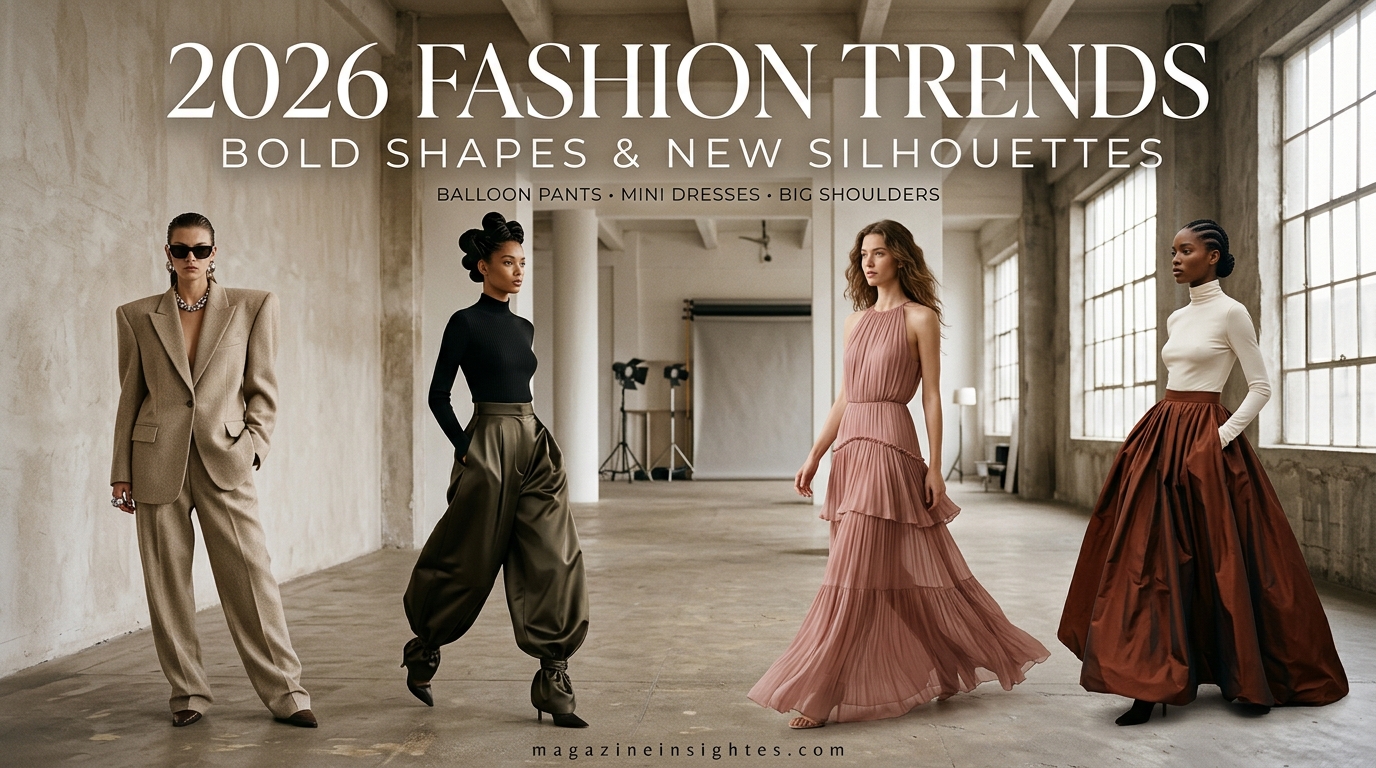
Silhouette was where the season’s confidence showed most clearly. Shoulders grew, hems ballooned, skirts swelled, and waists dropped, all in the same season.
1980s Shoulders Are Back
The best of 1980s fashion returned through short blazers with big shoulders, loud floral prints, and vibrant colors. ELLE Canada’s runway report named the 1980s revival as one of the season’s defining stories.
Versace’s Dario Vitale delivered tight capri pants in teal and lilac, paired with tops in red and cobalt, in his first collection for the Italian brand.
The look paired a strong shoulder with a slim, cropped bottom.
Chemena Kamali at Chloé embraced ruched, fitted floral dresses and soft cocoon-like jackets with exaggerated shoulders.
At Chanel, Matthieu Blazy revealed his take on the classic Chanel suit as a cropped silhouette with strong shoulders and menswear-inspired bottoms.
Balloon Trousers and Wide Legs
Balloon trousers were one of the few trends that crossed from runway to street without losing their shape. Balmain, Michael Kors, and Calvin Klein all sent the exaggerated-hem trouser down the spring and summer runways.
Who What Wear listed balloon trousers among the six runway trends people could actually wear, and noted that they were back for another polished outing after the previous year.
The volume sat at the hem, so the waist and hip stayed clean.
Wide legs ran alongside the balloon shape in denim and tailoring. The relaxed leg balanced the season’s strong shoulders, and it worked with flat sandals, ballet flats, and low heels alike.
The Mini Returns
The mini was the most consistently reported length of the season.
Vogue noted that minis appeared in almost every collection, including jeweled babydoll versions at Miu Miu and small tank styles at Calvin Klein and Loewe.
Who What Wear added that the short shape was reframed through retro 1950s housewife pinafores at Miu Miu and floral interpretations at Chloé.
The mini felt playful rather than provocative, especially in floral and polka dot fabrics.
The Dropped Waist
The dropped waist was a major structural proposal of the season.
Harper’s Bazaar described lowered waistlines with clean lines and soft draping at Bottega Veneta and Gabriela Hearst, creating a longer torso and a more sweeping shape.
The drop-waist dress became the softer, more relaxed version of the defined-waist trend seen across the year. It flattered with ease rather than structure, and it worked in cotton, linen, and silk alike.
Voluminous Skirts and Meringue Shapes
Designers dialed up the drama with voluminous silhouettes focused around the hips. Harper’s Bazaar reported big skirts and exaggerated dress shapes bringing playful movement to runways at Versace, Prada, and Loewe.
Meringue-like volumes appeared alongside soft tailoring and flowing dresses in the season’s womenswear reporting. The shapes were dramatic on the runway and wearable in edited form, with one full skirt balanced against a fitted top.
Harem Pants and Desert Draping
Harem pants solidified their comeback in spring 2026, according to Vogue Scandinavia. The runways saw what the magazine called a deluge of decadent, desert-destined looks, with sandy hues, rich textures, and divine draping.
The desert-inspired harem pant worked with the season’s sandy palette and its love of draping. It offered a relaxed alternative to tailored trousers, and it suited the bohemian mood that ran through the whole season.
Soft Tailoring and the Reinvented Trench
Tailoring softened rather than disappearing in 2026. Soft tailoring, relaxed shapes, and loose silk or satin forms ran through the season alongside the bolder silhouettes.
The trench coat was reinvented for spring 2026, with ultra-dropped waists at Prabal Gurung and 1980s influences at Bottega Veneta.
ELLE called the trench as fresh as a daisy for the season, and it worked as the layer over both dresses and denim.
The Dresses of Spring and Summer 2026
Dresses were the heart of the warm-weather wardrobe, and the season offered a clear set of winners. The most widely adopted ideas were also the simplest ones, which is why they lasted through summer.
The White Maxi Dress
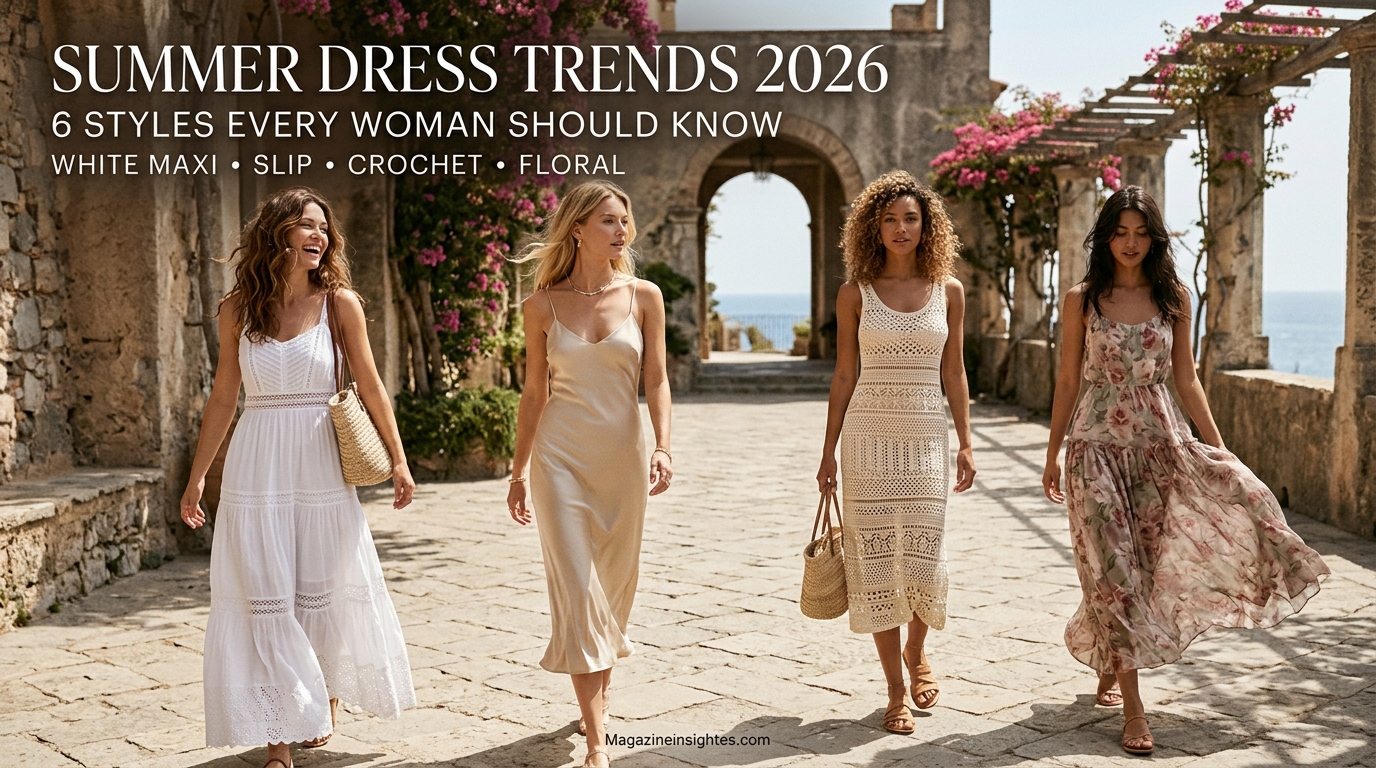
The white or ivory maxi dress led the summer, usually in cotton, broderie, or crinkled fabric, often with a tiered skirt.
It was the single most repeated dress of the season, from city streets to beach towns.
The white maxi worked because it needed almost nothing else. A flat sandal and a woven bag finished it, and the same dress carried into fall under a denim or suede jacket with ankle boots.
The Slip Dress
The slip dress stayed central through both seasons, bias-cut or straight, in satin-like or matte fabrics, sometimes trimmed with lace.
It was the season’s most versatile dress, moving from day to evening with a change of shoes.
Victoria Beckham’s pastel slips gave the slip dress a soft, delicate register. Valentino’s sheer lace versions gave it a bolder one, and the two registers sat side by side all season.
The Shirt Dress
The shirt dress offered the season’s most practical shape, relaxed and often in stripes or linen, worn belted or loose. It worked for work, for travel, and for weekends without a change of silhouette.
A shirt dress with a slim belt and slingbacks made a complete office outfit in summer heat. The same dress, worn loose with flat sandals, made an easy weekend outfit.
Crochet and Knit Dresses
Crochet and knit dresses defined the bohemian side of summer, usually layered over a slip or a swimsuit.
They were vacation dressing at its most direct, and they appeared in both open knits and denser crochet.
The crochet dress worked best as a layer rather than a standalone piece. Over a slip it read as a dress, and over swimwear it read as a cover-up, which gave one piece two jobs.
The Drop-Waist Dress
The drop-waist dress gave the season a softer alternative to the fitted waist. It created a longer line through the torso and a more sweeping skirt, and it suited the season’s relaxed mood.
The shape appeared in cotton and linen for day and in silk for evening. A drop-waist dress with a defined shoulder or a slim belt kept the relaxed shape from looking shapeless.
Floral and Polka Dot Dresses
Floral and polka dot dresses carried the season’s prints.
Chanel enlarged floral motifs to impressionistic proportions, while Chloé used bright 1980s blooms, and the H&M spring analysis named pretty florals and playful polka dots as key categories.
Polka dot dresses were among the season’s strongest forecast performers.
Trend forecasting reported big dot dresses up 80 percent in Europe, with dotted skirts up 47 percent in Europe, in figures that are forecasts rather than sales data.
| Dress | Fabric | Best for | Wear it with |
|---|---|---|---|
| White maxi | Cotton, broderie, crinkled fabric | City days and vacations | Flat sandals and a woven bag |
| Slip dress | Satin-like or matte, lace trim | Evenings and warm days | Strappy sandals or slingbacks |
| Shirt dress | Linen or stripes | Work and travel | Slim belt and slingbacks |
| Crochet dress | Open knit or crochet | Vacations and beach days | Slides and a straw hat |
| Drop-waist dress | Cotton, linen, or silk | Relaxed days and evenings | Ballet flats or low heels |
| Polka dot dress | Cotton or poplin | Daytime statements | Plain basics and simple shoes |
Prints and Patterns
Prints were treated with more intensity in 2026 than in the quiet seasons before it. Big dots, new animal prints, and oversized florals all appeared at full strength.
Polka Dots
Polka dots made a comeback with playful precision, balancing whimsy with sophistication.
Big dots were forecast to grow 55 percent in Europe and 33 percent in the United States, in trend forecasting figures that are projections rather than sales data.
Dots appeared on dresses, skirts, and blouses, and they worked best as a single statement piece. A polka dot dress with plain shoes and a solid bag kept the print from overwhelming the outfit.
Animal Prints Beyond Leopard
Animal prints expanded beyond leopard in 2026, with zebra, dalmatian, and cow motifs leading a monochrome resurgence. Trade reporting on the season called the shift bold yet understated in its modernity.
Zebra stripes were forecast to grow 21 percent in Europe and 17 percent in the United States.
Cow print was forecast at an impressive 87 percent growth in the United States, in figures reported from Heuritech forecasting.
Leopard stayed relevant, and python joined it in the season’s print lists. The new prints worked best as one piece against plain basics, which kept the monochrome patterns from competing with each other.
Romantic Florals and Botanicals
Romantic florals and paisleys returned with the boho resurgence, particularly at the start of the season. Chloé and Valentino led the boho revival, and their florals were soft, romantic, and layered.
A second floral story ran alongside the romantic one: the powerful flower. Single large blooms, often rendered imperfectly through delicate stitching or painterly prints, became a key dress motif.
Botanical prints added a third register, from vibrant and disrupted florals to serene and precise botanical renderings.
Digital nature prints, including macro photography of moss, crystals, and water surfaces processed by neural networks, gave florals a futuristic edge.
Stripes, Gingham, and Checks
Stripes in all widths stayed a staple through the whole season. They anchored the coastal mood, appeared on shirt dresses and knitwear, and paired easily with denim and linen.
Gingham was forecast to grow 31 percent among women in Europe and 17 percent among men. The check appeared on dresses, blouses, and the farmer’s market looks that Stitch Fix named as a spring trend.
Prince of Wales and windowpane checks joined gingham in the season’s checks. Checkered patterns stepped out of their seasonal confines, signaling the erosion of traditional wardrobe boundaries between seasons.
The 2026 fashion trends for women on the site cover the season’s styles in more depth. That guide lists 25 styles for the year, including several of the silhouettes and prints described here.
Fabrics for Warm Weather
Fabric choice mattered more in summer than any single trend. The good news is that the summer 2026 mood favored the very fibers that work best in heat.
Linen
Linen was the season’s defining fabric, highly breathable and quick-drying. It wrinkled, but in summer that read as relaxed rather than messy, and it appeared in sets, pants, dresses, and shirts.
The linen set was the most widely adopted idea of the summer: a relaxed shirt or vest with matching wide pants or shorts.
It looked polished with zero effort, and it worked for city days, travel, and weekends alike.
Pure linen or a high-linen blend breathes far better than a blend dominated by polyester.
Checking the composition tag before buying was the season’s most practical tip, and it separated the linen that cools from the linen that only looks like linen.
Cotton Poplin and Voile
Cotton poplin and voile were the season’s crisp, light cottons, easy to wash and easy to wear. Poplin gave shirt dresses and blouses their structure, while voile gave dresses and tops a softer fall.
Crinkled and seersucker cotton joined them, with a texture that keeps fabric off the skin and helps airflow. The texture made hot days easier, and it needed no ironing to look right.
Silk and Sheer Layers
Silk and silk-like fabrics were beautiful for evening, though they can show sweat, so matte or printed versions worked better for day.
Loose silk or satin shapes offered a relaxed elegance alongside the season’s bolder looks.
Sheer layering was one of the season’s clearest ideas, with mesh, organza, and fine linen used as overshirts, cover-ups, and second layers.
A new kind of allure replaced overt cutouts with intriguing layers of transparent material.
Layered lingerie appeared in the season’s reporting as well, either with unruly layering for younger wearers or refined transparency for more sophisticated looks.
The wearable version was a sheer overshirt or a lace camisole under a linen blazer.
Denim, Worn In
Classic blue stepped back in 2026, and worn-in denim took its place.
Faded colors, dirty sand shades, and raw edges defined the season’s denim, and maxi skirts made from several types of denim were particularly relevant.
Brut denim, the unwashed and untreated kind, appeared alongside dark denim in the spring collections. Both gave denim a rawer, more textured feel than the polished washes of earlier seasons.
What to Avoid in Heat
Fully synthetic, tightly woven fabrics trap heat and moisture, and heavily lined dresses can feel stifling.
If a synthetic piece is loved, an open weave or a loose fit lets air circulate and makes it wearable.
Darker colors absorb more heat, so they were best saved for evenings. Looser fits beat tighter ones on hot days, because air movement keeps the body cooler than less fabric does.
| Fabric | Why it works in heat | Best pieces | Watch out for |
|---|---|---|---|
| Linen | Breathable and quick-drying | Sets, pants, dresses, shirts | Polyester-heavy blends that trap heat |
| Cotton poplin | Crisp, light, easy to wash | Shirt dresses, blouses | Heavy linings in dresses |
| Cotton voile | Soft, light, airy fall | Dresses and tops | Sheerness without a layer |
| Seersucker | Texture keeps fabric off skin | Shirts, dresses, shorts | Stiff versions that lose the drape |
| Silk | Beautiful drape, cool feel | Evening dresses, camisoles | Sweat marks in bright light |
| Tulle and organza | Sheer layers without weight | Overshirts, skirts, trims | Over-layering that adds heat |
Denim in 2026: The Classic Revival
Denim returned to form in 2026, according to Vogue Scandinavia, with classic no-fuss washes and reliable silhouettes dominating runways from Acne Studios to Stella McCartney. Straight, boot, and wide cuts led the revival.
The classic revival was a deliberate step back from novelty denim. Instead of extreme washes or experimental cuts, the season favored denim that looked like denim and fit like it was made to last.
Low-rise denim made a refined return alongside the classic cuts, and wide legs kept the relaxed line the season loved.
Patchwork denim and maxi skirts built from several denim types added the season’s craft detail to the classic base.
Denim appeared in the season’s most practical outfits as well.
A striped top with relaxed denim was one of the coastal casual formulas Stitch Fix recommended for spring, and a light sweater paired with linen pants offered the same ease in a softer fabric.
The Accessories That Finished the Look
Accessories carried much of the season’s personality, because the clothes themselves were often simple. A coin belt, a raffia bag, or a pair of jelly heels could define an otherwise plain outfit.
Coin Belts
Coin belts were one of the six wearable runway trends Who What Wear named for spring and summer 2026. Last year brought layered belts, and the season made the belt itself the statement.
Hermès attached Kelly bags to its waistbands, Louis Vuitton leaned toward rope, and Celine created its own version with extra-large medallions, oval metal clasps, and heavy hardware.
Dior’s Médaillon belt was a key find from its spring and summer runway, and there were loafers to match.
The coin belt worked best over a simple dress or a linen set, where the hardware had room to show.
Worn that way, it turned a plain outfit into a styled one without adding a layer.
Safari Chic
Safari chic was the season’s standout utility aesthetic, built from utility jackets, khaki tones, and cargo trousers. Balmain, Burberry, Isabel Marant, and Saint Laurent were among the standout examples on the runways.
The look was practical as well as stylish, with pockets, sturdy fabrics, and earthy colors. It paired naturally with flat sandals and woven bags, and it suited travel and outdoor weekends.
Shoes: Jelly Heels, Ballet Flats, and Flat Sandals
Chunky stompers were swapped for dainty alternatives in spring 2026. Bottega Veneta’s version was an anti-toe-cleavage pump with a high vamp, and it set the tone for a prettier, lighter shoe season.
Chloé had peep-toed jelly heels in dreamy colors like mustard and powder blue.
At Dior, Jonathan Anderson delivered delicate heels, some adorned with a big rosette, some in silk with a little bow, and others with whimsical bunny-like ears.
Flat sandals led the summer, in leather, with thin straps, thongs, or fisherman styles.
Ballet flats in mesh or soft leather suited city days, slides and mules with a low heel suited evenings, and espadrilles with woven soles gave a classic summer note.
Slim sneakers covered travel and long walking days. The season’s shoe rule was simple: spend on the pair that must be walked in, since cheap soles and stiff straps are where summer comfort usually fails.
Bags: Raffia, Straw, and Open Shapes
Raffia, straw, and woven bags led the summer in totes and shoulder shapes. They matched the season’s natural textures, and they worked with linen, cotton, and denim alike.
Soft suede or canvas shoulder bags suited the city, where a structured woven tote felt too casual. Open bags also appeared in the season’s accessory lists, alongside sculptural handbags and oversized jewelry.
Hats and Jewelry
The pillbox hat returned in spring 2026, a simple accessory that confers an indisputable touch of elegance. Joseph Altuzarra paired it with fierce leather and fur separates, and it appeared across the season’s statement-hat reporting.
Wide-brim hats and caps served sun protection as well as style. Shell, bead, and pearl jewelry ran alongside chunky gold, and scarves were worn as tops, headscarves, or bag accents.
XXL brooches and sculptural jewelry added the season’s decorative finish. Beaded jewelry, printed scarves, and statement hats completed the accessory story, and each piece worked best as a single focal point.
Spring versus Summer: How the Season Shifted
Spring and summer 2026 shared a palette and a mood, but they did not wear the same clothes. Spring leaned on structure and layering, while summer leaned on breathable fabrics and simpler shapes.
Spring was the season of 1980s shoulders, color blocking, coin belts, and the reinvented trench. Jelly heels and ballet flats carried the shoe story, and butter yellow was the color that tied the looks together.
Summer was the season of linen sets, white maxi dresses, crochet, and Bermuda shorts. Flat sandals replaced heels, terracotta and sage joined the palette, and the most adopted outfits were the simplest ones.
A summer retrospective published in October 2026 named the linen set, the white maxi dress, and the relaxed shirt with a skirt and flat sandals as the most widely adopted ideas of the summer.
The shift was gradual rather than sudden, and the bridge pieces were the ones that worked in both seasons.
A slip dress, a linen blazer, a white shirt, and a pair of wide leg pants crossed from spring into summer without a change.
| Element | Spring 2026 | Summer 2026 |
|---|---|---|
| Leading pieces | Blazers, trench, balloon trousers | Linen sets, white maxi, slip dress |
| Key colors | Butter yellow, chartreuse, primary blocks | White, terracotta, sage, soft blue |
| Key prints | Polka dots, florals, zebra | Stripes, small florals, paisley, cow print |
| Shoes | Jelly heels, ballet flats, loafers | Flat sandals, slides, espadrilles |
| Accessories | Coin belts, pillbox hats | Raffia bags, wide-brim hats, shell jewelry |
| Mood | Bold, structured, cinematic | Relaxed, tactile, romantic |
Outfit Formulas for Every Occasion
Outfit formulas turn trends into clothes people can wear without overthinking. The formulas below use the season’s most adopted pieces, and each one mixes two of the season’s moods rather than one.
Elevated workwear was one of Stitch Fix’s five spring trends for women. Stylist Jackie described it as everyday tailoring, polished but relaxed, good for errands and brunch alike.
Coastal casual was another of the five, built on simple formulas that feel comfortable and pulled together.
Stylist Caro named a striped top with relaxed denim, a tank under an open button-down, and a light sweater paired with linen pants as easy combinations for day to night.
Farmer’s market style blended feminine silhouettes with a cottagecore feel for an unfussy, elevated boho look. Gingham prints, woven accessories, and comfortable sandals added charm while keeping things effortless, according to Stylist Jackie.
Spring occasions called for dainty details like tie-front and flutter-sleeve blouses, feminine skirts, and matching sets. Stylist Caro advised refined silhouettes in soft colors or modern florals for spring gatherings.
| Occasion | Formula |
|---|---|
| City day | Linen pants, tucked tank, flat sandals, woven tote |
| Office | Shirt dress, slim belt, slingbacks, small gold earrings |
| Vacation | Crochet dress over swimsuit, slides, straw hat |
| Evening | Slip dress, light cardigan, strappy sandals |
| Weekend | Bermuda shorts, oversized striped shirt, ballet flats |
| Wedding guest | Floral midi dress, block heel, small clutch |
| Travel | Linen set, slim sneakers, canvas shoulder bag |
| Date night | Slip skirt, silk camisole, low heel, gold jewelry |
Vacation dressing leaned into the full mood, with crochet, fringe, cover-ups, bold prints, and flat sandals, often worn over swimwear.
City dressing borrowed the same ideas in more structured form, with a linen set instead of a cover-up and a slip skirt with a crisp shirt.
Casual outfit ideas for women on the site offer more everyday combinations in the same spirit. That guide lists 15 casual looks for 2026, including several built around the season’s linen and denim pieces.
What Men Wore in Spring and Summer 2026
Most spring and summer 2026 reporting was womenswear, so the men’s picture is thinner and deserves honesty about that limit.
What was verified comes from a small number of guides, and it is worth recording rather than inventing.
Stitch Fix’s men’s spring guide named four trends for the season, and the first was layers.
The station jacket was the top outerwear pick, and Stylist Matthew recommended a lightweight flannel shirt in white or blue under it for a layer that was not too heavy.
Leveled-up activewear was the second trend, with moisture-wicking tops paired with streamlined joggers or shorts and finished with modern sneakers.
Stylist Caro described the mix as a look that moves easily between workouts and weekend errands.
Vacation-ready dressing was the third trend, built around the vacation shirt.
These breezy button-downs offered an elevated take with a textured weave, embroidered details, or a soft color or pattern, and drawstring pants and shorts completed the packing list.
Preppy American sportswear also returned for men, with collegiate stripes, vibrant blues, and polos recalling 1980s yacht rock.
Gingham was forecast to grow 17 percent among men in Europe, and the check appeared across shirts and tailoring.
The men’s trends shared the season’s wider themes: relaxed fits, natural fabrics, and practical layering. A linen shirt, a station jacket, and drawstring pants made a complete warm-weather wardrobe without chasing novelty.
Budget: What to Spend On and What to Skip
Trend pieces are cheap to buy and expensive to regret, so the budget question matters more than the trend list.
Cost per wear is the honest measure: the price divided by the number of times the piece is actually worn.
Linen and cotton basics were available at every price tier in 2026, so spending on fit and fabric quality mattered more than spending on labels.
A well-cut linen shirt at a modest price beats a poorly cut designer piece every time.
The largest share of a summer budget belonged on sandals that can be walked in. Cheap soles and stiff straps are where summer comfort usually fails, and a good sandal outlasts three cheap pairs.
Statement pieces earned the smallest share of the budget, because their life is short.
A coin belt, a pair of jelly heels, or a cow print skirt should cost little, since they may only be worn for one season.
| Category | Spend on | Save on | Why |
|---|---|---|---|
| Fabrics | Pure linen and good cotton | Polyester-heavy blends | Breathable fabric decides comfort |
| Shoes | Sandals and ballet flats | Novelty heels | Walkable shoes get worn daily |
| Dresses | White maxi and slip dress | Single-print statement dresses | Classics repeat across seasons |
| Trousers | Balloon and wide leg cuts | Extreme novelty shapes | Good cuts carry into next year |
| Accessories | One good woven bag | Coin belts and jelly heels | Statements age fastest |
Sustainability in Plain Language
Sustainability was the season’s quiet undercurrent rather than its headline. The clearest version of it was simple: buy fewer pieces, choose better fabrics, and wear what is bought more often.
Mindful curation was the market’s own word for the shift, with shoppers favoring longevity and personal expression over impulse buys. A wardrobe built on well-chosen pieces wastes less than one built on constant newness.
Reading the label was the most practical sustainability skill of the season. Pure linen, organic cotton, Tencel Lyocell, and Lenzing Ecovero viscose were the fibers the season’s reporting named for lower-impact warm-weather dressing.
European rules changed how brands may talk about green claims in 2026.
The European Union’s Directive 2024/825 on consumer empowerment for the ecological transition took effect on September 27, 2026, and it applies in the European Union rather than the United States.
Craftsmanship was the season’s other sustainability story, with hand-finished hems, tone-on-tone texture, and careful construction presented as the opposite of disposable fashion.
Clothes made to last were the season’s most durable trend, even if they were the least photographed.
Keep or Retire: What Carries Into 2027
The 2026 spring fashion trends guide on the site covered the spring season alone, and the summer half completes the picture. With both seasons behind us, a keep-or-retire verdict is possible for the first time.
Keep the pieces that carried over already or that rest on classic shapes. Linen sets, white maxi dresses, slip dresses, balloon trousers, classic denim, ballet flats, and raffia bags all earned another year.
Rest the pieces that depended on novelty alone. Jelly heels, coin belts as a daily statement, heavy fringe, and sheer without a layer were fun for one season and are best stored rather than repeated.
Cow print and polka dots sit in the middle, worth keeping as accents rather than full outfits.
A cow print bag or a polka dot blouse carries the trend without betting the whole outfit on it.
| Trend | Verdict | Reason |
|---|---|---|
| Linen sets | Keep | Breathable, classic, already carried over |
| White maxi dress | Keep | Timeless shape in the season’s key color |
| Slip dress | Keep | Versatile across day, evening, and seasons |
| Balloon trousers | Keep | Carried over from last year already |
| Classic denim | Keep | No-fuss washes outlast novelty cuts |
| Ballet flats | Keep | Practical, comfortable, widely adopted |
| Raffia bags | Keep | Natural texture suits every summer |
| Polka dots | Keep as accent | Strong but best in one piece |
| Cow print | Keep as accent | New print, unproven beyond one season |
| Jelly heels | Rest | Novelty shoe with a short life |
| Coin belts | Rest | Statement piece, easily overdone |
| Heavy fringe | Rest | Runway drama, hard to wear daily |
The carry-forward depends on what the next season actually shows, and two dates matter.
Pantone announces its next Color of the Year in December 2026, and the spring and summer 2027 shows land in February and March 2027.
How to Wear SS26 Pieces Into Fall
The best summer pieces do not need to disappear in September. Layering and a shoe swap carry most of them into fall without buying anything new.
Slip dresses layer over a fitted turtleneck or under a chunky cardigan.
Linen pants work with a knit and loafers on mild days, and the white maxi dress keeps going with a denim or suede jacket and ankle boots.
The shoe swap does most of the work: sandals give way to loafers or boots while the same skirts and dresses stay.
A light layer in the bag covers air-conditioned offices and trains on the way.
Wash everything before storing, since body oils and sunscreen can cause yellowing over time.
Store linen and cotton folded in breathable bags rather than plastic, and keep straw and raffia bags stuffed with tissue so they hold their shape.
Frequently Asked Questions
What were the biggest fashion trends of 2026?
Bold color, generous volume, and tactile texture led the year.
Pantone named Cloud Dancer, a billowy white, its Color of the Year, while the runways filled with chartreuse, primary color blocks, balloon trousers, voluminous skirts, polka dots, and new animal prints.
What is SS26 in fashion?
SS26 is shorthand for the spring and summer 2026 season, covering the collections shown in September and October 2025 and worn through spring and summer 2026. The term covers both seasons as one fashion story.
What colors were trending in spring and summer 2026?
Cloud Dancer white, butter yellow, chartreuse, scarlet red, pistachio green, and primary color blocks led the season.
Creamy white replaced stark white, terracotta and sage joined in summer, and Transformative Teal was the rival Color of the Year from WGSN and Coloro.
What is the Pantone Color of the Year 2026?
Cloud Dancer, code PANTONE 11-4201, a billowy white imbued with a feeling of serenity.
Pantone announced it on December 4, 2025, and it was the first white ever named Color of the Year since the program began in 1999.
What is the WGSN Color of the Year 2026?
Transformative Teal, code 092-37-14, a deep blue-green chosen by WGSN and Coloro. It sat at the center of their seasonal palette alongside Electric Fuchsia, Blue Aura, Amber Haze, and Jelly Mint.
What is the difference between Pantone and WGSN Colors of the Year?
They are rival forecasts from different organizations with different methods.
Pantone chose a white based on broad cultural trends, while WGSN and Coloro chose a teal from fashion forecasting data, so the two picks should be read side by side rather than merged.
What changed in fashion from 2025 to 2026?
The mood moved from quiet luxury and neutrals to bold color, volume, and texture.
Pantone’s Color of the Year moved from Mocha Mousse to Cloud Dancer, butter yellow and balloon trousers carried over, and fifteen designer debuts reset the tone at major houses.
Was Mocha Mousse still trending in 2026?
Mocha Mousse stayed visible as a grounding brown neutral in 2026, but it was no longer the leading color.
Cloud Dancer white and the season’s bright colors took the lead, with brown playing a supporting role.
Is butter yellow still trending?
Butter yellow carried over from 2025 into 2026 and stayed everywhere through summer. It appeared on dresses, knitwear, trousers, and accessories, and it paired easily with white, denim, and navy.
Are polka dots in style in 2026?
Yes, polka dots were one of the season’s strongest prints.
Big dots were forecast to grow 55 percent in Europe and 33 percent in the United States. Big dot dresses were forecast up 80 percent in Europe, as forecasts rather than sales data.
What prints were trending in spring 2026?
Polka dots, leopard, zebra, romantic florals, paisley, stripes, and gingham led the spring prints. Oversized florals appeared at Chanel, bright 1980s blooms at Chloé, and pretty florals with playful polka dots in retail trend reporting.
What animal prints were trending in 2026?
Leopard stayed relevant, and zebra, dalmatian, cow, and python joined it.
Cow print was forecast at 87 percent growth in the United States, and zebra was forecast up 21 percent in Europe and 17 percent in the United States.
Are balloon trousers still in style?
Balloon trousers carried over from the previous year into spring and summer 2026 and returned on the runways of Balmain, Michael Kors, and Calvin Klein.
The exaggerated hem became a polished staple, and the shape earns a keep verdict for next year.
What is safari chic?
Safari chic is the season’s utility aesthetic, built from utility jackets, khaki tones, and cargo trousers. Balmain, Burberry, Isabel Marant, and Saint Laurent were among the standout examples on the spring and summer runways.
What is a coin belt?
A coin belt is a statement waist belt with large medallions, heavy hardware, or attached charms.
Hermès attached Kelly bags to its waistbands, Louis Vuitton leaned toward rope, Celine used extra-large medallions, and Dior’s Médaillon belt came with matching loafers.
What dresses were trending in summer 2026?
The white or ivory maxi dress led the summer, followed by the slip dress, the shirt dress, the crochet dress, and the drop-waist dress.
Floral and polka dot dresses carried the season’s prints, and the linen set was the most adopted non-dress outfit.
What fabrics are best for summer heat?
Linen, cotton poplin, cotton voile, seersucker, and open knits are the most comfortable choices because they breathe and dry quickly.
Loose fits help air circulate, and tightly woven synthetics with heavy linings should be avoided on hot days.
Is linen good for summer?
Yes, linen is highly breathable and quick-drying, which makes it the best warm-weather fabric.
It wrinkles, but in summer that reads as relaxed rather than messy, and pure linen or a high-linen blend breathes far better than a polyester-heavy blend.
What shoes were trending in summer 2026?
Flat sandals in leather led the summer, with thin straps, thongs, or fisherman styles.
Ballet flats in mesh or soft leather suited city days, slides and mules with a low heel suited evenings, and espadrilles and slim sneakers covered the rest.
What did men wear in spring and summer 2026?
Men’s spring 2026 trends included the station jacket with a lightweight flannel shirt, leveled-up activewear with moisture-wicking tops and streamlined bottoms, and vacation shirts with drawstring pants and shorts.
Preppy sportswear with polos and collegiate stripes also returned.
How do you wear bold color without looking loud?
Pair one bold piece with plain basics in white, navy, or denim.
A chartreuse top with white trousers, or a scarlet bag against a neutral outfit, gives the color room to work without competing with anything else.
How do you dress for summer in the city versus on vacation?
On vacation, embrace crochet, cover-ups, bold prints, and flat sandals.
In the city, use the same fabrics in more structured shapes, like linen sets, shirt dresses, or slip skirts with crisp shirts, with a little more coverage and a polished shoe.
What should I wear to work in spring and summer 2026?
Elevated workwear led the season: everyday tailoring that is polished but relaxed. A shirt dress with a slim belt and slingbacks, or a linen set with loafers, made a complete office outfit in summer heat.
How do you transition summer clothes into fall?
Layer slip dresses over a fitted turtleneck or under a chunky cardigan. Wear linen pants with a knit and loafers, and keep the white maxi dress going with a denim jacket and ankle boots.
Swap sandals for loafers or boots while keeping the same skirts and dresses.
What spring and summer 2026 trends are worth keeping for 2027?
Linen sets, white maxi dresses, slip dresses, balloon trousers, classic denim, ballet flats, and raffia bags earned a keep verdict.
Polka dots and cow print are worth keeping as accents, while jelly heels, coin belts, and heavy fringe are best rested.
Conclusion
Fashion trends 2025 2026 spring summer added up to a season that chose feeling over restraint.
Bold color, generous volume, and tactile texture replaced the quiet neutrals of 2025, and the clothes people actually wore were the simplest versions of those ideas.
The season’s winners were the pieces that worked in real heat and real life: the linen set, the white maxi dress, the slip dress, and the balloon trouser.
The color story belonged to Cloud Dancer white and the bright shades around it, and the two rival Colors of the Year framed the season rather than settling it.
The current fashion trends for 2026 on the site track the full year behind the season, and the spring what to wear now guide on the site still holds the season’s original predictions.
Both are worth reading next to the retrospective, since the forecast and the outcome tell different parts of the same story.
Keep the linen, the white dresses, the classic denim, and the walkable shoes.
Rest the novelties, and watch December for the next Color of the Year and February for the spring and summer 2027 shows, when the next season starts to take shape.