Do You Need Health Insurance? The Honest 2026 Answer
Last updated: November 7, 2026, 18:00 PKT. Facts checked November 7, 2026. Figures are labelled by source and date. This article is general information only. It is not insurance advice, tax advice, or medical advice.
Rules vary by state. Check your own situation on HealthCare.gov or with a licensed broker before you decide.
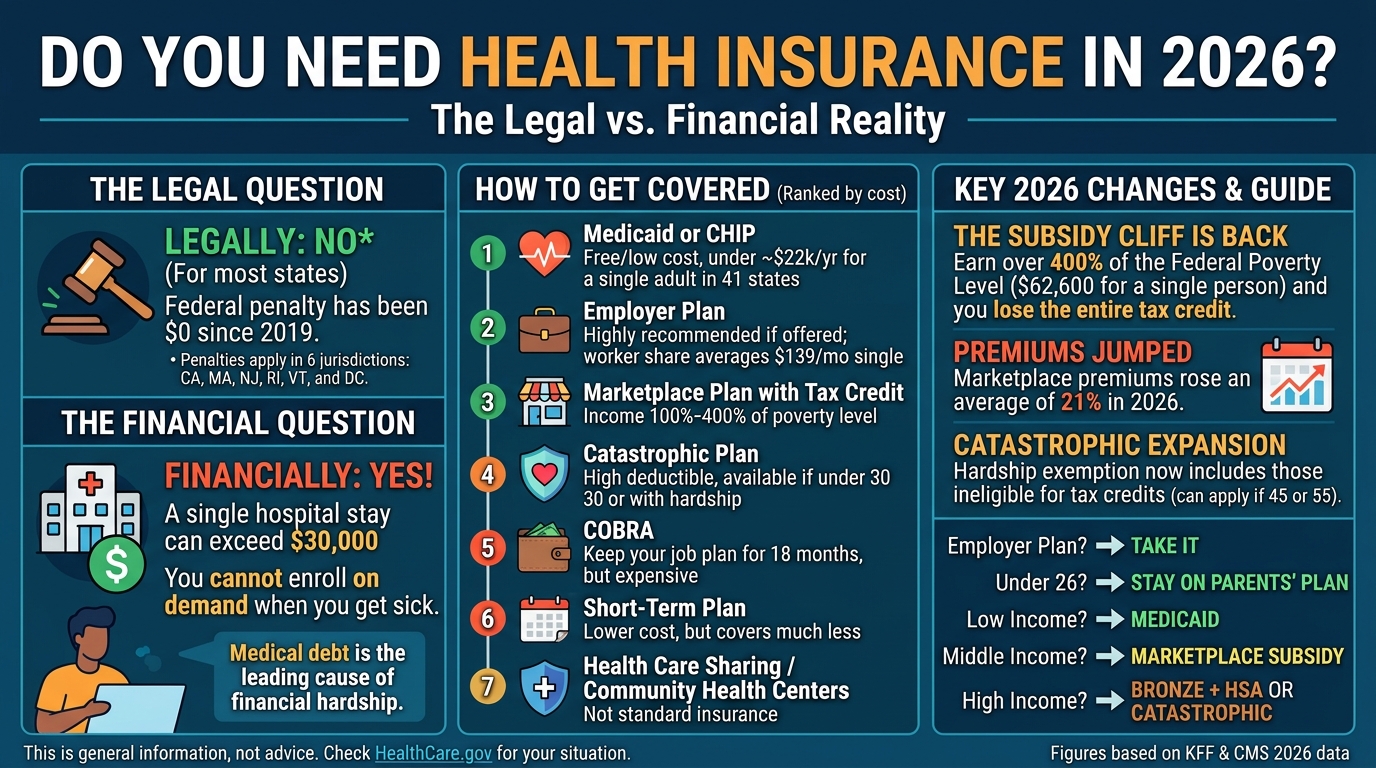
Do you need health insurance? Legally, no, in most states. The federal penalty for going without coverage is $0, and it has been $0 since 2019. Financially, yes, almost everyone does.
A single hospital stay can cost more than a year of premiums, and you cannot sign up on demand when you get sick.
The legal question and the financial question are separate. Almost all the real risk lives in the second one. No federal penalty describes one narrow legal fact.
It was never designed to tell you whether skipping coverage is a smart financial move.
This guide answers both questions. It explains the law,
the six states that still fine you,
the real cost of going without,
what coverage actually buys,
what it costs in 2026,
the 2026 changes that matter most,
and how to get covered.
It ends with a decision flowchart and 25 FAQs.
Do You Need Health Insurance? The Short Answer
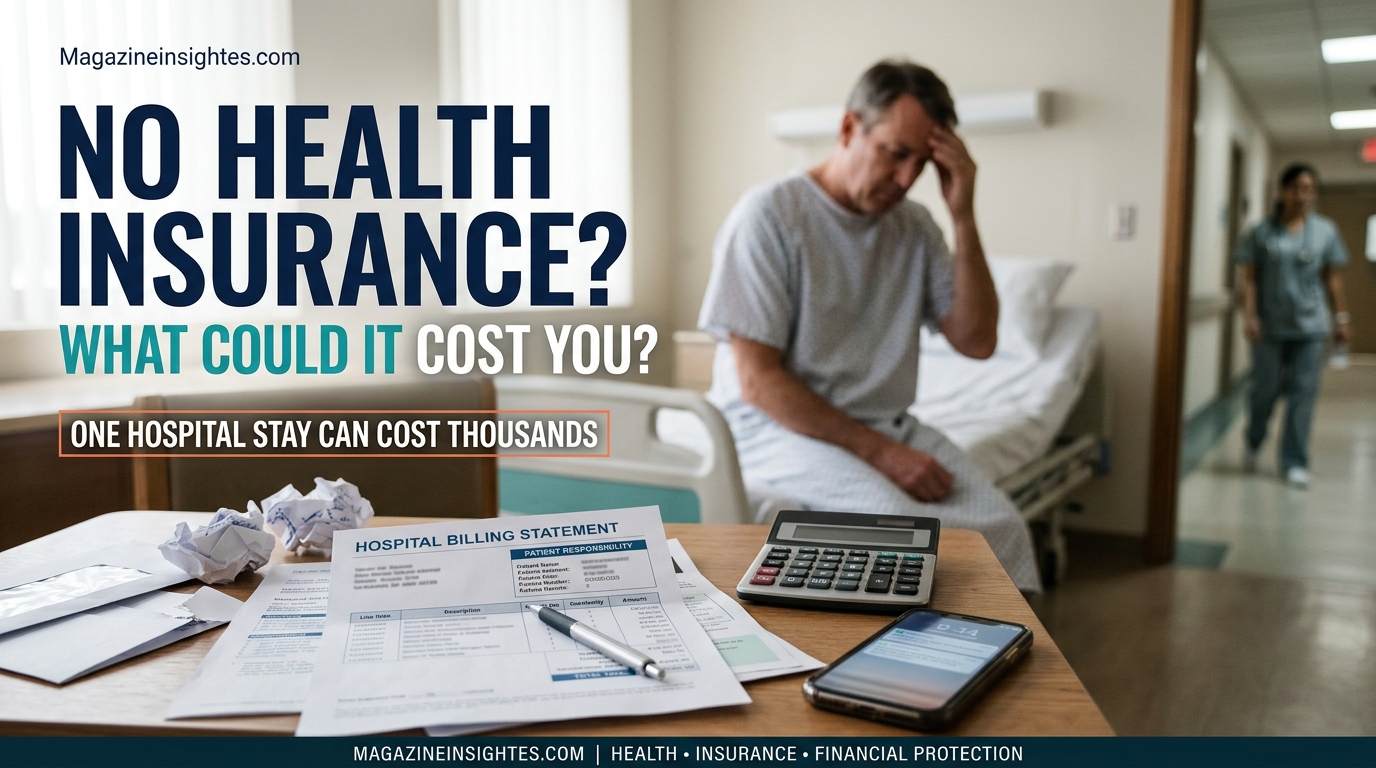
Yes, for almost everyone, in almost every situation. Health insurance is the main barrier between you and financial catastrophe when illness or injury strikes.
A single hospital stay can generate bills exceeding $30,000, and without coverage you would owe every dollar yourself.
The exception is narrow. If your income is low enough for Medicaid, if you are under 26 and on a parent’s plan, or if you have employer coverage, you already have the answer.
If none of those apply, the question is not whether you need coverage. It is which coverage you can afford.
Three facts decide the answer for most people. First, you cannot enroll on demand. Open enrollment runs once a year.
Second, hospitals must stabilize you in an emergency, but they do not have to do it for free. Third, one bad week can erase two to five years of premium savings in a single bill.
The Legal Question vs the Financial Question
The legal question is simple. At the federal level, no, you do not have to carry coverage. The penalty dropped to $0 in 2019.
Six jurisdictions still enforce their own mandates with real financial consequences through state tax filings. Everywhere else, there is no legal financial consequence at either the federal or the state level for going without coverage.
The financial question is harder, and it is the one that matters. Insurance only works as a system when healthy people pay into the same pool as sick people.
Remove the mandate’s teeth, and the people most likely to walk away first are the young and healthy, exactly the ones whose premiums were quietly subsidizing everyone else’s claims. The risk is not a fine.
The risk is a bill.
Think of it as a car. Would you drive a car without auto insurance? No, of course not. After all, you need protection in case of an accident.
Like auto insurance, health insurance operates as a safety net for the worst-case scenario. It protects you from financial hardship when an injury or illness occurs.
The Federal Mandate: What Changed
The Affordable Care Act, passed in 2010, originally included an individual mandate. The mandate required most Americans to carry health insurance or pay a tax penalty, known as the shared responsibility payment.
The penalty was the law’s way of keeping healthy people in the pool.
That changed with the Tax Cuts and Jobs Act, passed in December 2017. The Act reduced the federal shared responsibility payment to $0 starting in the 2019 tax year.
The mandate still exists on paper, but the penalty is zero, so there is no federal financial consequence for going uninsured.
YourInsurance.info still claims a federal fine exists. That page is wrong. It also claims a federal law requires coverage. Both claims have been false since 2019. Do not rely on it.
The federal penalty is $0, and it has been $0 for seven years.
State Penalties: The Six Jurisdictions
Six jurisdictions still enforce their own mandates. California,
Massachusetts,
New Jersey,
Rhode Island,
Vermont,
and Washington D.C. enacted their own individual mandates after the federal penalty was zeroed out,
specifically to keep their insurance markets stable.
If your state has a mandate, you may owe a penalty when you file your state taxes.
| Jurisdiction | Mandate since | Penalty 2026 | Notes |
|---|---|---|---|
| California | 2020 | Greater of about $900 to $950 per uninsured adult (about half per child) or 2.5% of household income above the filing threshold | Hardship exemptions available |
| Massachusetts | 2006 | Income and age based, capped at 50% of the lowest-cost monthly premium, up to about $1,600 to $2,200 per year | Oldest mandate in the country |
| New Jersey | 2019 | Based on income and household size, similar to the old federal penalty | Hardship exemptions available |
| Rhode Island | 2020 | Based on income and household size | Hardship exemptions available |
| Vermont | 2020 | No financial penalty attached | Mandate exists on paper, no fine |
| Washington D.C. | 2019 | Based on income and household size | Hardship exemptions available |
Tax penalties vary,
but they are often an amount based on your income or a flat rate per adult. Some states offer exemptions or hardship waivers if you cannot afford insurance or have another qualifying reason.
You may qualify for a hardship exemption if a financial challenge or other hardship kept you from getting coverage.
Every other state has no individual mandate and no state-level penalty. Residents outside these six jurisdictions face no legal financial consequence at either the federal or the state level for going without coverage.
The legal penalty, where one exists, is often the smallest part of the real cost of going uninsured.
The Real Cost of Going Without Health Insurance
A single hospital stay can generate bills exceeding $30,000. Hospital expenses averaged roughly $3,300 per inpatient day in 2024,
meaning a week-long stay for something like pneumonia or a complicated fracture can run past $25,000 before physician fees,
imaging,
and medications are added.
A multi-day hospital stay for a cardiac event can clear six figures before you leave the building.
Uninsured patients pay the highest price. Uninsured patients typically see a much higher sticker price because they do not benefit from negotiated discounts.
Insurance spreads risk across a pool of people, so your share of costs stays predictable even when your medical needs spike.
Without the negotiating power of an insurer, you will be billed at the highest possible rate for every service, from a doctor’s consultation to a hospital stay.
| Event | Typical uninsured bill | What insurance does |
|---|---|---|
| Emergency room visit | Well into four figures, even for something minor | Negotiated rate, then deductible and copay |
| Broken arm with surgery | Five figures at the uninsured rate | Negotiated rate, capped by out-of-pocket maximum |
| Emergency appendectomy | Five figures | Negotiated rate, capped by out-of-pocket maximum |
| Week-long hospital stay | $25,000 to $30,000 plus physician fees | Negotiated rate, capped by out-of-pocket maximum |
| Multi-day cardiac stay | Six figures | Negotiated rate, capped by out-of-pocket maximum |
Medical debt is the leading cause of financial hardship. Roughly 41% of working-age Americans currently carry medical debt or are paying off medical bills.
Research published in the American Journal of Public Health found that roughly two-thirds of people filing for bankruptcy cited medical expenses or illness-related income loss as a contributing factor,
translating to about 530,000 medical bankruptcies each year.
Medical debt still hurts your credit. A federal rule that would have removed medical bills from credit reports entirely was struck down by a court in July 2025,
so medical debt remains reportable under the Fair Credit Reporting Act.
Beyond credit damage, ignoring medical bills can lead to late fees, lawsuits, and wage garnishment.
Going without insurance changes your behavior. Uninsured people routinely skip routine care or delay treatment, which turns manageable conditions into expensive emergencies.
People with chronic conditions who do not have insurance are less likely than those with insurance to get care due to cost.
For example, 42% of uninsured adults with diabetes delayed or skipped needed care because of cost, according to UnitedHealthcare.
People without insurance are more likely to end up in the hospital for health problems that may have been avoided with preventive care. They may also have worse health outcomes.
Without regular care, health conditions may go undiagnosed and get worse.
What Health Insurance Actually Covers
Plans sold in the individual and small-group markets must cover ten categories of essential health benefits. These include hospital stays,
emergency services,
prescription drugs,
maternity and newborn care,
mental health and substance use treatment,
rehabilitative services,
lab work,
preventive and wellness services,
and pediatric care including dental and vision for children.
Insurers cannot turn you away or charge you more because of a pre-existing condition. Before the ACA, a history of diabetes, cancer, or even pregnancy could mean a coverage denial or sky-high premiums.
That protection alone is reason enough for many people to value insurance.
The only factors that can affect your premium are your age (within a 3-to-1 ratio for adults), geographic location, family size, and tobacco use (with a maximum 1.5-to-1 surcharge).
There are no lifetime or annual coverage limits. For 2026, the annual out-of-pocket maximum is $10,600 for an individual plan and $21,200 for a family plan.
Your annual out-of-pocket maximum sets a legal limit on what you will pay in a year for covered services, shielding you from unlimited financial liability.
One of the most underused benefits is free preventive care. Most plans must cover a set of screening tests,
immunizations,
and wellness visits with no copay,
no coinsurance,
and no deductible,
as long as you stay in network.
Insurance plans need to cover the cost of preventive care, like your annual flu shot, Pap test, and wellness checkup.
With an insurance plan, you do not have to pay out of pocket for preventive services.
Preventive care is the cheapest care. Walking 30 minutes a day is one of the simplest preventive habits, and it costs nothing.
Healthy morning habits and a healthy meal plan for beginners are the same idea: small daily habits that keep you out of the hospital.
A 15-minute home workout for beginners needs no equipment and no gym. Insurance pays for the screenings. You do the habits.
How Much Does Health Insurance Cost in 2026

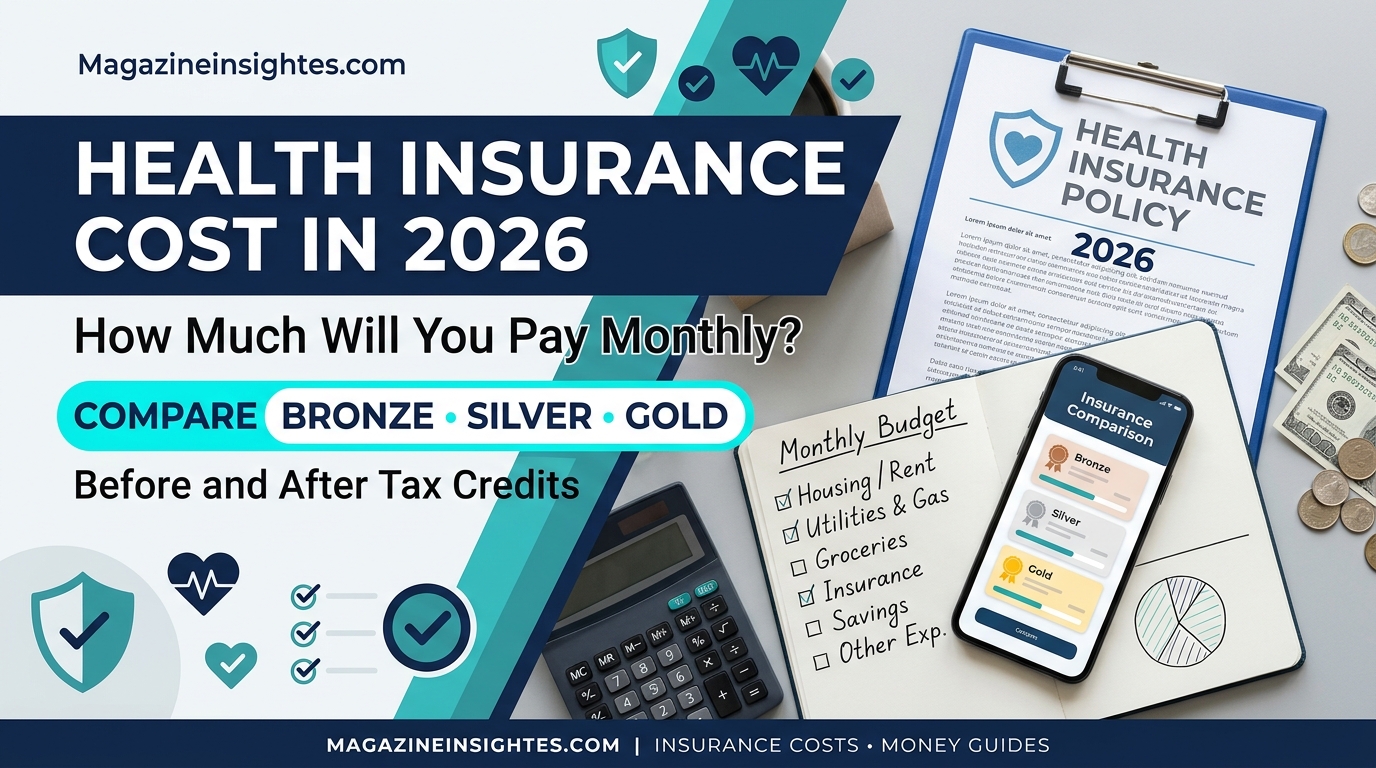
In 2026, the benchmark Silver plan for a 40-year-old averaged $625 a month before tax credits across the United States, according to KFF. The cheapest Bronze plan averaged $456 a month.
The benchmark is the second-lowest-cost Silver plan where you live. Your tax credit is figured from its price.
Before any tax credit, a benchmark Silver plan averaged about $489 a month at age 21, $625 at 40, and $1,327 at 60.
One source reports $615 a month for the same benchmark, computed county by county from CMS rate filings. The two figures conflict by method, not by fact. KFF’s $625 is the national average.
The $615 figure is a county-weighted CMS calculation. Present them by source, never merged. Your own price depends on your state, your age, and your income.
What you actually pay is much lower for most people. Marketplace enrollees paid an average of $178 a month in 2026 after tax credits.
Through an employer, the worker share averages about $139 a month for single coverage and about $623 a month for a family, according to the KFF 2026 Employer Health Benefits Survey, published October 22, 2026.
Workers pay about 18% of a single premium and 27% of a family premium on average.
| Coverage | Monthly cost 2026 | Source |
|---|---|---|
| Benchmark Silver, age 40, before tax credits | $625 | KFF |
| Cheapest Bronze, age 40, before tax credits | $456 | KFF |
| Benchmark Silver, age 21, before tax credits | $489 | KFF |
| Benchmark Silver, age 60, before tax credits | $1,327 | KFF |
| Marketplace enrollee, average after tax credits | $178 | KFF |
| Employer plan, worker share, single | $139 | KFF 2026 Employer Health Benefits Survey |
| Employer plan, worker share, family | $623 | KFF 2026 Employer Health Benefits Survey |
| Catastrophic plan, age 27, average | $346 | Budget Seniors, KFF data |
| Medicaid, expansion state, under 138% FPL | $0 | Medicaid.gov |
A mid-tier individual Marketplace plan might run somewhere in the range of $400 to $600 a month depending on age,
location,
and subsidy eligibility. Call it roughly $5,000 to $7,000 a year at the high end with no subsidy at all.
A broken arm requiring surgery can run into five figures billed at the uninsured rate. One bad week erases two to five years of premium savings in a single bill.
The 2026 Changes That Matter Most
Three changes make 2026 different from 2025. The subsidy cliff is back. Premiums jumped. Catastrophic plans opened up. A fourth change, Medicaid work requirements, starts in 2027. The table below is the whole story.
| Change | What happened | Who it affects |
|---|---|---|
| Subsidy cliff returns | Enhanced premium tax credits expired December 31, 2025. The One Big Beautiful Bill, signed July 4, 2025, did not extend them. The 400% FPL cliff is back: $62,600 for a single person, $128,600 for a family of four. | Everyone above 400% FPL loses all federal help |
| Premiums jumped | Marketplace premiums jumped an average of 21% in 2026. Insurers asked for a median increase of about 15% on 2027 plans. | Everyone buying their own plan |
| Catastrophic plans opened up | In September 2025, the hardship exemption expanded to include anyone whose income makes them ineligible for premium tax credits. Starting with 2026 plans, you may qualify for a catastrophic plan even if you are 45 or 55. | People above 400% FPL or below 100% FPL |
| Medicaid work requirements | Starting January 1, 2027, most expansion states must require many adults ages 19 to 64 to show 80 hours a month of work, school, or volunteering, with exemptions. | Medicaid adults in expansion states |
The subsidy cliff is the biggest change. For 2026, the original ACA rules apply again.
There is a hard cliff at 400 percent of the Federal Poverty Level: $62,600 for a single person, $84,600 for a couple, $128,600 for a family of four.
Earn one dollar over the line, and you lose the entire tax credit. The enhanced premium tax credits originally passed in 2021 under the American Rescue Plan cushioned costs for 22 million Americans.
They are gone.
The catastrophic expansion is the least known change. Catastrophic plans were previously limited to adults under 30 or those with a documented hardship exemption.
In September 2025, the administration expanded the hardship exemption to include any consumer whose income makes them ineligible for premium tax credits.
The average catastrophic plan for a 27-year-old in 2026 is about $346 a month, a significant savings over a Bronze or Silver plan at the same deductible.
Who Needs Health Insurance Most
Everyone can benefit, but some people cannot afford to go without. Your life stage, health status, and financial situation all play a role in determining the necessity of coverage.
For these people, going without insurance is an exceptionally high-risk gamble.
| Persona | Why coverage is non-negotiable | Best route |
|---|---|---|
| Chronic condition (diabetes, heart disease, asthma) | Ongoing management, regular visits, prescription medications, specialist care | Marketplace Silver with cost-sharing reductions, or Medicaid |
| Family with children | Frequent check-ups, vaccinations, unexpected injuries and illnesses | Marketplace family plan, or CHIP for children |
| Seniors approaching 65 | A serious medical issue in the years before Medicare eligibility can be financially devastating | Marketplace plan until Medicare starts at 65 |
| Significant assets to protect | A home or retirement savings can be wiped out by one hospital bill | Any ACA plan, with the out-of-pocket maximum as the shield |
| Self-employed or freelancer | No employer safety net, no group rate, full premium on your own | Marketplace with premium tax credit, or catastrophic plan above the cliff |
| Between jobs | Losing employer coverage triggers a Special Enrollment Period, and COBRA is expensive | Marketplace SEP, or COBRA for 18 months |
| Young and healthy | Lowest risk, but also lowest cost, and one accident erases years of savings | Catastrophic plan, or Bronze plus HSA |
| Early retiree | Too young for Medicare, too old for cheap premiums, high risk of a costly event | Marketplace plan, watch the subsidy cliff |
Whether skipping coverage is defensible depends heavily on who you are. Self-employed, between jobs, young and healthy, or an early retiree each carry a genuinely different risk profile. The table above is the starting point.
Your income, your state, and your health decide the rest.
How to Get Health Insurance
There are seven doors into coverage. The cheapest option for you right now depends almost entirely on your income,
your state’s Medicaid expansion status,
and whether you are shopping at HealthCare.gov or getting the question wrong entirely.
The doors are ranked below, cheapest first.
1. Medicaid or CHIP
Medicaid is free or nearly free. In 41 states including D.C., adults qualify with incomes up to 138% of the poverty level. That is about $22,025 a year for one person in 2026.
Children, pregnant people, and people with disabilities can qualify at higher incomes. In 10 states, adults without children often cannot qualify at all.
You can apply through the Health Insurance Marketplace or directly through your state’s Medicaid agency at any time of year. Medicaid.gov is the official portal for state Medicaid and CHIP programs.
Under about $22,000 a year for a single adult in an expansion state, Medicaid is the cheapest legitimate health insurance available to any American. Coverage is comprehensive, often with no premiums and minimal copays.
Starting January 1, 2027, most expansion states must require many adults ages 19 to 64 to show 80 hours a month of work, school, or volunteering, with exemptions.
2. Employer Plan
Employer coverage, if offered and affordable, beats all other options for most people. The employer pays most of the premium.
The worker share averages about $139 a month for single coverage and about $623 a month for a family, according to KFF. If your employer offers a plan, take it.
If your spouse’s employer offers a plan, compare both.
If you are under 26, you can stay on a parent’s plan regardless of whether you are married, living at home, enrolled in school, or financially independent.
3. Marketplace Plan With a Premium Tax Credit
The Health Insurance Marketplace,
established by the Affordable Care Act,
offers subsidized plans based on your income. If your household income falls between 100% and 400% of the federal poverty level,
you likely qualify for financial help.
For 2026, that range is roughly $15,960 to $62,600 for a single person and $33,000 to $132,000 for a family of four.
Marketplace tax credits cap what you pay for a benchmark Silver plan at 2.10% to 9.96% of income in 2026.
Cost-sharing reductions lower your deductible and copays, not just your premium. They are available with Silver plans for lower-income households.
A Silver plan with cost-sharing reductions can be the best value in the Marketplace, even though its premium is higher than Bronze.
From 2026 on, there is no cap on paying back extra tax credits, so report income changes promptly.
4. Catastrophic Plan
Catastrophic plans have low monthly premiums but a deductible equal to the out-of-pocket limit. They cover preventive care and three primary care visits before the deductible. After that, they pay for essential health benefits.
They are available if you are under 30 or qualify for a hardship exemption. Starting with 2026 plans, the hardship exemption includes anyone whose income makes them ineligible for premium tax credits.
The average catastrophic plan for a 27-year-old in 2026 is about $346 a month. Catastrophic plans are a true safety net against medical bankruptcy but offer little help for routine care.
5. COBRA
Your former employer is required by federal law,
the Consolidated Omnibus Budget Reconciliation Act,
to offer you the chance to continue your existing group health plan for a limited time,
typically 18 months. COBRA costs 102% of the full premium,
which is the employer’s share plus your share plus a 2% administration fee.
COBRA is expensive, but it keeps your doctors and your network. Compare it with a Marketplace plan before you choose.
Losing job-based coverage qualifies you for a Special Enrollment Period, so you can sign up for a Marketplace plan outside open enrollment.
6. Short-Term Plan
Short-term plans cost less because they cover less. They are medically underwritten,
meaning insurers can and do deny coverage for exactly the kind of new health issue that made you suddenly want coverage in the first place.
They can refuse coverage for pre-existing conditions, cap benefits, and leave out care like maternity and prescriptions. They typically last 3 to 12 months depending on state regulations.
Short-term plans are a risky choice for anyone with ongoing health needs but may provide catastrophic coverage for a young, healthy individual in a very brief transition period.
Beware of plans marketed as full health coverage that do not cover essential health benefits or exclude pre-existing conditions.
7. Health Care Sharing Ministry and Community Health Centers
Health care sharing ministries are not insurance. They are organizations where members, who often share a religious belief, agree to share medical costs.
They are not regulated as insurance, they do not guarantee payment, and they can exclude pre-existing conditions. They are not a substitute for real coverage.
Community health centers are a safety net, not a plan. Federally Qualified Health Centers offer primary medical care on a sliding-fee scale based on your income, regardless of insurance status.
They are the cheapest way to see a doctor without insurance. They do not cover hospital stays, surgeries, or prescriptions. Use them for primary care, and get a plan for everything else.
Metal Tiers: Bronze vs Silver vs Gold vs Platinum vs Catastrophic
Plans on the Marketplace are categorized into metal tiers, which balance premiums against out-of-pocket costs. The tier is not a quality rating. It is a cost split.
Bronze pays less of your costs, so your premium is lower and your deductible is higher. Platinum pays more, so your premium is higher and your deductible is lower.
Silver is the middle, and it is the only tier that carries cost-sharing reductions.
| Tier | Insurer pays (approx.) | Premium | Deductible | Best for |
|---|---|---|---|---|
| Bronze | 60% | Lowest | Highest | Young, healthy, low expected use, HSA pairing |
| Silver | 70% | Moderate | Moderate | Most people, especially with cost-sharing reductions |
| Gold | 80% | Higher | Lower | Regular care, prescriptions, predictable costs |
| Platinum | 90% | Highest | Lowest | Frequent care, chronic conditions, high expected use |
| Catastrophic | After deductible | Lowest | Equal to out-of-pocket max | Under 30 or hardship exemption, worst-case protection |
Healthy and above the subsidy cliff,
a Bronze or Catastrophic plan plus an HSA is usually the cheapest real option. A high deductible health plan paired with a Health Savings Account lets you pay for care with pre-tax dollars.
The HSA is the move that makes a Bronze plan financially rational. The HSA is yours, it rolls over, and it grows tax-free.
When Can You Enroll
You cannot enroll in a Marketplace plan on demand. Open enrollment is once a year, and Special Enrollment Periods require a specific qualifying event, not just a new diagnosis.
Outside open enrollment, you can usually sign up within 60 days of a qualifying life event, such as losing other coverage, getting married, having or adopting a child, or moving.
| Window | Dates | Coverage starts |
|---|---|---|
| Open enrollment, 2027 coverage, HealthCare.gov | November 1, 2026 to January 15, 2027 | January 1 if you enroll by December 15; February 1 if you enroll December 16 to January 15 |
| Open enrollment, state-run exchanges | Varies by state | California, New Jersey, and New York end January 31; Idaho ends December 15; Connecticut and Massachusetts open October 23, 2026 |
| Special Enrollment Period | 60 days after a qualifying life event | Varies by event |
| Medicare open enrollment | October 15 to December 7 | January 1 |
| Medicaid and CHIP | Any time of year | Varies by state |
Miss open enrollment,
and you are locked out of ACA coverage until the next window,
unless a job loss,
marriage,
divorce,
new baby,
or a handful of other specific events triggers a 60-day Special Enrollment Period. The lockout is the trap.
The trap is the reason to enroll when you can, not when you need to.
The Decision Flowchart
Answer the questions in order, and the answer finds you.
Step 1: Does your employer offer coverage? If yes, and it is affordable, take it. Employer coverage beats every other option for most people. If no, go to step 2.
Step 2: Are you under 26? If yes, stay on a parent’s plan. It is the cheapest coverage you will ever have. If no, go to step 3.
Step 3: Is your income under about $22,000 a year for a single adult? If yes, and you live in one of the 41 expansion states plus D.C., apply for Medicaid.
It is free or nearly free. If no, go to step 4.
Step 4: Is your income between 100% and 400% of the federal poverty level? If yes, buy a Marketplace plan with a premium tax credit. Silver with cost-sharing reductions is usually the best value.
If no, go to step 5.
Step 5: Are you above 400% of the federal poverty level? If yes, you face the subsidy cliff.
A Bronze plan plus an HSA, or a catastrophic plan if you qualify for the expanded hardship exemption, is usually the cheapest real option.
If you are between jobs, check COBRA and the Special Enrollment Period first.
Step 6: Are you between jobs or did you just lose coverage? If yes, you have 60 days to use a Special Enrollment Period. Compare a Marketplace plan with COBRA. COBRA keeps your doctors.
The Marketplace is usually cheaper.
Pros and Cons
Getting health insurance has clear advantages and real costs. The table below is the honest version, not a sales pitch.
| Pros of having insurance | Cons of having insurance |
|---|---|
| Financial protection against catastrophic bills | Monthly premiums, even with subsidies |
| Negotiated rates, often 50% less than the sticker price | Deductibles and copays before coverage kicks in |
| Free preventive care, screenings, and immunizations | Network limits, some doctors out of network |
| Pre-existing condition protection, guaranteed issue | Open enrollment lockout, cannot enroll on demand |
| Out-of-pocket maximum caps your annual liability | Premiums rose an average of 21% in 2026 |
| Access to doctors, specialists, and prescriptions | Paperwork, claims, and prior authorizations |
Going without has one advantage and many risks. The advantage is saving thousands of dollars in premiums each year.
The risks are a five-figure hospital bill, medical debt, bankruptcy, delayed care, and the open enrollment lockout.
Opting out also gives people more freedom over their choices, but the freedom is the freedom to pay the full sticker price.
Mistakes to Avoid
Mistake 1: Waiting until you are sick. You cannot enroll on demand. Open enrollment is once a year. A new diagnosis is not a qualifying life event.
Enroll when you can, not when you need to.
Mistake 2: Buying a short-term plan as if it were real insurance. Short-term plans can deny pre-existing conditions, cap benefits, and leave out maternity and prescriptions. They are a bridge, not a home.
Mistake 3: Ignoring the subsidy cliff. Earn one dollar over 400% of the federal poverty level, and you lose the entire tax credit. Check the line before you take extra income.
The line is $62,600 for a single person in 2026.
Mistake 4: Forgetting to report income changes. From 2026 on, there is no cap on paying back extra tax credits. If your income rises, report it.
If it falls, report it too, because you may qualify for more help.
Mistake 5: Assuming EMTALA means free care. Hospitals must stabilize you in an emergency regardless of insurance. They do not have to do it for free, and EMTALA covers almost nothing outside true emergencies.
You will be responsible for the full cost of all services rendered, which can be astronomically high.
Mistake 6: Trusting outdated advice. The federal penalty is $0 since 2019. Any page that claims a federal fine still exists is wrong. Any price from 2025 is stale.
Premiums jumped an average of 21% in 2026, and the subsidy cliff is back. Check the date on every source.
FAQs About Health Insurance
Do I need health insurance?
Yes, for almost everyone, in almost every situation. Legally, no, in most states, because the federal penalty is $0 since 2019.
Financially, yes, because a single hospital stay can cost more than a year of premiums, and you cannot sign up on demand when you get sick.
Is it illegal to not have health insurance in 2026?
No, at the federal level, it is not illegal to go without health insurance in 2026. The federal penalty is $0.
Six jurisdictions still have their own mandates: California, Massachusetts, New Jersey, Rhode Island, Vermont, and Washington D.C. Everywhere else, there is no legal consequence.
What is the penalty for not having health insurance in 2026?
There is no federal penalty in 2026. The federal shared responsibility payment is $0. State penalties apply only in the six mandate jurisdictions.
California charges about $900 to $950 per uninsured adult or 2.5% of household income. Massachusetts charges up to about $1,600 to $2,200 a year.
Is there a federal penalty for no health insurance?
No. The Tax Cuts and Jobs Act, passed in December 2017, reduced the federal shared responsibility payment to $0 starting in the 2019 tax year.
The mandate still exists on paper, but the penalty is zero.
Which states require health insurance?
Six jurisdictions require health insurance: California, Massachusetts, New Jersey, Rhode Island, Vermont, and Washington D.C. Vermont has no financial penalty attached to its mandate. Every other state has no individual mandate and no state-level penalty.
What is the California health insurance penalty?
For the 2026 tax year,
the California penalty is generally the greater of a flat per-person amount,
roughly $900 to $950 per uninsured adult and about half that per uninsured child,
or 2.5% of household income above the state filing threshold. Hardship exemptions are available.
What is the Massachusetts health insurance penalty?
Massachusetts uses an income- and age-based penalty schedule rather than a flat fee. Penalties are capped at 50% of the lowest-cost monthly premium available through the state’s Health Connector,
which for higher earners can add up to roughly $1,600 to $2,200 per year.
What happens if I don’t have health insurance?
You pay the full sticker price for every service, with no negotiated rates and no out-of-pocket maximum. A single hospital stay can exceed $30,000. Medical debt can lead to lawsuits, wage garnishment, and credit damage.
You may also delay or skip care, which turns manageable conditions into expensive emergencies. You cannot enroll on demand.
Can I go to the doctor without health insurance?
Yes, but you pay the full price. Federally Qualified Health Centers offer primary care on a sliding-fee scale based on your income, regardless of insurance status.
A private doctor’s visit without insurance can cost $100 to $300 or more, depending on the service.
Can I go to the emergency room without health insurance?
Yes. Hospitals must stabilize you in an emergency regardless of insurance, under EMTALA. They do not have to do it for free, and EMTALA covers almost nothing outside true emergencies.
You will be responsible for the full cost of all services rendered.
How much does health insurance cost per month in 2026?
In 2026, the benchmark Silver plan for a 40-year-old averaged $625 a month before tax credits, according to KFF. The cheapest Bronze plan averaged $456 a month.
Marketplace enrollees paid an average of $178 a month after tax credits. Your price depends on your state, your age, and your income.
How much does health insurance cost if I’m 40?
About $625 a month for a benchmark Silver plan before tax credits,
and about $456 a month for the cheapest Bronze plan,
according to KFF. At age 21,
the benchmark Silver averages about $489 a month.
At age 60, it averages about $1,327 a month. Tax credits lower the price for most people.
How much does health insurance cost if I’m self-employed?
The same as anyone buying their own plan: about $625 a month for a benchmark Silver plan at age 40 before tax credits. If your income falls between 100% and
400% of the federal poverty level,
a premium tax credit lowers the price.
Above 400%, you pay the full premium. A Bronze plan plus an HSA, or a catastrophic plan, is usually the cheapest real option above the cliff.
Can I get health insurance without a job?
Yes. The Affordable Care Act created a system where your employment status does not determine your ability to get insured.
Use the Health Insurance Marketplace, apply for Medicaid or CHIP, or use a Special Enrollment Period if you just lost employer coverage. COBRA lets you continue your old plan for 18 months.
Can I get health insurance anytime?
No, not a Marketplace plan. Open enrollment runs once a year.
Outside open enrollment, you need a qualifying life event, such as losing other coverage, getting married, having or adopting a child, or moving, to use a 60-day Special Enrollment Period.
Medicaid and CHIP accept applications any time of year.
When is open enrollment for 2027?
On HealthCare.gov, open enrollment for 2027 coverage runs November 1, 2026 to January 15, 2027. Enroll by December 15 for coverage starting January 1. Plans picked December 16 to January 15 start February 1.
State-run marketplaces set their own dates. California, New Jersey, and New York end January 31. Idaho ends December 15.
What is a qualifying life event?
A qualifying life event is a change that lets you enroll outside open enrollment. Losing other coverage, getting married, having or adopting a child, moving to a new state, and divorce are the most common.
You have 60 days after the event to sign up.
What is a special enrollment period?
A Special Enrollment Period is a 60-day window after a qualifying life event when you can sign up for a Marketplace plan outside open enrollment. A new diagnosis is not a qualifying life event.
You cannot enroll on demand because you got sick.
What is a premium tax credit?
A premium tax credit is a refundable tax credit that lowers your monthly Marketplace premium. It is available if your household income falls between 100% and 400% of the federal poverty level.
For 2026, that is roughly $15,960 to $62,600 for a single person. The credit is calculated so that the amount you owe for a benchmark Silver plan stays below a set percentage of your income.
What is the subsidy cliff?
The subsidy cliff is the hard cutoff at 400% of the federal poverty level. Earn one dollar over the line, and you lose the entire premium tax credit.
For 2026, the line is $62,600 for a single person and $128,600 for a family of four. The enhanced premium tax credits that removed the cliff expired December 31, 2025.
What is Medicaid eligibility in 2026?
In the 41 states plus D.C. that expanded Medicaid,
adults qualify with incomes up to 138% of the federal poverty level,
about $22,025 a year for one person in 2026. Children,
pregnant people,
and people with disabilities can qualify at higher incomes.
In the 10 non-expansion states, eligibility is stricter and often limited to parents, pregnant women, or people with disabilities.
What is a catastrophic health plan?
A catastrophic health plan has low monthly premiums but a deductible equal to the out-of-pocket limit. It covers preventive care and three primary care visits before the deductible.
After that, it pays for essential health benefits. The average catastrophic plan for a 27-year-old in 2026 is about $346 a month.
Who qualifies for a catastrophic plan?
Anyone under 30,
or anyone with a hardship exemption. In September 2025,
the hardship exemption expanded to include anyone whose income makes them ineligible for premium tax credits,
meaning people earning above 400% of the federal poverty level or below 100% of the federal poverty level.
Starting with 2026 plans, you may qualify even if you are 45 or 55.
What is a short-term health plan?
A short-term health plan provides temporary coverage,
typically for 3 to 12 months depending on state regulations. It is not ACA-compliant,
meaning it can deny coverage for pre-existing conditions and does not cover essential health benefits like maternity care or mental health services.
It costs less because it covers less.
What is COBRA?
COBRA is a federal law that lets you continue your former employer’s group health plan after you leave the job. Your former employer must offer it, typically for 18 months.
You pay 102% of the full premium, which is the employer’s share plus your share plus a 2% administration fee. COBRA keeps your doctors and your network, but it is expensive.
Conclusion
Do you need health insurance? Legally, no, in most states. The federal penalty is $0, and it has been $0 since 2019.
Six jurisdictions still fine you, and the fines are real, but most Americans face no legal consequence for going without coverage.
Financially, yes, almost everyone does. A single hospital stay can exceed $30,000. A week-long stay can run past $25,000 before physician fees. A multi-day cardiac stay can clear six figures.
One bad week erases two to five years of premium savings in a single bill. About 41% of working-age Americans already carry medical debt. About 530,000 medical bankruptcies happen each year.
The 2026 changes make the decision harder, not easier. The subsidy cliff is back at $62,600 for a single person. Premiums jumped an average of 21%.
The catastrophic plan expansion is the one piece of good news, and most people have not heard about it. The open enrollment window for 2027 coverage runs November 1, 2026 to January 15, 2027.
Enroll by December 15 for coverage starting January 1.
Start with the flowchart. Employer plan first. Parent’s plan if you are under 26. Medicaid if your income is low enough.
Marketplace with a premium tax credit if your income falls between 100% and 400% of the federal poverty level. Bronze plus an HSA, or a catastrophic plan, if you are above the cliff.
COBRA or a Special Enrollment Period if you just lost coverage.
Check your own numbers before you decide. HealthCare.gov is the official federal exchange, and it is where you enroll in most states.
KFF publishes the benchmark premiums, the employer survey, and the subsidy figures used in this guide. UnitedHealthcare explains the state penalties and the risks of going without.
LegalClarity explains the financial risks and the ACA protections. CMS runs the federal marketplace and publishes the official data. This article is general information only. It is not insurance advice, tax advice, or medical advice.
Talk to a licensed broker or a certified application counselor before you choose a plan.